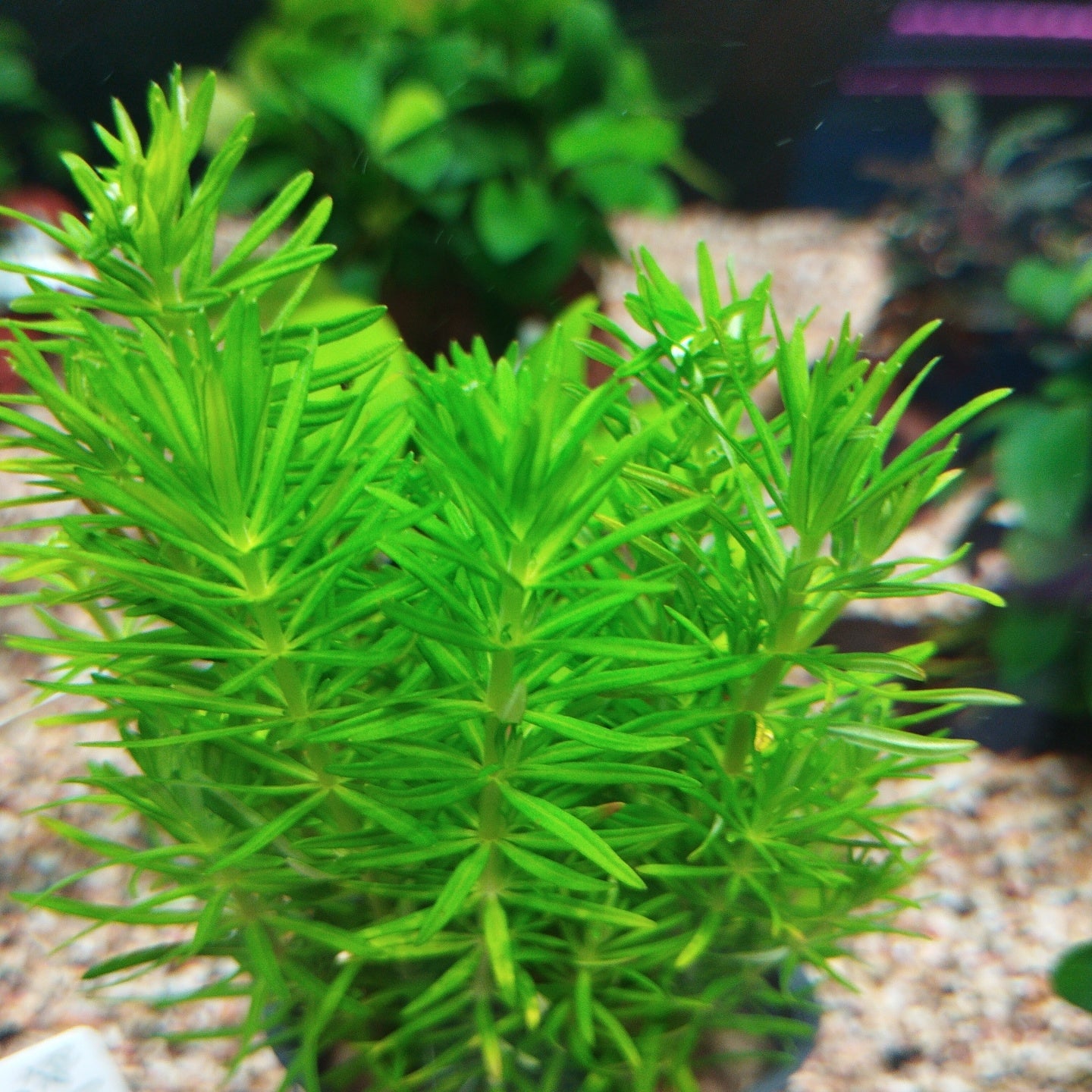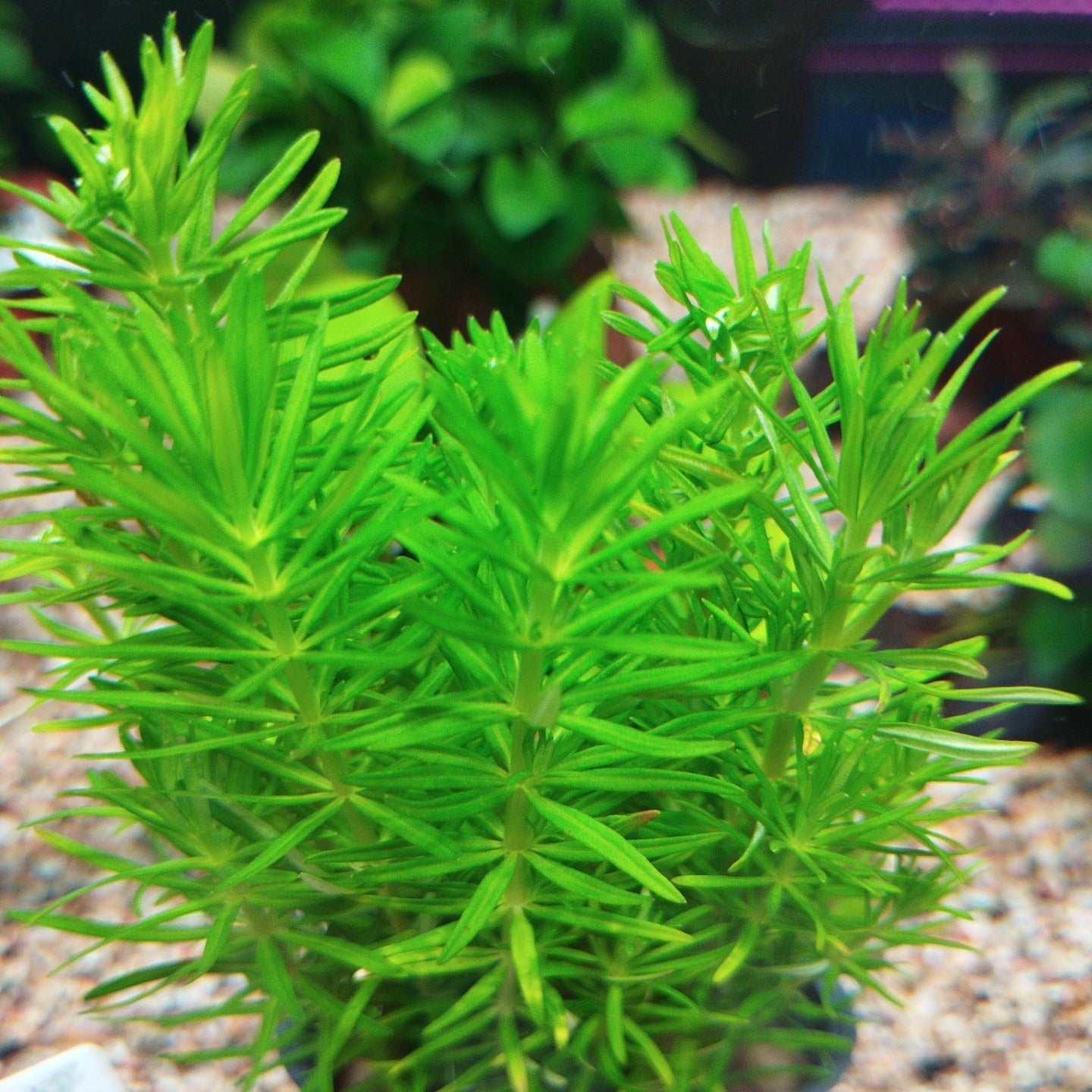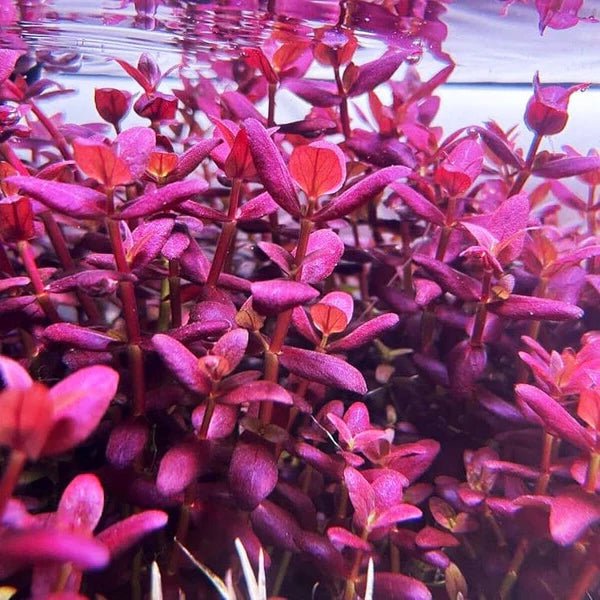
TCulture Echinodorus Horemanii Red (Pot)
You save
Out of stock
Ask on WhatsAppDescription
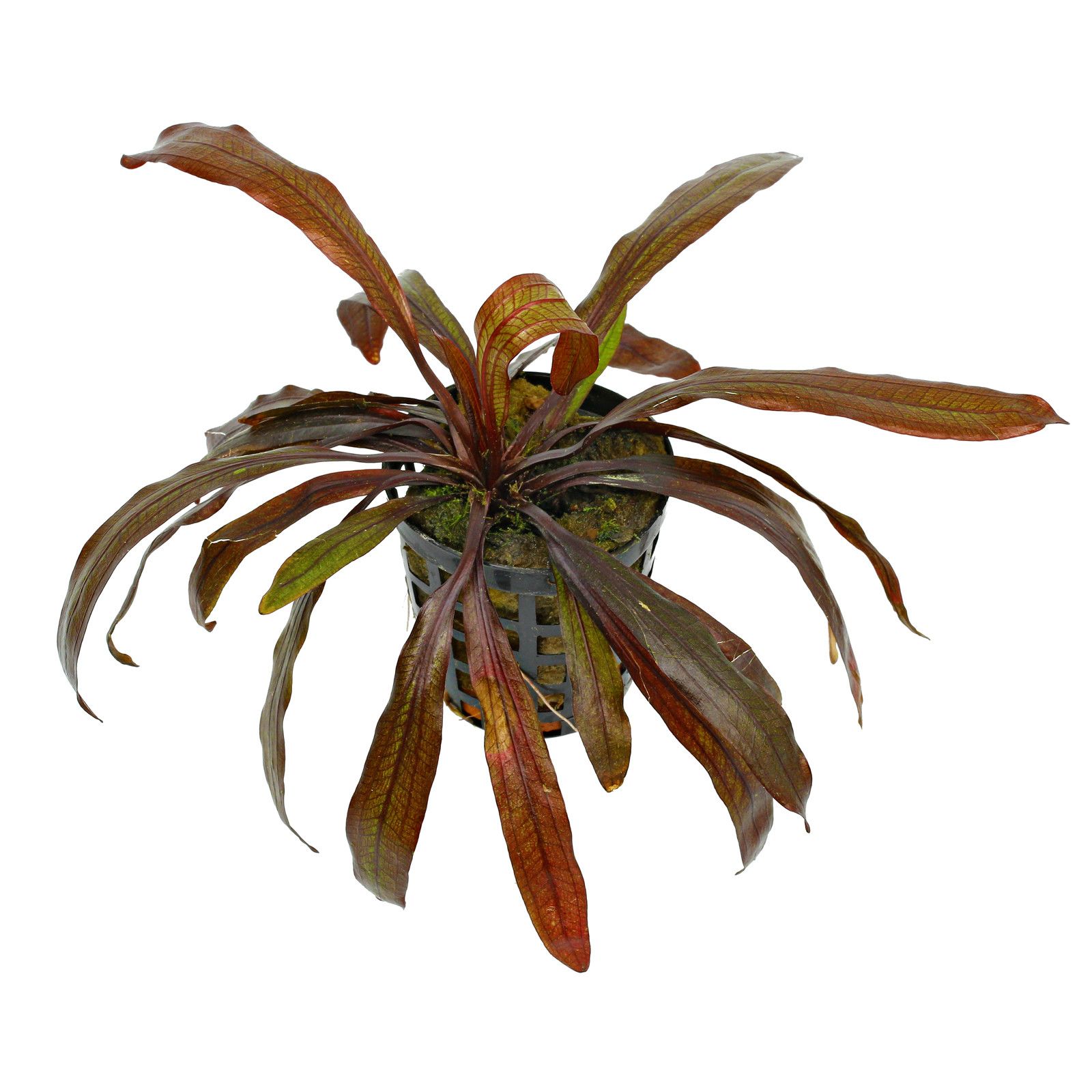
For many years, several forms of Echinodorus uruguayensis are known in the aquarium hobby under the name Echindorus horemanii. However the plant offered under the name Echinodorus horemanii ‘Red’ is likely a hybrid that resembles dark forms of E. uruguayensis. It develops up to 40 cm long, broadly strap-shaped, red-brown submerged leaves. It has a moderate growth rate and forms a magnificent rosette of many leaves with time.
As well as all swordplants, Echinodorus ‘Horemanii Red’ benefits much from a nutrient-rich substrate and good iron supply. Moderate lighting is sufficient. The water chemistry is of subordinate importance. CO2 supply is not essential but promotes its growth. The favourable temperature range is about 20-28 °C. As it is also known from E. uruguayensis, ‘Horemanii Red’ forms a long, creeping rhizome in the bottom. For propagation, the older leafless parts of the rhizome can be cut into pieces that will develop new leaf rosettes.
Echinodorus ‘Horemanii Red’ is a time-tested sword plant that looks best as solitary plant or small group in the midground to background of larger tanks. Its long, narrow foliage emphasises the vertical line and contrasts well with light green plants.
Echinodorus Horemanii ‘Red’ for Singapore Aquascapes
Sold as Echinodorus horemanii ‘Red’, this plant develops long, broadly strap-shaped, red-brown submerged leaves that make a dramatic specimen for a tank’s midground or background. It forms a magnificent rosette over time and grows at a moderate pace, so it rewards patience rather than quick results. In our warm Singapore tanks it is comfortable across the typical 27-29C range and settles well once its root system takes hold.
The deep red-brown tones show best under stronger lighting, and a nutrient-rich substrate is essential to support both the colour and the substantial root mass this plant builds. Root tabs are a reliable way to keep it fed. Plant the crown at substrate level, give it space to unfurl those long leaves, and avoid crowding it against fast-growing neighbours. Stable conditions and consistent feeding prevent the leaf yellowing and pinholing that can otherwise creep in.
See our echinodorus aquascape guide and plant deficiency guide, and browse our background live plants range for companions.