Southeast Asian Biotope Aquarium: Fish and Plants From Our Region
Table of Contents
- Why a Southeast Asian Biotope Matters
- Borneo Peat Swamps
- Thai and Malay Streams
- Sumatran Blackwater
- Fish Species List
- Plant Species List
- Water Parameters
- Hardscape and Decor
- Why It Is Meaningful to Keep Local Species
- Frequently Asked Questions
Why a Southeast Asian Biotope Matters
For aquarium hobbyists in Singapore, a Southeast Asian biotope holds a special significance that no other biotope type can match. These are the waters of our region — the streams, rivers, peat swamps and forest pools of Malaysia, Thailand, Indonesia and the broader Malay Archipelago. Many of the species we keep originated just a few hundred kilometres from our shores. This guide sits inside our broader Freshwater Aquarium Complete Beginner Hub reference.
Singapore itself sits at the southern tip of the Malay Peninsula, at the junction of some of the world’s most biodiverse freshwater ecosystems. The island once had its own native freshwater fish fauna, and neighbouring habitats in Johor, Riau and the wider region are home to hundreds of species that are readily available in our local aquarium trade.
Building a Southeast Asian biotope connects us to the natural heritage of our own region. It is an opportunity to learn about the ecosystems that exist — and are increasingly under threat — in our backyard.
Borneo Peat Swamps
The peat swamp forests of Borneo (Sarawak, Sabah and Kalimantan) are among the most extraordinary freshwater habitats on Earth. These are dark, still, acidic waters stained deep brown by tannins leached from decomposing plant material. The water is extremely soft, with a pH that can drop as low as 3.5-4.5 — conditions that would be inhospitable to most tropical fish but are home to a remarkable array of specialised species.
Key Species
- Chocolate gourami (Sphaerichthys osphromenoides) — A beautiful, challenging species that thrives in soft, acidic, tannin-rich water. Mouthbrooder with fascinating breeding behaviour.
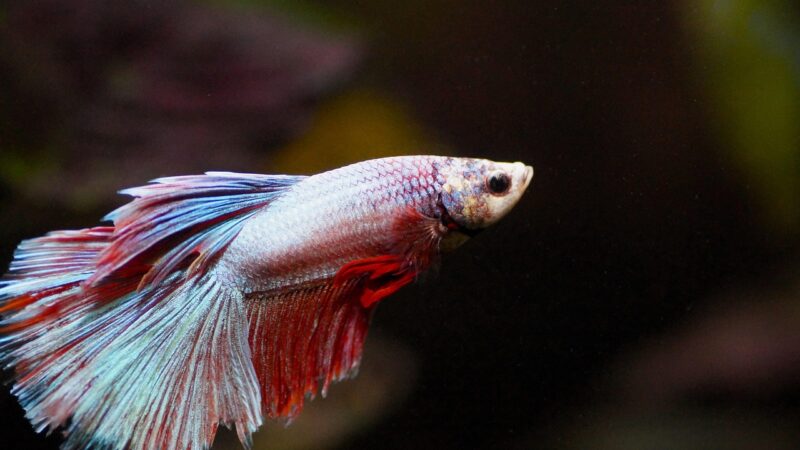
- Wild Betta species — Betta brownorum, Betta coccina, Betta persephone and other members of the coccina complex. These small, jewel-like fish are a far cry from the long-finned pet shop bettas. They require soft, acidic water and low light.
- Liquorice gouramis (Parosphromenus species) — Tiny, brilliantly coloured micro-predators. Critically threatened in the wild due to habitat destruction.
- Rasbora kalbarensis and other micro rasboras — Small, schooling species adapted to dark water.
Habitat Setup
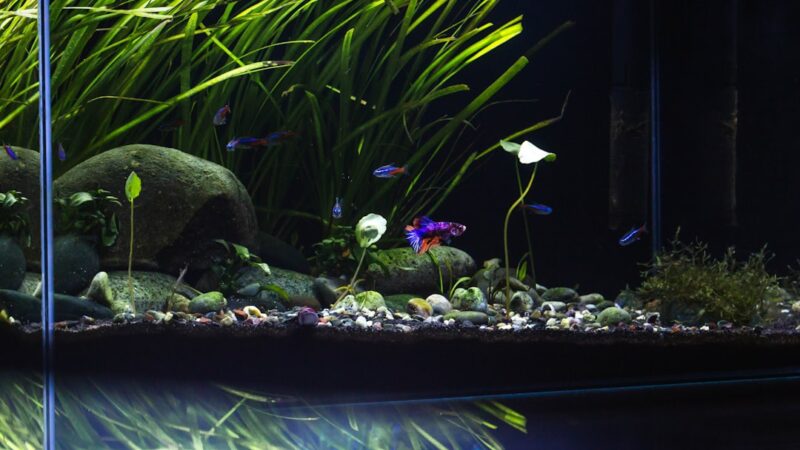
Use a dark substrate (black sand or ADA Amazonia), dense tangles of small driftwood and roots, and a generous layer of dried leaves (catappa, ketapang or dried hardwood leaves). Lighting should be dim — these are forest-floor environments with heavy canopy cover. Water should be stained dark with tannins using catappa leaves, peat extract or commercially available blackwater conditioners. Filtration should be gentle; a sponge filter or small internal filter is ideal.
Thai and Malay Streams
The clear-water streams of Thailand and Peninsular Malaysia represent a different Southeast Asian habitat — shallow, flowing water over sand and gravel substrates, with submerged rocks and logs colonised by ferns, mosses and Cryptocoryne species. These are brighter, more dynamic environments compared to the still darkness of peat swamps.
Key Species
- Harlequin rasbora (Trigonostigma heteromorpha) — The iconic Southeast Asian schooling fish. Peaceful, colourful, easy to keep.
- Chili rasbora (Boraras brigittae) — A tiny, brilliant red micro fish from Borneo but also found in similar habitats across the region.
- Galaxy rasbora / Celestial pearl danio (Danio margaritatus) — Originally from Myanmar but representative of the broader Southeast Asian stream habitat.
- Kuhli loach (Pangio kuhlii) — An eel-like bottom dweller native to streams across the Malay Peninsula and Indonesia. Nocturnal, social, best kept in groups.
- Various barb species — Cherry barbs, five-banded barbs and other small barbs from the region.
- Betta imbellis and Betta splendens (wild form) — The peaceful wild bettas of Thailand and Malaysia, very different from domestic varieties.
Habitat Setup
Use fine sand or small gravel as substrate. Add rounded river stones and pieces of driftwood with Java fern (Microsorum pteropus) and Java moss (Taxiphyllum barbieri) attached. Cryptocoryne species (C. wendtii, C. parva, C. pontederiifolia) grow well planted in the substrate. Water flow should be moderate, mimicking a gentle stream. Standard room temperature in Singapore (28-30°C) matches the natural conditions.
Sumatran Blackwater
Sumatra’s blackwater rivers and forest streams share characteristics with Bornean peat swamps but often have slightly more flow and somewhat less extreme water chemistry. These habitats are home to species that tolerate a range of soft, acidic conditions.
Key Species
- Boraras maculatus — Dwarf rasbora native to Sumatran blackwater streams.
- Sundadanio axelrodi — A tiny, iridescent blue or red species from Sumatran peat forests.
- Betta albimarginata and other Sumatran wild bettas
- Pangio species — Various kuhli loach relatives
- Cryptocoryne species — Several Cryptocoryne species are endemic to Sumatra
Habitat Setup
Similar to the Borneo peat swamp setup but with slightly more structure — more wood, some stones, and a moderate carpet of leaf litter. Water should be soft and acidic (pH 5.0-6.5, GH 0-3). In Singapore, achieving these parameters may require mixing PUB tap water with RO (reverse osmosis) water and adding tannin sources.
Fish Species List
| Species | Common Name | Habitat | Size (cm) | Availability in SG |
|---|---|---|---|---|
| Trigonostigma heteromorpha | Harlequin rasbora | Thai/Malay streams | 4-5 | Very common |
| Boraras brigittae | Chili rasbora | Borneo blackwater | 1.5-2 | Common |
| Boraras maculatus | Dwarf rasbora | Sumatran streams | 2-2.5 | Common |
| Pangio kuhlii | Kuhli loach | Malay/Indonesian streams | 8-10 | Very common |
| Sphaerichthys osphromenoides | Chocolate gourami | Borneo/Sumatra peat swamps | 5-6 | Moderate |
| Betta coccina | Wine red Betta | Malay/Sumatran peat swamps | 4-5 | Specialist |
| Betta imbellis | Peaceful Betta | Thai/Malay rice paddies | 5-6 | Moderate |
| Parosphromenus deissneri | Liquorice gourami | Bangka/Sumatra peat swamps | 3-4 | Rare/specialist |
| Trichopsis vittata | Croaking gourami | Thai/Malay still waters | 5-7 | Common |
| Trichogaster lalius | Dwarf gourami | South/Southeast Asian rivers | 5-7 | Very common |
Plant Species List
| Plant | Common Name | Growth Type | Light Requirement |
|---|---|---|---|
| Microsorum pteropus | Java fern | Epiphyte (attach to hardscape) | Low-medium |
| Taxiphyllum barbieri | Java moss | Moss (attach to hardscape) | Low |
| Cryptocoryne wendtii | Wendt’s Cryptocoryne | Rosette (planted) | Low-medium |
| Cryptocoryne parva | Dwarf Cryptocoryne | Rosette (planted) | Medium |
| Cryptocoryne cordata | Giant Cryptocoryne | Rosette (planted) | Low-medium |
| Barclaya longifolia | Orchid lily | Bulb (planted) | Low-medium |
| Ceratopteris thalictroides | Water sprite | Floating or planted | Medium |
| Salvinia natans | Floating fern | Floating | Medium |
Water Parameters
Most Southeast Asian freshwater habitats share a common profile: soft, acidic water with moderate to warm temperatures.
| Parameter | Thai/Malay Stream | Borneo Peat Swamp | Sumatran Blackwater |
|---|---|---|---|
| pH | 5.5-7.0 | 3.5-5.0 | 4.5-6.5 |
| GH (dGH) | 1-6 | 0-2 | 0-3 |
| KH (dKH) | 1-4 | 0-1 | 0-2 |
| Temperature | 24-30°C | 25-30°C | 24-28°C |
| Water colour | Clear to slightly tinted | Dark brown/tea-coloured | Brown/amber |
Singapore’s PUB tap water (GH 1-4, pH 6.5-7.5 after treatment) is naturally close to Thai/Malay stream conditions, making this the easiest biotope type to maintain without water modification. For peat swamp and blackwater biotopes, you will likely need RO water mixed with tap water, plus tannin supplementation. For more on blackwater setups, see our blackwater aquarium setup guide.
Hardscape and Decor
Southeast Asian aquatic habitats are characterised by organic materials rather than stone. Wood and leaf litter dominate.
- Driftwood — Malaysian driftwood, spiderwood and root tangles are ideal. These mimic the fallen branches and submerged roots found in forest streams and swamps.
- Leaf litter — Catappa (Indian almond) leaves are the standard choice. They are native to the region, release tannins and serve as a food source for micro-organisms that shrimp and fry graze on. Dried banana leaves and other tropical hardwood leaves also work.
- Minimal rocks — Southeast Asian streams do contain rocks, but they are typically rounded river stones rather than the jagged, angular rocks used in Iwagumi aquascaping. If you include stone, choose smooth, rounded pieces.
- Seed pods — Alder cones, cinnamon sticks and other botanical items add tannins and create natural-looking detail on the substrate.
Why It Is Meaningful to Keep Local Species
There is something uniquely satisfying about keeping fish and plants from your own region. These species evolved in conditions remarkably similar to Singapore’s climate — the same temperature range, the same general water chemistry, the same photoperiod. They are adapted to our environment in a way that South American or African species are not.
More importantly, many Southeast Asian freshwater habitats are under severe threat. Peat swamp forests in Borneo and Sumatra are being drained and converted to palm oil plantations at an alarming rate. Species like Parosphromenus (liquorice gouramis) are critically endangered in the wild. By keeping these species in our aquariums, learning about their habitats and sharing that knowledge, we contribute to awareness and, indirectly, to conservation efforts.
Singapore’s aquarium hobby community is well-positioned to champion Southeast Asian biotope keeping. We have access to species and materials that hobbyists in other parts of the world can only dream of. For a broader introduction to biotope aquariums, see our biotope aquarium guide.
Frequently Asked Questions
Is Singapore tap water suitable for a Southeast Asian biotope?
For Thai/Malay stream biotopes, Singapore’s PUB tap water is a reasonable starting point. It is moderately soft and close to neutral pH. However, PUB water contains chloramine, so you must always treat it with a dechlorinator (Seachem Prime or similar) before adding it to the tank. For peat swamp biotopes requiring very soft, very acidic water, you will need to dilute or replace tap water with RO water.
Can I mix species from different Southeast Asian habitats?
In a strict biotope, no — species should be from the same specific habitat. In a regional biotope-inspired setup, mixing species from different Southeast Asian habitats is acceptable as long as their water parameter requirements overlap. For example, harlequin rasboras and kuhli loaches can coexist happily even though they may not occur together in the exact same stream.
Where can I find wild-type Betta species in Singapore?
Wild Betta species (coccina complex, imbellis, etc.) are available through specialist breeders and importers in Singapore. Check local hobbyist forums, the Aquatic Quotient community and Facebook groups dedicated to wild bettas. Some local fish shops occasionally stock them, but availability is inconsistent. Specialist breeders are the most reliable source.
How do I darken the water for a blackwater biotope?
Add catappa (Indian almond) leaves directly to the tank — they release tannins as they decompose. For faster and more controllable tannin levels, use catappa leaf extract, peat granules in the filter, or commercial blackwater conditioners. Rooibos tea (unsweetened, unflavoured) is also used by some hobbyists. Start gradually and increase until you achieve the desired colour.
A Southeast Asian biotope is more than an aquarium — it is a window into the natural world of our own region. If you would like help planning or building one, visit us at 5 Everton Park. Our team has decades of experience with both local and exotic aquarium species.
Related Reading