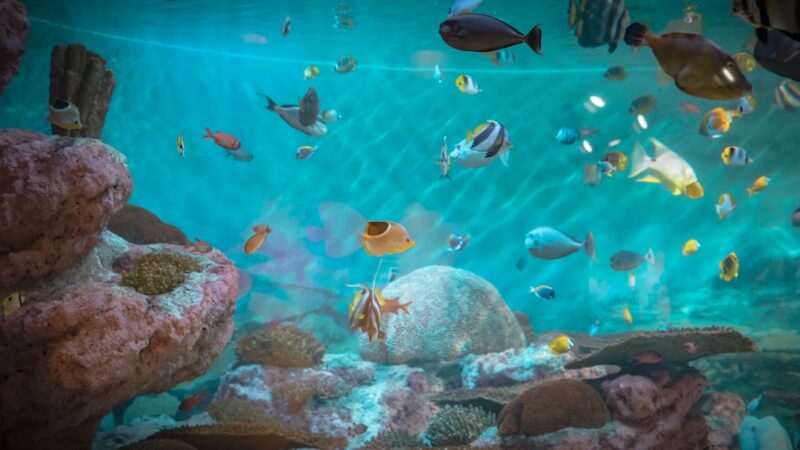
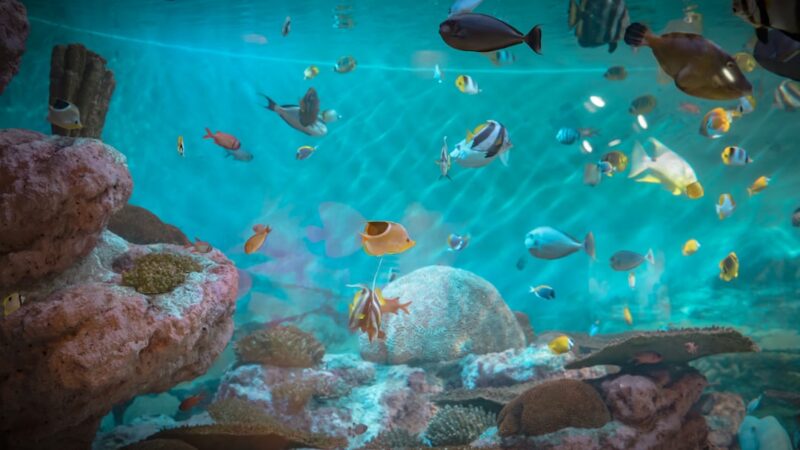
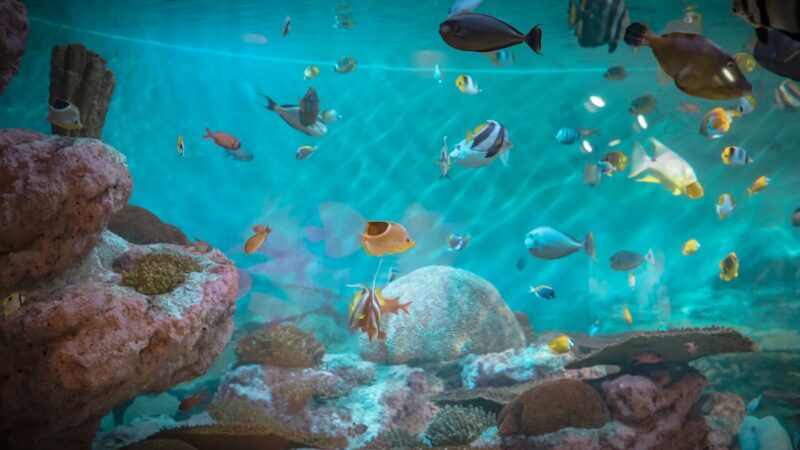
Best 55 Gallon Aquarium Stocking Ideas
Table of Contents
- Why the 55 Gallon Tank Is a Hobbyist Favourite
- Tank Dimensions and Placement Considerations
- Core Stocking Principles
- Community Tank Stocking Plans
- Cichlid Tank Stocking Plans
- Planted Aquascape Stocking Plans
- Species Compatibility Chart
- Filtration Requirements for a 55 Gallon
- Feeding Strategies for Multi-Species Tanks
- Common Stocking Mistakes to Avoid
- Singapore-Specific Considerations
- Frequently Asked Questions
- Plan Your 55 Gallon Community
Choosing the right 55 gallon aquarium stocking plan is the difference between a thriving, harmonious underwater community and a chaotic tank plagued by aggression, disease and disappointment. At 208 litres, a 55 gallon tank offers enough volume for impressive schools, eye-catching centrepiece fish and layered aquascapes — but only if you stock it wisely.
At Gensou, our aquascaping studio at 5 Everton Park in Singapore, we have designed and stocked hundreds of 55 gallon tanks over more than 20 years. This guide distils that experience into actionable stocking plans, compatibility advice and practical tips tailored for hobbyists in Singapore.
Why the 55 Gallon Tank Is a Hobbyist Favourite
The 55 gallon tank occupies a comfortable middle ground in the hobby. It is large enough to house a genuine community of diverse species, yet manageable enough for most living spaces — including larger HDB flats and condominium units. Key advantages include:
- Generous swimming space — Standard dimensions of approximately 120 cm × 33 cm × 50 cm give schooling fish room to display natural behaviour.
- Stable water chemistry — The larger water volume buffers against sudden parameter swings far better than nano or mid-sized tanks.
- Versatile stocking — You can keep medium-bodied fish (such as rainbowfish and angelfish) that are too large for 10 or 20 gallon setups.
- Aquascaping potential — Enough depth and width for elaborate hardscape arrangements, lush plant groupings and dramatic lighting effects.
Tank Dimensions and Placement Considerations
Before stocking, ensure your physical setup can support a 55 gallon tank. When filled, it weighs approximately 250 kg including substrate, hardscape and equipment.
| Consideration | Recommendation |
|---|---|
| Stand / cabinet | Purpose-built aquarium stand rated for 300+ kg; avoid repurposed furniture |
| Floor support | Concrete or reinforced flooring preferred; consult HDB guidelines if uncertain |
| Location | Away from direct sunlight and windows; near a power outlet and water source |
| Access | Leave 15 – 20 cm clearance above the tank for feeding, maintenance and lighting |
| Room temperature | Air-conditioned rooms stay cooler; use a chiller or fan if ambient temperature exceeds 30 °C |
Core Stocking Principles
Successful 55 gallon aquarium stocking follows several universal principles:
- Stock in layers — Select species that occupy different zones: top, middle and bottom. This reduces territorial conflict and fills the visual space.
- Respect adult sizes — Always stock based on the adult size of the fish, not the juvenile size you see at the shop.
- Prioritise schools — Schooling fish like tetras and rasboras look best and behave most naturally in groups of 8 or more.
- Limit centrepiece fish — One or two larger focal fish (such as a pair of angelfish or a pearl gourami) anchor the tank without overwhelming it.
- Include a clean-up crew — Corydoras catfish, otocinclus, nerite snails and amano shrimp help manage algae and leftover food.
- Add fish gradually — Introduce species in batches over several weeks to allow the biological filter to adjust.
Community Tank Stocking Plans
Community tanks are the most popular configuration for a 55 gallon setup. Below are three balanced plans suited to different aesthetics.
Plan A: Classic Tropical Community
| Species | Quantity | Zone |
|---|---|---|
| Rummy-nose tetra | 15 | Middle |
| Harlequin rasbora | 12 | Middle – Top |
| Pearl gourami | 2 (1 male, 1 female) | Top – Middle |
| Corydoras sterbai | 8 | Bottom |
| Amano shrimp | 10 | Bottom – Midground |
| Nerite snail | 4 | All zones |
Plan B: Rainbowfish Showcase
| Species | Quantity | Zone |
|---|---|---|
| Boesemani rainbowfish | 8 | Middle – Top |
| Dwarf neon rainbowfish | 10 | Middle |
| Kuhli loach | 8 | Bottom |
| Bristlenose pleco | 1 | Bottom |
| Amano shrimp | 8 | Bottom |
Plan C: South American Biotope
| Species | Quantity | Zone |
|---|---|---|
| Cardinal tetra | 20 | Middle |
| Angelfish | 2 | Middle – Top |
| Corydoras panda | 8 | Bottom |
| Otocinclus | 6 | Bottom – Glass |
| Nerite snail | 3 | All zones |
Note: Angelfish can become semi-aggressive as they mature. Ensure cardinal tetras are large enough not to be eaten, or add the tetras first so they are established before the angels grow.
Cichlid Tank Stocking Plans
If you prefer bold colours and active personalities, a cichlid-focused 55 gallon tank is an excellent choice.
Plan D: African Cichlid (Lake Malawi Mbuna)
| Species | Quantity | Notes |
|---|---|---|
| Yellow lab (Labidochromis caeruleus) | 6 | Relatively peaceful mbuna |
| Rusty cichlid (Iodotropheus sprengerae) | 6 | Calm temperament for a mbuna |
| Acei cichlid (Pseudotropheus acei) | 6 | Active swimmer, less territorial |
| Synodontis petricola | 4 | Hardy catfish compatible with mbuna |
Mbuna require rocky hardscapes with plenty of caves and line-of-sight breaks to diffuse aggression. Overstock slightly (compared to community tanks) to spread aggression across more targets — a well-known strategy among cichlid keepers.
Plan E: Dwarf Cichlid Community
| Species | Quantity | Zone |
|---|---|---|
| German blue ram | 4 (2 pairs) | Bottom – Middle |
| Apistogramma cacatuoides | 3 (1 male, 2 females) | Bottom |
| Rummy-nose tetra | 15 | Middle |
| Corydoras pygmaeus | 10 | Bottom |
| Otocinclus | 6 | Glass – Plants |
Dwarf cichlids prefer softer, slightly acidic water — which aligns well with Singapore’s naturally soft PUB tap water after dechlorination.
Planted Aquascape Stocking Plans
For aquascapers who want fish to complement their underwater garden rather than dominate it, restrained stocking is essential.
Plan F: Nature Aquarium Style
| Species | Quantity | Purpose |
|---|---|---|
| Green neon tetra | 25 | Tight schooling behaviour enhances the sense of scale |
| Otocinclus | 8 | Algae control on plant leaves |
| Amano shrimp | 15 | Best algae-eating invertebrate |
| Nerite snail | 5 | Glass and hardscape algae removal |
This lean stocking approach keeps nutrient load low, reducing the risk of algae in heavily planted, CO2-injected setups — the kind of tanks that win international aquascaping contests.
Species Compatibility Chart
Use this quick-reference chart when mixing species in a 55 gallon community tank.
| Species | Tetras | Rasboras | Corydoras | Angelfish | Gouramis | Shrimp |
|---|---|---|---|---|---|---|
| Tetras | Yes | Yes | Yes | Caution | Yes | Yes |
| Rasboras | Yes | Yes | Yes | Caution | Yes | Yes |
| Corydoras | Yes | Yes | Yes | Yes | Yes | Yes |
| Angelfish | Caution | Caution | Yes | Caution | No | No |
| Gouramis | Yes | Yes | Yes | No | Caution | Caution |
| Shrimp | Yes | Yes | Yes | No | Caution | Yes |
“Caution” means the combination can work under specific conditions (tank size, individual temperament, plenty of hiding spots) but carries risk. “No” indicates a pairing best avoided.
Filtration Requirements for a 55 Gallon
A 55 gallon tank demands robust filtration. Aim for a total turnover rate of 4 to 6 times the tank volume per hour — roughly 800 to 1,200 litres per hour.
- Canister filter — The gold standard. Brands like Eheim, Oase and Fluval offer canisters rated for 200+ litres with excellent biological media capacity.
- Dual HOB filters — Two hang-on-back filters (one at each end) provide redundancy and good flow distribution.
- Sump filter — If your cabinet allows, a sump provides the highest filtration capacity and hides equipment from view.
For cichlid tanks, oversize your filtration by 50 percent because cichlids produce heavier waste than comparably sized community fish.
Feeding Strategies for Multi-Species Tanks
Different species occupy different zones and have different dietary needs. A varied feeding approach ensures everyone gets enough nutrition.
- Floating flakes or pellets — For top and mid-water feeders like tetras, rasboras and gouramis.
- Sinking wafers — For bottom-dwellers like corydoras, plecos and loaches. Drop these in after lights-out if top-feeders steal them.
- Frozen foods — Bloodworms, brine shrimp and daphnia provide essential protein and variety. Feed 2 to 3 times per week.
- Blanched vegetables — Zucchini, cucumber and spinach for herbivorous fish and shrimp.
Feed small portions twice daily — only as much as fish consume within 2 to 3 minutes. Uneaten food decomposes and spikes ammonia, which is especially dangerous in a newly stocked tank.
Common Stocking Mistakes to Avoid
- Adding all fish at once — This overwhelms the biological filter. Add species in batches over 4 to 6 weeks.
- Choosing fish by appearance alone — A stunning fish that grows to 30 cm or displays extreme aggression will ruin a carefully planned community.
- Ignoring adult size — Common plecos, pacu and bala sharks outgrow a 55 gallon tank within months.
- Mixing incompatible water parameters — African cichlids (hard, alkaline water) and discus (soft, acidic water) should never share a tank.
- Skipping quarantine — New fish can introduce ich, velvet or parasites. A simple 2-week quarantine in a spare tank saves the entire community.
- Neglecting the clean-up crew — Algae eaters and scavengers are not optional extras; they are essential members of a balanced ecosystem.
Singapore-Specific Considerations
- Temperature — Singapore’s heat means tropical species are a natural fit, but delicate cold-water species (such as white cloud minnows) may struggle without a chiller. Focus on true tropicals that thrive above 26 °C.
- Water parameters — PUB tap water is typically pH 7.0 to 7.5 and soft to moderately soft. This suits most South American and Southeast Asian species out of the box. For African cichlids, buffer the water with crushed coral or cichlid salts.
- Electricity costs — A 55 gallon tank with a canister filter, LED light and possibly a chiller can add S$20 to S$40 per month to your utility bill. LED lighting and energy-efficient pumps help keep costs down.
- Sourcing livestock — Singapore is a global hub for ornamental fish. Local farms and importers along Pasir Ris Farmway and Lim Chu Kang offer species at competitive prices. Our team at Gensou can also source specific fish for custom orders.
- Weight considerations — A fully set-up 55 gallon tank weighs roughly 250 kg. Verify that your floor (especially in older HDB blocks) can handle this concentrated load. Place the tank against a load-bearing wall whenever possible.
Frequently Asked Questions
How many fish can I put in a 55 gallon tank?
There is no single number because it depends on the species, their adult size, filtration capacity and whether the tank is planted. As a rough guideline, a well-filtered 55 gallon community tank can comfortably support 30 to 50 small-bodied fish (such as tetras and rasboras) plus a clean-up crew. Larger species like angelfish or rainbowfish reduce the total number. The stocking plans in this article are designed to stay within safe limits.
Can I keep angelfish with small tetras in a 55 gallon?
It is possible but carries risk. Adult angelfish have mouths large enough to eat very small fish like neon tetras. Larger tetra species — rummy-nose, black phantom or lemon tetras — fare better. Adding the tetras first and introducing juvenile angelfish later also improves compatibility, as the angels grow up alongside their tank mates.
What is the best filter type for a 55 gallon aquarium?
A canister filter is the most popular choice for a 55 gallon tank. It provides excellent biological, mechanical and chemical filtration in a single unit, runs quietly and keeps equipment hidden inside the cabinet. Look for a model rated for 200 to 400 litres with adjustable flow. Eheim Classic, Fluval 307 and Oase BioMaster are all strong contenders available in Singapore.
How long should I wait before adding fish to a new 55 gallon tank?
Complete a full fishless cycle before adding any livestock. This typically takes 3 to 6 weeks. Once ammonia and nitrite consistently read 0 ppm within 24 hours of dosing, perform a large water change and begin adding fish in small batches over the following weeks. Patience at this stage prevents devastating losses later.
Related Reading
- Best 40 Gallon Aquarium Stocking Ideas
- Best 10 Gallon Aquarium Setup for Beginners
- Best 20 Gallon Aquarium Setup for Beginners
- Best Fish for a 5-Gallon Planted Nano Tank: Tiny but Complete
- Best Fish for a Nano 5-Gallon Tank
Plan Your 55 Gallon Community
A well-stocked 55 gallon aquarium is a centrepiece that draws every visitor’s eye and provides daily moments of calm in a busy Singapore lifestyle. The secret is planning: choose compatible species, stock gradually and invest in adequate filtration.
At Gensou, we have spent over 20 years helping hobbyists across Singapore design, stock and maintain aquariums of every size. Whether you need a complete stocking plan, a custom aquascape design or ongoing maintenance support, we are here to help.
Ready to stock your 55 gallon tank? Contact our team for a free consultation, explore our custom aquarium design service, or visit our shop for premium fish, plants and equipment.