
How to Sex Common Aquarium Fish: Male vs Female Identification
Knowing the sex of your fish is essential for breeding, managing aggression and creating balanced communities. While some species make it obvious, others require a trained eye and knowledge of subtle differences. This guide on how to sex aquarium fish from Gensou Aquascaping at 5 Everton Park covers the most common species kept in Singapore.
Why Sexing Fish Matters
Beyond breeding purposes, knowing the sex ratio in your tank helps manage behaviour. Too many males can lead to excessive aggression and territorial disputes. Some species require specific ratios — most cichlids and livebearers do best with one male to two or three females. Unbalanced ratios cause stress, injury and even death in extreme cases. Identifying sex also helps you understand behaviours you observe.
Livebearers: The Easy Ones
Guppies, platies, swordtails and mollies are the easiest fish to sex. Males have a gonopodium — a modified anal fin that forms a narrow, pointed rod used for mating. Females have a standard, fan-shaped anal fin. Male guppies are smaller and more colourful, while females are larger and plainer. Male swordtails develop the distinctive sword-shaped tail extension. These differences are visible from about four to six weeks of age.
Tetras and Rasboras
Sexing tetras and rasboras is more subtle. Females are typically fuller-bodied (rounder belly when viewed from above), especially when carrying eggs. Males tend to be slimmer, slightly more colourful and sometimes have longer or more elaborate fins. In neon tetras, the blue stripe appears straighter in slimmer males and slightly curved in rounder females. These differences become more apparent in mature, well-fed fish.
Cichlids
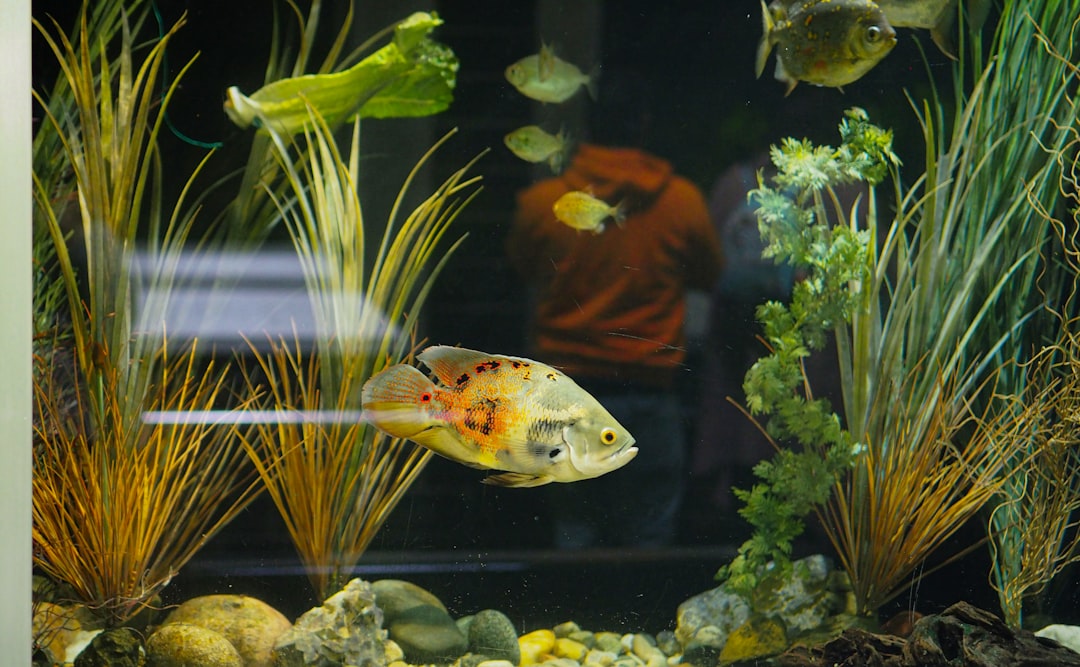
Male cichlids are generally larger, more colourful and develop more prominent features — larger heads, longer fin extensions and egg spots on the anal fin (in African mouthbrooders). Many male cichlids develop a pronounced nuchal hump (forehead bump) with age. In species like apistogrammas, males are significantly more colourful, while females are smaller with yellow colouration during breeding. Venting (examining the genital papilla) provides definitive identification but requires experience.
Bettas and Gouramis
Male bettas have much longer, more flowing fins and more vivid colouration than females (in standard varieties). Female bettas have shorter fins, a visible white egg spot (ovipositor) near the anal fin and a slightly more rounded body. Male gouramis typically have longer, more pointed dorsal fins — in dwarf gouramis, males are brilliantly coloured while females are silvery-grey. Male honey gouramis develop intense golden-orange colour during breeding.
Corydoras and Plecos
Female Corydoras are noticeably larger and rounder than males when viewed from above. Males are slimmer and slightly smaller. In bristlenose plecos, males develop prominent bristle-like tentacles (odontodes) on their snout and head, while females have none or very small ones at the lip margin. Other pleco species can be difficult to sex — body shape (females wider when viewed from above) is often the only clue.
Shrimp
Female Neocaridina and Caridina shrimp are larger, more intensely coloured and develop a visible saddle (egg mass) on their upper body behind the head. Males are smaller, paler and slimmer. The difference becomes clear once shrimp reach maturity at three to four months. Female cherry shrimp, for example, are deep red, while males are often semi-transparent with faint colouring.
Advanced Technique: Venting
Venting involves gently catching a fish, holding it belly-up and examining the genital openings near the anal fin with magnification. Females have two openings (anus and ovipositor), with the ovipositor being larger and rounder. Males have two openings with the genital pore being smaller and more pointed. This technique is most useful for cichlids and is practiced by experienced breeders. It requires careful handling to avoid stressing the fish.
Singapore-Specific Tips
When buying fish for breeding at local shops, ask the staff for help selecting specific sexes — experienced staff can often sex fish by sight. If buying online through Carousell or Facebook, request photos from above (to show body shape) and from the side (to show fin development). Singapore’s active fishkeeping community includes experienced breeders who share sexing tips in species-specific groups online.
Conclusion
Learning to sex your fish opens the door to breeding projects and better community management. Start with the easier species — livebearers and bettas — and work your way up to more challenging identifications as your eye develops. Visit Gensou Aquascaping at 5 Everton Park for help selecting sexed pairs for your breeding projects.



