
Blood Parrot Cichlid Care Guide: The Controversial Hybrid
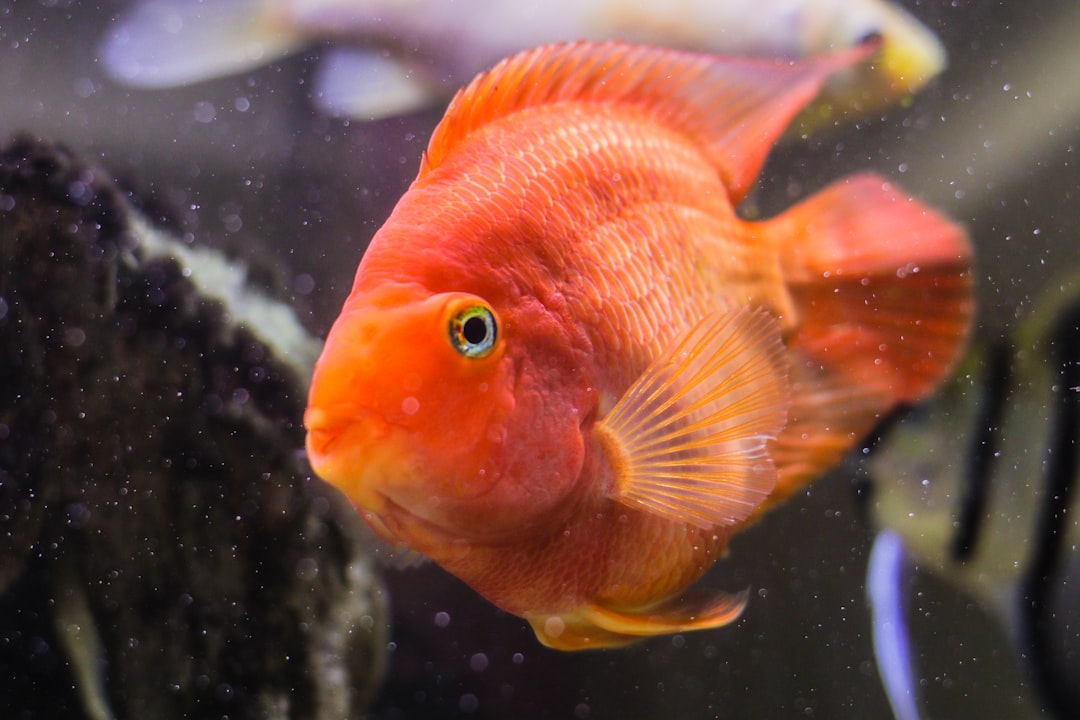
The Blood Parrot cichlid is one of the most recognisable and divisive fish in the freshwater hobby. Its round body, beak-like mouth and vivid orange-red colour make it unmistakable, but its origins as a man-made hybrid raise ethical questions that every keeper should consider. This Blood Parrot cichlid care guide from Gensou Aquascaping at 5 Everton Park provides honest, practical advice for those who choose to keep them. This guide sits inside our broader Tropical Fish Species Master Index reference.
Blood Parrot Overview
Blood Parrots are a hybrid cichlid, most likely a cross between the Midas cichlid (Amphilophus citrinellus) and the redhead cichlid (Paraneetroplus synspilus). They do not exist in the wild. First bred in Taiwan in the 1980s, they have become hugely popular across Asia, including Singapore. Adults reach 15–20 cm and can live for 10–15 years. Their deformed mouth cannot fully close, which affects feeding — a key care consideration.
The Ethical Question
Blood Parrots are controversial because their hybrid anatomy causes functional limitations. The permanently open mouth makes eating difficult, the compressed body affects swimming, and some individuals develop spinal deformities. Dyed Blood Parrots (injected with artificial colours to appear purple, blue or green) are particularly condemned — the dye fades, stresses the fish and shortens its lifespan. If you choose to keep Blood Parrots, buy only naturally coloured specimens and provide the specialised care they need.
Tank Requirements
A single Blood Parrot needs at least a 150-litre tank, and a group of three or more requires 300 litres. They are moderately active and appreciate open swimming space. Use sand or smooth gravel — they enjoy digging. Maintain the temperature between 24 °C and 28 °C, pH 6.5–7.5 and GH 5–15 dGH. They prefer stable conditions and are more sensitive to parameter swings than many cichlids.
Feeding Challenges
The deformed mouth makes it difficult for Blood Parrots to compete for food or eat large items. Offer soft, small pellets specifically designed for cichlids with smaller mouths. Hikari Blood-Red Parrot+ is formulated for this species. Supplement with frozen bloodworm, brine shrimp and finely chopped prawns. Blanched peas help with digestion. Feed twice daily in small amounts and ensure food reaches them before faster tank mates consume it all.
Tank Mates
Despite their cichlid lineage, Blood Parrots are relatively peaceful — their deformed mouths make them poor fighters. Suitable tank mates include silver dollars, larger tetras (Buenos Aires, Congo), Severums, peaceful medium-sized cichlids, bristlenose plecos and larger Corydoras. Avoid aggressive cichlids that will bully them and fast, competitive feeders that steal their food. Keeping three or more Blood Parrots together reduces individual stress.
Aquascaping
Provide caves and shelters using rocks, PVC pipes or large driftwood — Blood Parrots are shy and retreat into hiding when startled. They feel most secure with multiple hiding options. Tough plants like Anubias and Java Fern survive their occasional digging. A dark substrate enhances their orange-red colouration, and dim lighting reduces their natural shyness.
Colour and Health
A healthy Blood Parrot displays deep orange to red colouration. Colour fading indicates stress, poor diet or illness. Black patches may appear during stress or territorial disputes and usually fade when conditions improve. Swim bladder issues are more common in Blood Parrots due to their compressed body shape — fast the fish for two to three days and offer blanched peas if the fish struggles with buoyancy. Maintain excellent water quality — they are more prone to bacterial infections than many cichlids.
Breeding
Male Blood Parrots are almost always infertile due to their hybrid nature. Females can lay eggs, but they rarely develop unless fertilised by a male of a compatible parent species. Most hobbyists accept that breeding is not viable and keep Blood Parrots purely as display fish. Females may still go through spawning behaviour, cleaning surfaces and becoming territorial — this is normal and harmless.
Related Reading



