Southeast Asian Rice Paddy Biotope: Betta and Wild Gourami Habitat
Few aquascapes capture the essence of tropical Asia quite like a rice paddy biotope. A southeast asian rice paddy biotope recreates the shallow, warm, vegetation-choked waters where wild bettas and gouramis have thrived for millennia. Living in Singapore, Gensou Aquascaping draws constant inspiration from the region’s own backyard habitats, and this style is one of the most rewarding layouts we build for clients who want something authentic and understated.
Understanding the Natural Habitat
Rice paddies across Thailand, Cambodia, Vietnam and peninsular Malaysia are shallow, rarely deeper than 20-30 cm during growing season. Water is warm, typically 28-34°C, soft, acidic and rich with organic matter from decomposing plant material. Flow is virtually nonexistent. These conditions favour labyrinth fish that breathe atmospheric air, making bettas and gouramis the obvious inhabitants.
Tank Selection and Dimensions
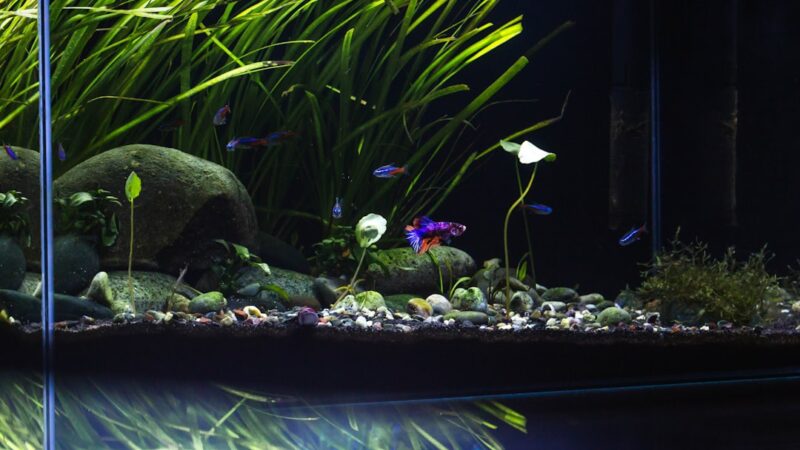
Shallow tanks suit this biotope perfectly. A 60 x 30 x 20 cm rimless tank holding roughly 36 litres provides an ideal footprint. Low water depth encourages emersed plant growth and gives labyrinth fish easy surface access. In HDB flats, a tank this size sits comfortably on most furniture without structural concerns, typically weighing under 45 kg fully set up.
Substrate and Hardscape
Use a fine, muddy-looking substrate. ADA Amazonia or a laterite-based soil capped with fine sand replicates the silty paddy floor convincingly. Avoid dramatic rock formations, as natural paddies have almost no exposed stone. A single piece of weathered driftwood or a dried lotus pod adds subtle interest without breaking the biotope’s authenticity. Scatter dried Indian almond leaves and small twigs across the bottom for a natural debris layer.
Plant Choices for Authenticity
Cryptocoryne species, particularly C. wendtii and C. pontederiifolia, grow naturally in and around paddy margins. Hygrophila species work well as taller background stems. For the emersed element, plant rice itself, available from aquascaping suppliers, or use Echinodorus species that grow leaves above the waterline. Floating plants like Salvinia natans and duckweed complete the surface layer. Singapore’s high humidity, typically 80-90%, makes emersed growth effortless.
Stocking With Bettas and Wild Gouramis
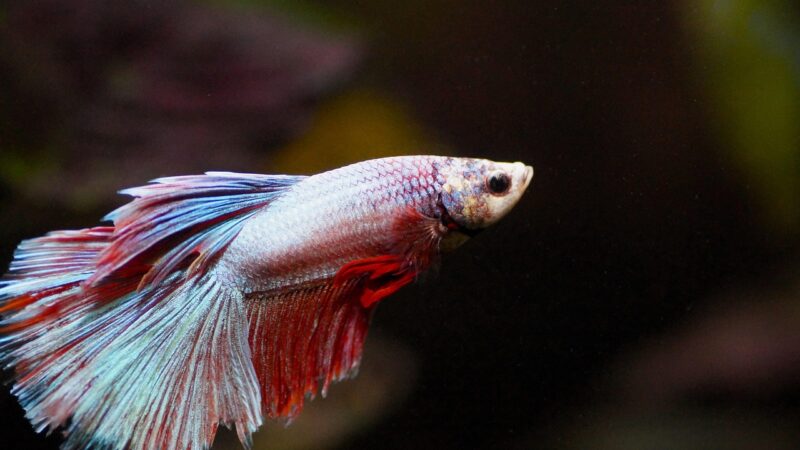
Wild-type Betta splendens, B. imbellis or B. smaragdina are the most biotope-appropriate choices. A single male or a pair suits a 36-litre paddy setup. For a larger tank, Trichopsis pumila, the sparkling gourami, schools beautifully in groups of six or more and barely reaches 3 cm. Trichogaster lalius, the dwarf gourami, adds colour but needs slightly more space. Avoid mixing aggressive male bettas with other anabantoids in small volumes.
Water Parameters and Maintenance
Target a pH of 6.0-7.0, GH 2-6 and temperature of 26-30°C. Singapore tap water at GH 2-4 is already close to ideal, needing only dechlorination. No heater is required in most months. Filtration should be gentle: a small sponge filter or air-driven box filter provides enough biological processing without creating current. Weekly 20% water changes and occasional topping off to replace evaporation keep the system stable.
Lighting and Atmosphere
Moderate lighting around 30-50 PAR at the substrate encourages plant growth without promoting excessive algae in the shallow water column. A warm-toned LED in the 3000-4000K range mimics the golden light of late-afternoon paddy fields. Run lights for seven to eight hours daily. The combination of floating plants, tannin-stained water and warm lighting creates a mood that is calm, earthy and distinctly Southeast Asian.
Related Reading