Best Programmable Digital Timers for Aquariums
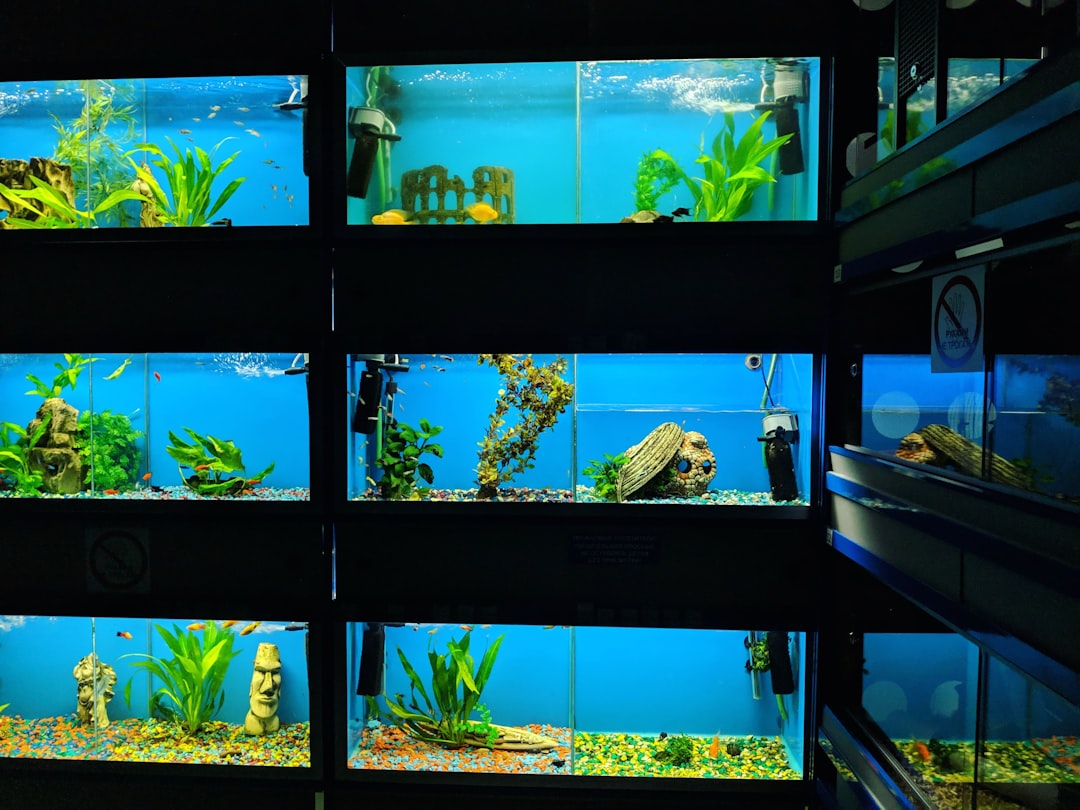
Consistency is everything in aquarium keeping — your lights, CO2, and air pumps should switch on and off at the same time every day regardless of whether you are home, travelling, or simply asleep. A reliable best programmable digital timer aquarium setup removes human forgetfulness from the equation entirely. This guide from Gensou Aquascaping at 5 Everton Park, Singapore, reviews the most dependable timer options available locally and explains what features genuinely matter for fishkeeping.
Why Timers Are Essential, Not Optional
Inconsistent lighting is one of the top causes of algae outbreaks in planted tanks. Running lights for 14 hours one day and 8 the next confuses plant metabolism and gives opportunistic algae the upper hand. CO2 injection needs to start 1-2 hours before lights-on and stop at lights-off — manual control makes that nearly impossible to maintain consistently across weeks and months.
Even for fish-only setups, a regular photoperiod reduces stress. Fish have circadian rhythms, and sudden or irregular light changes trigger hiding behaviour and reduced feeding.
Mechanical vs Digital: Why Digital Wins
Mechanical timers — the cheap dial type with push-in pins — are inaccurate. They drift several minutes per week, the pins wear out and slip, and they typically offer only 15-minute increment control. For aquarium use, where you might need CO2 to start at exactly 10:00 and lights at 12:00, that imprecision creates problems. Digital timers maintain accuracy to within seconds, offer per-minute programming, and retain schedules through power outages via battery backup.
Single-Outlet Digital Timers
For a simple setup — one light on one schedule — a single-outlet timer is all you need. The most widely available in Singapore is the generic digital timer sold at hardware shops and on Shopee for $8-15 SGD. These typically offer 8-10 programmable on/off events per day, a manual override switch, and a built-in rechargeable battery that holds settings during power cuts.
Look for a model with a clearly backlit LCD display and intuitive button layout. The cheapest units often have tiny, unlabelled buttons that make programming frustrating. Spending an extra $3-5 for a legible display saves you considerable irritation.
Multi-Outlet Power Strips With Timers
Planted tank hobbyists running lights, CO2 solenoids, air pumps, and dosing pumps benefit from a multi-outlet power strip where each outlet — or groups of outlets — can be programmed independently. The BN-LINK and Century brands, available on Lazada for $25-40 SGD, offer strips with 4-8 outlets and dual-programme capability.
These are particularly useful for staggering equipment: CO2 on at 09:00, main light on at 11:00, secondary light on at 11:30, air pump on at 19:00 when CO2 stops. Achieving this with individual single-outlet timers means four separate devices cluttering your power setup.
Smart Plugs as Timer Replacements
Wi-Fi smart plugs from brands like TP-Link Tapo and Sonoff run $12-20 SGD each in Singapore and offer timer functionality through smartphone apps. The advantage is remote control and monitoring — you can verify your lights are running correctly from anywhere and adjust schedules without physically touching the device.
The drawback is Wi-Fi dependency. If your router drops or your internet goes down, some smart plugs lose their schedules until connectivity returns. Models with onboard schedule storage (like the Tapo P100) continue executing programmed events offline, making them far more reliable for aquarium use. Always verify this feature before purchasing.
What Wattage Rating Matters
Every timer has a maximum wattage or amperage rating. Most aquarium equipment draws modest power — a typical LED light uses 20-50 watts, a CO2 solenoid 5-10 watts, and an air pump 3-8 watts. A standard timer rated at 2,200 watts (10 amps at 220V, Singapore’s standard) handles all of this comfortably. Problems arise only if you plug in high-draw equipment like heaters (100-300 watts) on a timer rated for low loads. Always check the rating printed on the timer body.
Battery Backup: The Overlooked Feature
Power outages happen in Singapore — briefly during thunderstorms or planned maintenance by SP Group. A timer without battery backup resets to flashing 12:00 after every outage, losing your entire programme. Every aquarium timer you buy should have an internal battery that retains settings for at least 72 hours without mains power. Most digital timers include this, but verify it before purchase rather than discovering the gap after a blackout.
Our Setup Recommendation
For most hobbyists, a combination of two to three single-outlet digital timers is the simplest and most reliable approach: one for lighting, one for CO2, and one for the night-time air pump. Mount them on a power board behind the tank stand, label each timer clearly, and set the schedules once. Gensou Aquascaping uses this exact arrangement on the majority of our client installations — it is inexpensive, easy to troubleshoot, and runs for years without attention.
Related Reading