How to Aquascape a Double Tank Rack: Cohesive Multi-Level Design

Double-tier tank racks are a practical solution for hobbyists in space-constrained Singapore homes — two tanks in the footprint of one. But stacking two aquascapes vertically introduces a design challenge that most single-tank guides ignore: how do you make both levels look intentional and cohesive rather than like two unrelated setups sitting on a shelf? This aquascape double tank rack guide shares the layout principles and practical techniques Gensou Aquascaping has refined across numerous multi-level installations at 5 Everton Park and in client homes across Singapore.
Structural Considerations First
Before any aquascaping, confirm the rack can handle the load. A filled 60 x 30 x 36 cm tank weighs roughly 65 kg; two of them plus the rack itself approach 150 kg. HDB floors are rated for 150 kg/m2 as a distributed load, so a double rack on a 60 x 30 cm footprint concentrates significant weight on the four legs. Use a rack rated for aquarium use — welded steel frames from local brands cost $80 to $200 on Shopee — and place it against a load-bearing wall, ideally over a beam. Never trust a repurposed bookshelf.
Design Approach: Connected or Contrasting
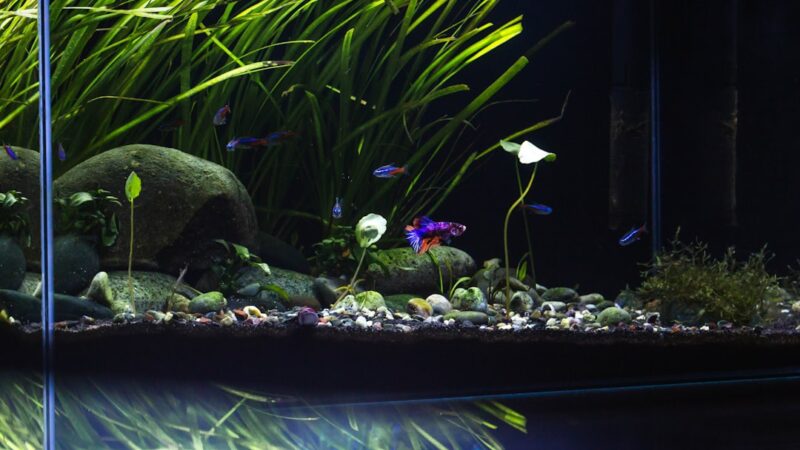
Two strategies work well. The connected approach treats both tanks as one composition: the bottom tank might represent a riverbed with low-growing carpets and smooth stones, while the top tank depicts the canopy zone with tall stems and floating plants. Alternatively, a contrasting approach gives each tank a distinct but complementary identity — perhaps a hardscape-dominant Iwagumi on top and a lush Dutch-style below. The key is shared visual elements: matching hardscape material, a common colour temperature in lighting, or the same wood species tying both levels together.
Scale and Proportion
Identical tanks make cohesion easier. If the tanks differ in size, place the larger one on the bottom for visual stability — a heavy top shelf looks precarious regardless of structural safety. Within each tank, scale your hardscape proportionally. A stone that dominates a 60 cm tank looks awkward next to the same species used timidly in its twin above. Sketch both layouts side by side before committing to placement; what looks balanced in isolation may feel lopsided when viewed as a pair.
Lighting and Viewing Angles
The bottom tank sits at a lower viewing angle, so foreground detail matters more — carpet plants and fine substrate textures shine here. The top tank is viewed more or less straight on, making midground and background composition the priority. Light spill from the top fixture can illuminate the area between the tanks, so choose sleek, low-profile LED units that do not create a visual barrier. Matching colour temperature — both at 6500 K, for instance — ensures the two tanks read as a unified display.
Practical Plumbing and Maintenance
Running both tanks on a single canister filter with a manifold is tempting but risky — if one tank springs a leak or needs medication, you cannot isolate it. Separate filtration for each level is safer and simpler. Route tubing along the rear of the rack using cable clips to keep things tidy. Water changes on the top tank are straightforward with a standard siphon into a bucket; the bottom tank may need a battery-powered vacuum or a pump to reach a drain if the bucket cannot sit low enough for gravity flow.
Stocking for Visual Harmony
Complement the fish in each tank rather than duplicating them. A school of green neon tetras in the top tank pairs beautifully with a colony of cherry shrimp below, for example — similar colour tones at different scales. Avoid large, active fish in the top tank, as their movement can startle inhabitants below through the glass. Peaceful nano species work best at both levels, and bottom-dwellers like corydoras or otocinclus add interest to the lower tank where substrate-level viewing is most natural.
Making the Rack Itself Disappear
The rack is functional, but it should not dominate the display. Black steel frames recede visually against most wall colours. Some hobbyists wrap the exposed frame in matching vinyl or attach a thin timber fascia for a furniture-grade finish. Position the rack so both tanks receive roughly equal ambient light from the room, and leave at least 15 cm of clearance above the top tank for feeding and maintenance access. A well-executed double tank rack aquascape doubles your creative canvas without doubling your floor space — a genuine advantage in Singapore living.
Related Reading