Aquascaping With Eleocharis Mini Only: Ultra-Short Hairgrass Carpet
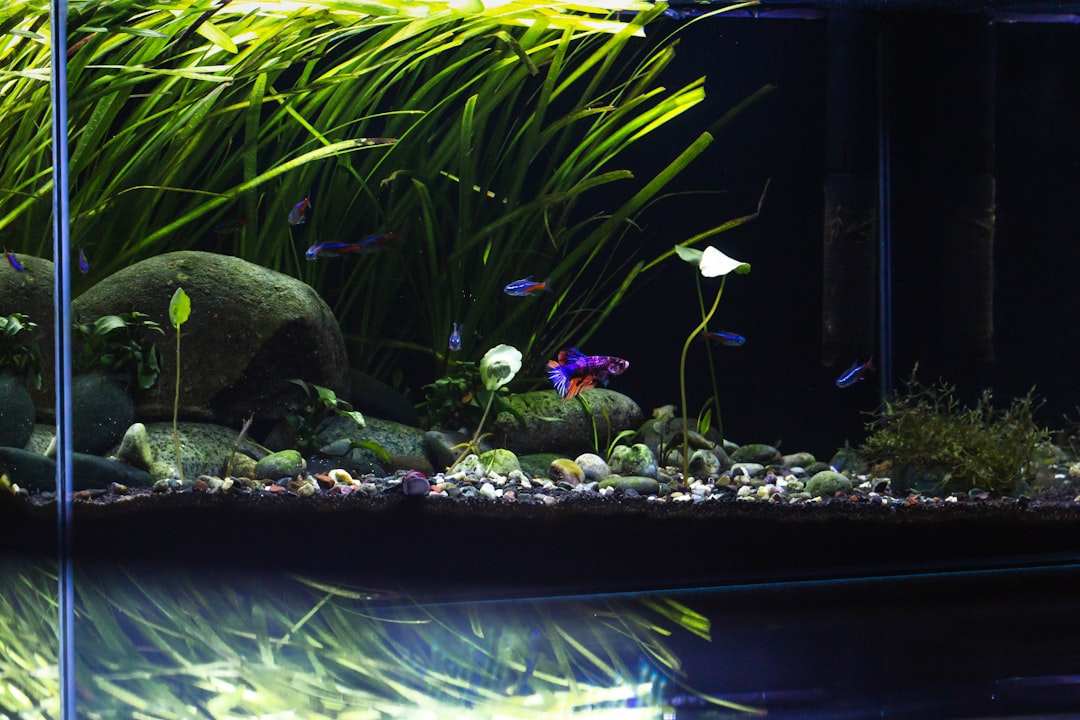
Few sights in aquascaping rival a perfectly uniform carpet of Eleocharis sp. ‘Mini’, its needle-fine blades barely reaching 3 cm, stretching across the tank floor like a manicured lawn. An aquascape using Eleocharis mini only demands more precision than a sagittaria meadow, but the payoff is a carpet so tight it looks almost artificial. This guide from Gensou Aquascaping at 5 Everton Park, Singapore covers everything you need to achieve and maintain that result.
What Makes Eleocharis Mini Special
Standard hairgrass (Eleocharis acicularis) can grow 10-15 cm tall and requires constant trimming to stay short. Eleocharis sp. ‘Mini’ is a naturally compact variety that tops out at 3-5 cm under good conditions. It spreads through runners just like its taller cousin but forms a denser mat because the internodal distance between runner plantlets is shorter. The visual effect is a velvet-textured ground cover that enhances the sense of scale in any layout, making stones and wood appear larger than they are.
Substrate Requirements
Eleocharis mini is a heavy root feeder. Fine-grained aquasoil like ADA Amazonia Powder Type or Tropica Aquarium Soil Powder is essential. The smaller granule size holds the tiny root systems firmly and prevents plantlets from floating up during the first few weeks. Layer the substrate 3-4 cm deep across the carpet zone. Coarser substrates leave air gaps around the delicate roots and slow establishment dramatically. If you are on a tighter budget, UP Aqua Soil or Mr Aqua soil available on Lazada for around $15-$20 per bag perform well enough.
The Dry Start Method Advantage
Eleocharis mini responds brilliantly to the dry start method (DSM). Plant into moist substrate, cover the tank with cling film, and mist daily for four to six weeks before flooding. Roots establish without the hassle of floating plantlets, and the carpet fills in more evenly than underwater planting allows. Singapore’s high ambient humidity (75-90 percent) makes DSM particularly effective here; you may barely need to mist if the wrap holds moisture well. Once you see dense lateral runner growth connecting all the initial plantlets, flood slowly over 24 hours.
Planting Density and Technique
Buy generously. For a 60 cm tank you want at least 8-10 tissue culture cups or 6-8 pots of emersed-grown Eleocharis mini. Divide each cup into portions roughly 1 cm square and plant them in a grid pattern spaced 2 cm apart. Use fine-tipped planting tweezers and push each portion about 1 cm into the substrate. Closer spacing means faster coverage but higher upfront cost. Wider spacing saves money but adds weeks to the fill-in timeline. For competition-style scapes, closer is always better.
CO2 and Lighting
CO2 injection is strongly recommended. Eleocharis mini can survive without it, but growth slows to a crawl and the carpet may never achieve the density you want. Aim for 20-30 ppm CO2, confirmed with a drop checker showing lime green. Lighting should be moderate to high, around 40-60 lumens per litre, on a 7-hour photoperiod. Increase to 8 hours only after the carpet is established and algae is under control. In the first month, shorter photoperiods help prevent the hair algae and diatoms that plague new setups.
Trimming for Maximum Density
Once the carpet reaches 3-4 cm, trim it down to about 1.5-2 cm with sharp, curved scissors. This sounds aggressive, but Eleocharis mini responds to mowing by sending out more runners laterally, thickening the carpet. Trim every three to four weeks during the establishment phase. Collect cut blades with a fine net or airline tubing siphon before they settle into the carpet and decay. After three or four trim cycles, the carpet becomes remarkably dense and grows more slowly, reducing maintenance frequency.
Common Problems and Solutions
Yellowing tips usually signal a nitrogen or iron deficiency at the roots. Push root tabs into the substrate every 8-10 weeks. Melting after flooding is normal for dry-started plants; new submersed growth replaces the emersed leaves within two weeks. Thread algae tangling in the carpet is the most frustrating issue; address it with stable CO2, moderate lighting, and manual removal with a toothbrush twirled gently through the affected patch. Amano shrimp (Caridina multidentata) are invaluable allies, grazing thread algae without uprooting the delicate hairgrass.
Hardscape Pairing and Fish Choices
A minimalist iwagumi layout of three to five seiryu stones emerging from a sea of Eleocharis mini is a timeless combination. The contrast between grey stone and bright green carpet is striking. Fish should be small and mid-water dwelling to avoid disturbing the carpet. A school of 20 green neon tetras or celestial pearl danios complements the scale perfectly. Bottom dwellers like kuhli loaches will burrow through the carpet and create bare patches, so avoid them. Gensou Aquascaping has built numerous Eleocharis mini iwagumi tanks for Singapore clients, and the simplicity of the design never goes out of style.
Related Reading

emilynakatani
Still Have Questions About Your Tank?
Drop by Gensou Aquascaping — most walk-in questions get answered in under 10 minutes by someone who has set up hundreds of tanks.
5 Everton Park #01-34B, Singapore 080005 · Open daily 11am – 8pm