Jungle Style Aquascape Guide: Wild, Dense and Low Maintenance
Not every aquascape needs manicured precision. The jungle style celebrates controlled chaos — layers of stems, floating roots, broad leaves overlapping, and fish darting through gaps in the canopy. A jungle style aquascape guide like this one helps you harness that wildness without letting the tank descend into neglected mess. Gensou Aquascaping Singapore at 5 Everton Park has built jungle scapes for clients who want lush beauty with less trimming, drawing on over 20 years of planted tank experience.
What Defines a Jungle Aquascape
Where nature style values restraint and open space, jungle style embraces density. Plants grow tall, overlap, and compete for light — just as they would in a tropical riverbank. Hardscape is present but often partially or fully hidden beneath foliage. The impression is one of abundance and age, as if the tank has been growing untouched for years.
Dutch aquascaping shares the “lots of plants” philosophy but arranges them in strict rows and colour blocks. Jungle style rejects that formality. Randomness — or the appearance of it — is the goal.
Choosing the Right Plants
Fast-growing stems form the backbone. Hygrophila polysperma, Limnophila sessiliflora, and Rotala rotundifolia fill vertical space quickly and tolerate a wide range of conditions. Broad-leaved species like Echinodorus bleheri (Amazon sword) and Nymphaea lotus (tiger lotus) add dramatic focal leaves that break up the stem monotony.
Epiphytes play a crucial role. Java fern, Bolbitis heudelotii, and Anubias attached to driftwood at mid-height create a layered canopy effect. Floating plants — Salvinia, Limnobium laevigatum (Amazon frogbit) — complete the overhead cover and dim the light naturally, reducing algae pressure below.
Layout Principles
Start by placing two or three pieces of driftwood at varying heights and angles. Branchy spider wood or gnarled bogwood mimics fallen tree limbs convincingly. Let some branches break the surface — emersed wood covered in moss looks exceptionally natural and thrives in Singapore’s humid air.
Plant in loose clusters rather than neat rows. Mix species within the same area so colours and leaf textures overlap. Tall stems at the back, medium rosettes and ferns in the midground, and low-growing Cryptocoryne or moss in the foreground provides depth without rigid structure. Leave one or two small clearings for fish to be visible; total coverage makes the tank feel like an overgrown hedge.
Lighting and CO2
Moderate light (50–80 PAR at substrate level) suits jungle scapes well. High light accelerates growth and demands constant trimming — the opposite of the low-maintenance ethos. A mid-range LED running 7–8 hours daily sustains robust growth without overwhelming you.
CO2 injection is beneficial but not essential. Many jungle plants — java fern, Anubias, Cryptocoryne, Hygrophila — grow perfectly well without pressurised CO2. Liquid carbon supplements provide a modest boost. If you do inject CO2, moderate bubble rates suffice; pushing growth faster just means more pruning.
Maintenance: Less Frequent, Not Absent
Jungle scapes need trimming roughly every two to three weeks rather than weekly. When stems reach the surface, cut them back by a third and replant tops if gaps appear. Thin floating plants weekly to maintain at least 40 % of the surface clear for gas exchange and light penetration.
Remove dead leaves promptly — decaying organic matter in a dense scape raises ammonia locally and encourages snail populations. A quick five-minute leaf patrol twice a week keeps things healthy. Water changes of 20–30 % weekly remain standard, same as any planted tank.
Fish That Suit Jungle Tanks
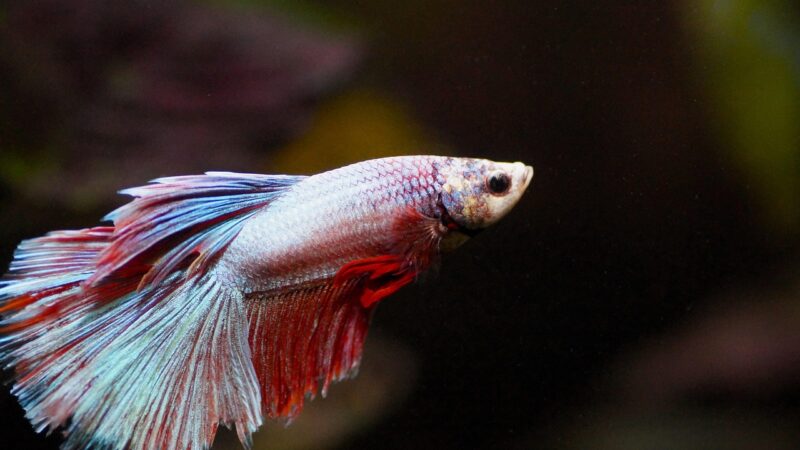
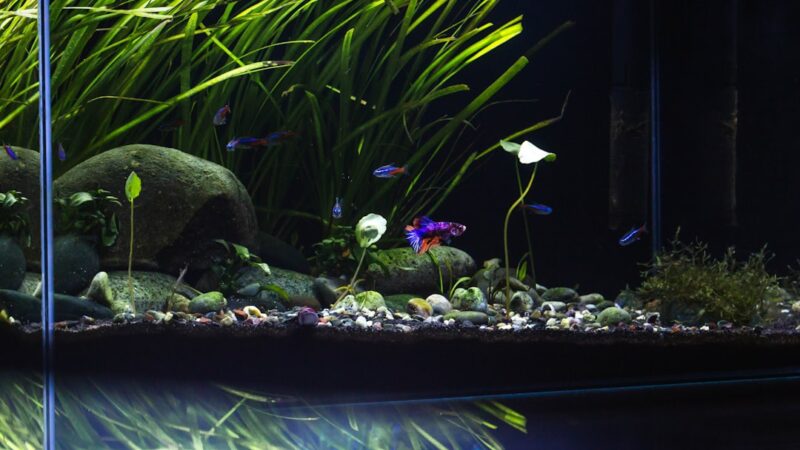
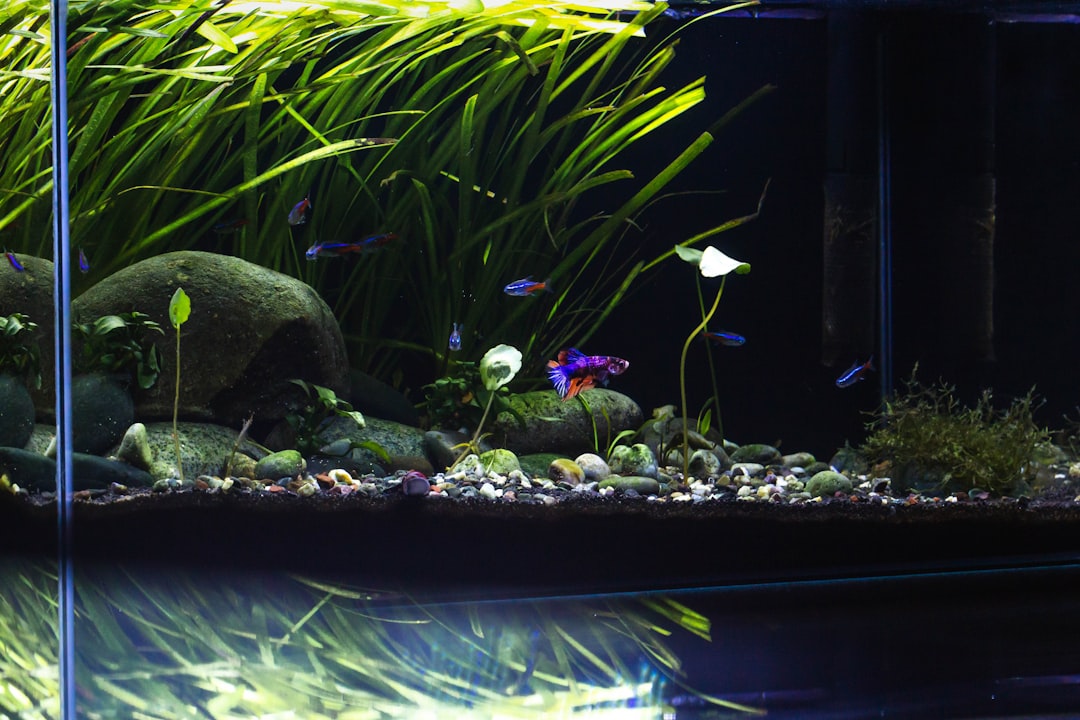
Dense planting invites schooling fish that appreciate cover. Cardinal tetras, harlequin rasboras, and ember tetras weave through the stems beautifully. Bottom dwellers like Corydoras habrosus forage through leaf litter on the substrate. Gouramis — pearl, honey, and wild-type bettas — use floating plants as bubble-nest anchors and look completely at home in a jungle environment.
Shrimp colonies thrive in jungle tanks because the dense planting offers endless grazing surfaces and hiding spots from fish. Neocaridina cherry shrimp and Amano shrimp (Caridina multidentata) both work well.
Why Jungle Style Works in Singapore
Singapore’s warm, humid climate means many jungle plants can grow emersed portions above the waterline with zero extra effort. High ambient temperatures keep tropical species happy without heaters, and the naturally soft PUB tap water suits most of the plants listed here. A jungle style aquascape is arguably the most forgiving planted tank approach for our climate — lush, dramatic, and refreshingly low-fuss once established.
Related Reading
- Nature Style Aquascape Step by Step: Amano-Inspired Simplicity
- Aquascaping With Sand and Rocks Only: No Aqua Soil Needed
- Walstad Method Guide: Dirt-Based Planted Tanks Made Simple
- How to Create a Forest Aquascape: Trees, Moss and Depth
- How to Aquascape a Planted 10-Gallon Betta Tank: Layout and Species