Aquascaping With Sand and Rocks Only: No Aqua Soil Needed
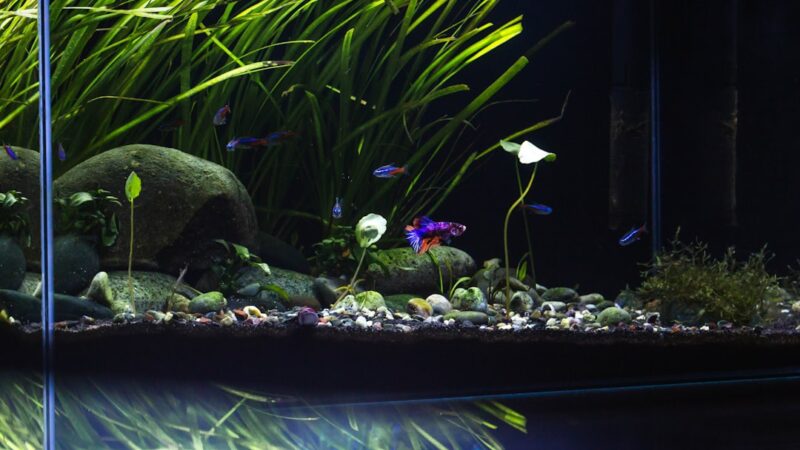
Aqua soil dominates the planted tank world, but it is not the only path to a beautiful aquascape. Building an aquascape with sand and rocks only — no nutrient-rich soil beneath — produces clean, mineral-themed layouts that are simpler to maintain and kinder to your budget. This guide from Gensou Aquascaping Singapore at 5 Everton Park, shaped by over 20 years of creating soil-free scapes, shows how to achieve lush results without a single bag of aqua soil.
Why Skip Aqua Soil
Aqua soil leaches ammonia for weeks, demanding aggressive water changes during cycling. It compacts and breaks down after 12–18 months, eventually needing replacement — a disruptive, messy process. Sand, by contrast, is inert: no ammonia spike, no expiry date, and no clouding when disturbed during maintenance. For fish that dig or sift — goldfish, corydoras, loaches — sand is also far safer than granular soil.
Cost is another factor. A 9-litre bag of premium aqua soil runs $30–$50 in Singapore, and a 120 cm tank may need three or four bags. Quality pool filter sand or river sand costs under $10 for a comparable volume.
Choosing Your Sand
Pool filter sand in natural beige is the go-to: uniform grain size (0.5–1 mm), inert, and affordable. ADA La Plata sand and JBL Sansibar offer finer grains and whiter tones at a premium. Black sand (iron-based or cosmetic) creates dramatic contrast with pale rocks.
Rinse any sand thoroughly before use — fill a bucket, stir vigorously, pour off the cloudy water, and repeat until the water runs clear. Unrinsed sand clouds the tank for days and clogs filter impellers.
Rock Selection and Layout
Seiryu stone, Ohko (dragon stone), and mountain stone are popular for soil-free scapes. Since there is no dark soil to contrast against, the rocks become the primary visual element. Arrange them using the Iwagumi principle — one dominant stone, one or two secondary stones, and smaller accent pieces — or build a more complex rocky hillside for depth.
Bury the base of each rock 1–2 cm into the sand for stability and a natural, rooted appearance. Silicone larger rocks to a glass base plate if they are top-heavy; a toppled rock can crack the tank glass. Test the arrangement dry first, photograph from your viewing angle, and adjust before adding water.
Plants That Thrive Without Soil
Epiphytic plants are your best allies. Anubias varieties, java fern (Microsorum pteropus), and Bucephalandra species all attach to rocks via their rhizomes — they draw nutrients from the water column, not the substrate. Glue them with cyanoacrylate gel or tie with cotton thread that dissolves as the roots grip.
Mosses — java moss, Christmas moss, Taxiphyllum ‘Flame’ — spread beautifully over rock surfaces, softening hard edges and adding an aged look within weeks. For foreground coverage, Marsilea hirsuta and Lilaeopsis brasiliensis root in sand acceptably when supplemented with root tabs pushed into the sand every 10–15 cm.
Fertilisation Strategy
Without soil releasing nutrients, the water column and root tabs carry the entire fertilisation load. Dose a comprehensive liquid fertiliser (Tropica Premium, APT Complete, or similar) two to three times per week. Push root tabs near heavy feeders like Cryptocoryne or Echinodorus every two to three months.
Lean dosing suits sand-and-rock scapes because the plant mass is typically lower than a soil-based jungle. Start at half the recommended dose and increase only if you see deficiency symptoms — yellowing leaves, stunted growth, or pinholes in older foliage.
CO2: Needed or Not
Many epiphytes and mosses grow well without pressurised CO2. If your plant list stays within Anubias, java fern, Bucephalandra, and mosses, liquid carbon (Seachem Excel, APT Fix) is sufficient. Adding demanding species like Rotala or carpeting plants shifts the equation — those will struggle in sand without both CO2 and strong light.
A soil-free scape with no CO2, moderate light, and hardy epiphytes is one of the lowest-maintenance planted setups possible — ideal for busy hobbyists or office desks.
Maintenance Advantages
Sand is easy to vacuum — detritus sits on the surface rather than sinking into porous soil granules. A quick pass with a gravel vacuum during weekly water changes keeps the substrate spotless. Rocks accumulate algae over time; a soft brush or brief hydrogen peroxide spot-treatment handles stubborn patches without disturbing the layout.
An aquascape using sand and rocks with no soil proves that simplicity and beauty are not mutually exclusive. Strip away the complexity, choose plants that suit the method, and you get a tank that looks polished, stays stable, and demands less of your time — a winning combination for hobbyists at any level.
Related Reading
- Nature Style Aquascape Step by Step: Amano-Inspired Simplicity
- Dragon Stone Aquascaping Guide: Texture, Placement and Layouts
- How to Attach Plants to Driftwood and Rock: Glue, Thread and Mesh
- Jungle Style Aquascape Guide: Wild, Dense and Low Maintenance
- Best Aquarium Cleaning Kits: Essential Tools in One Set
A sand-and-rock scape leans heavily on its stones, so it’s worth knowing how to test whether aquarium rocks are safe before they go into a soil-free setup.