
Best CO2 Drop Checkers for Planted Aquariums: Accuracy Guide
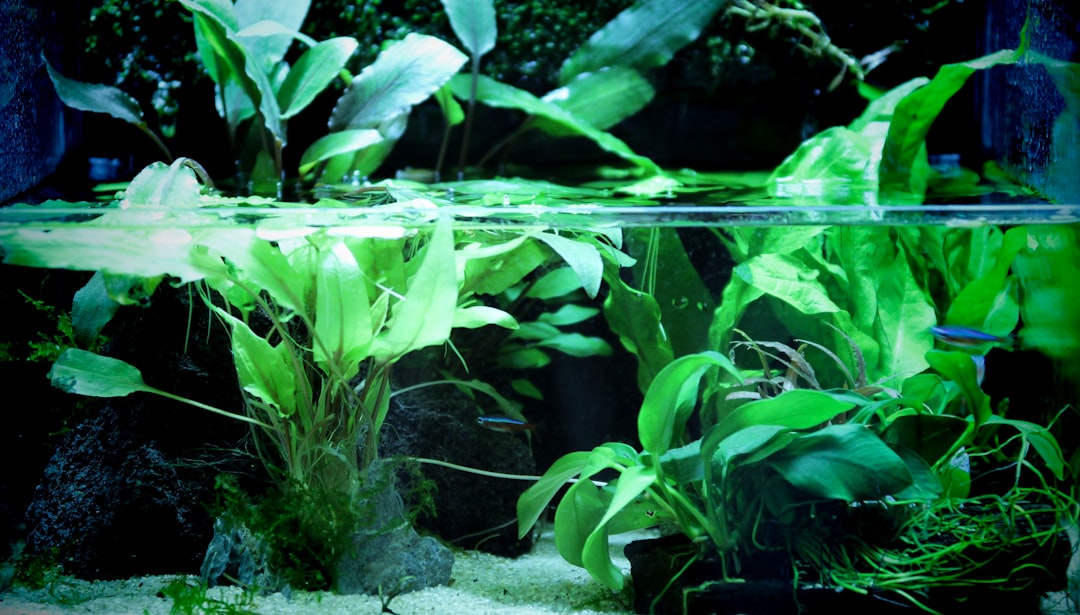
Injecting CO2 into a planted aquarium without monitoring concentration is like driving without a speedometer — you might be fine, or you might gas your fish. A drop checker is the simplest, most reliable way to gauge dissolved CO2 levels at a glance. This guide to the best CO2 drop checkers for planted aquariums from Gensou Aquascaping Singapore — with over 20 years of hands-on experience at 5 Everton Park — explains how they work, what to buy, and how to read them accurately.
How a CO2 Drop Checker Works
A drop checker is a small glass or acrylic device that hangs inside your tank, filled with a pH reagent solution (typically 4 dKH reference water mixed with bromothymol blue indicator). CO2 from the tank water diffuses into the air gap above the reagent, dissolving into the solution and shifting its pH. The colour changes accordingly: blue means too little CO2, green means ideal (roughly 30 ppm), and yellow means dangerously high.
The reaction is not instant. Drop checkers reflect CO2 levels from roughly one to two hours earlier, creating a lag. This is why you should never adjust your CO2 rate based on a single reading — watch the trend over a full light cycle.
Choosing the Right Drop Checker
Glass drop checkers with suction-cup mounts ($5–$15 on Shopee) are the most popular option. ADA, Cal Aqua Labs, and CO2Art produce premium models with elegant profiles that blend into an aquascape. Budget alternatives from no-name brands work identically — the physics is the same regardless of branding.
Avoid drop checkers with built-in permanent solution that cannot be replaced. The reagent degrades over four to six weeks and needs refreshing. Models that allow you to pipette in fresh solution save money long term and maintain accuracy.
4 dKH Reference Solution: The Key to Accuracy
Using tank water inside the drop checker instead of 4 dKH reference solution is the most common mistake. Tank water contains buffers, tannins, and dissolved organics that skew the pH reading, making the colour unreliable. Always use dedicated 4 dKH water — you can buy pre-made bottles ($5–$8) or make your own by dissolving baking soda in distilled water to achieve exactly 4 dKH.
Add three to four drops of bromothymol blue indicator per fill. The combined solution should start blue when no CO2 is present. Replace the solution every three to four weeks for consistent readings.
Where to Place the Drop Checker
Mount the drop checker on the opposite side of the tank from your CO2 diffuser. This ensures you are measuring the CO2 level at the point furthest from the source — the weakest reading in the system. If that spot shows green, you can be confident the entire tank has adequate coverage.
Position it at mid-height in the water column, away from filter outlets that could create localised high-CO2 pockets. Avoid placing it directly behind dense plant growth where circulation may be restricted.
Reading the Colours Correctly
Ideally, your drop checker transitions from blue (lights off, CO2 off overnight) to green (one to two hours after CO2 and lights come on) and holds green throughout the photoperiod. If it reaches yellow, your fish are at risk — reduce the bubble count immediately.
Lighting colour temperature affects how you perceive the reagent colour. Check the drop checker under neutral white light (a phone torch works) rather than under blue-shifted aquarium LEDs, which can make green look more blue than it actually is.
Top Drop Checker Picks for Singapore
- Budget: Generic glass drop checker with suction cup ($5–$8 on Shopee) — functional, widely available, easy to refill
- Mid-range: CO2Art drop checker ($15–$20) — well-made glass, includes 4 dKH solution and indicator
- Premium: ADA Drop Checker ($35–$50) — iconic design, crystal-clear glass, fits high-end aquascapes
- Inline option: CO2Art inline diffuser with built-in checker ($30–$40) — combines diffusion and monitoring in one unit
Complementing the Drop Checker With Other Tests
A drop checker provides a visual approximation, not a laboratory-precise measurement. Pair it with a pH meter or test kit for cross-referencing. Measuring pH at the start and end of CO2 injection (a drop of 1.0 pH unit typically correlates with 30 ppm CO2) gives a useful secondary confirmation.
Investing in the best CO2 drop checker for your planted aquarium protects both your plants and your fish. At Gensou Aquascaping, every planted display we build includes a properly calibrated drop checker — it is a small tool that prevents big problems.
Related Reading
- Best TDS and pH Test Combos for Aquariums: All-in-One Meters
- Iwagumi Style Aquascape Step by Step: Stone, Sand and Simplicity
- Best Aquarium Substrate for Shrimp: Active Soil vs Inert Sand
- Best Aquarium Algae Magnet Cleaners: Glass and Acrylic Safe
- Best Aquarium Gift Ideas for Fishkeepers: Useful and Thoughtful



