Saltwater Aquarium Heater Guide: Titanium and Dual Safety
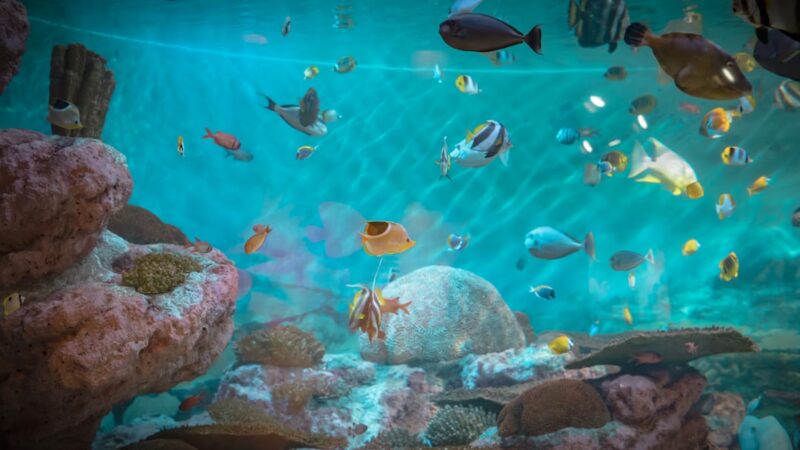
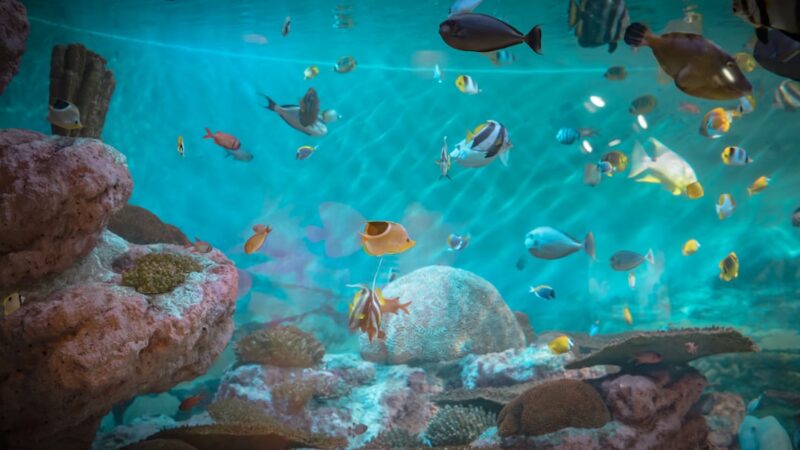
Marine and reef tanks in Singapore reverse the usual heater question — most need chillers to drop temperature against a 28-30°C ambient, but a heater is still essential to buffer against aircon overnight and to ride out the odd cool December week. This saltwater aquarium heater guide covers why titanium is the only sensible material for salt, how to wire two heaters in redundant mode, and which brands survive the corrosive environment year after year. At Gensou Aquascaping, 5 Everton Park, every marine system we commission runs dual titanium heaters with an external controller as the minimum standard.
Why Titanium, Not Glass
Saltwater attacks glass heater seals over 18-24 months, eventually leaking current into the tank or flooding water into the element. Titanium is functionally inert in marine water and survives decades if mechanically intact. For any tank with salt — reef, fish-only with live rock, or coldwater marine — titanium is the only material we will install. The SGD 80-120 premium over glass is trivial insurance against a short that kills livestock.
Heater Wattage for Reef Tanks
A 200 L reef in a 22°C aircon living room holding 25°C target needs perhaps 150-200 W; in a 28°C non-aircon room it may need zero watts most days but 100 W during a cool monsoon week. Dual 150 W or dual 200 W heaters give redundancy — if one sticks off, the other maintains temperature; if one sticks on, the external controller cuts both. Total installed wattage should match the tank, split across two units.
Finnex HMA Titanium
Finnex HMA titanium heaters with external digital controllers are our benchmark pick at SGD 165-245 for 300-800 W models. The controller probe reads tank temperature accurately while the element sits in-sump or in a discreet display corner. The probe-based setup avoids the common complaint of in-element thermostats reading micro-environment rather than true tank temperature.
Weipro Titanium Budget
Weipro Chinese-made titanium units at SGD 55-110 are popular on Shopee. Titanium element quality is decent; the bundled plastic controller is the weak link — probe calibration varies 1-1.5°C between batches. Acceptable for fish-only salt setups if you verify with a reference thermometer and adjust setpoint offset. Not what we would install on a reef tank with SGD 3000+ of corals.
Eheim Thermocontrol-e Marine
Eheim’s Thermocontrol-e electronic titanium (SGD 195-280) combines a German-engineered digital thermostat with a titanium element. Thermostat accuracy within 0.5°C and dry-fire protection are standard. Runs 150-400 W. Excellent standalone unit if you prefer built-in thermostat over external controller architecture; we still add an Inkbird as backup on any reef.
Dual Heater Redundancy Wiring
Install two heaters each rated for roughly 60-70% of total required wattage. In normal operation both run at lower duty cycle — if one fails closed (stuck on), the Inkbird controller set 1°C above target cuts both. If one fails open (stuck off), the surviving unit maintains temperature until you notice. Never rely on a single heater for any tank over 150 L.
Inkbird External Controller Setup
An Inkbird ITC-308 or the twin-relay ITC-310T (SGD 55-85) plugs between wall outlet and both heaters. Set controller target 0.5°C above desired tank temp so heater internal thermostats do the primary regulation; the Inkbird acts only as a runaway cut-off at target + 1°C. Probe sits at opposite end of tank from the heaters for representative reading, not in the heater’s thermal plume.
Sump Installation
Sump-mounted heaters keep the display tank free of visible equipment and simplify maintenance access. Place in the return pump section where flow is constant; avoid the refugium section where flow is low and thermal layering can fool the thermostat. Use titanium mounting clips or magnetic holders rather than suction cups — suction fails in salt water faster than freshwater.
Heater Plus Chiller Logic
Most Singapore marine tanks run a chiller as the primary temperature controller with heaters as the secondary low-side regulator. Set chiller to cool to 25.5°C, heater target to 25.0°C with 0.3°C dead band. The chiller runs often during the day, heaters run occasionally at night when aircon drops ambient. Both connected to separate temperature controllers for full safety.
Lightning Safety and GFCI
Saltwater conducts electricity far better than freshwater; a cracked heater creates real shock hazard during maintenance. Install a RCD/RCBO on the aquarium circuit — HDB new builds already have this per SS 638 regs, older units may need a plug-in RCD unit at SGD 35-50. Test the RCD monthly with its test button. Never service a salt system without first unplugging all electrical.
Replacement Schedule
Replace titanium heaters every 5-6 years regardless of apparent condition. Internal thermostat contacts degrade with cycling even when the titanium shell is pristine. Replace external controller probes every 3 years — salt mist on the cable entry corrodes internal sensor contacts. Keep one spare heater boxed ready; a failure mid-cycle should not mean a livestock emergency.
Related Reading

emilynakatani
Still Have Questions About Your Tank?
Drop by Gensou Aquascaping — most walk-in questions get answered in under 10 minutes by someone who has set up hundreds of tanks.
5 Everton Park #01-34B, Singapore 080005 · Open daily 11am – 8pm