
How to Aquascape a Discus Show Tank: Open Swimming and Tall Plants

Discus are living art, and their tank should frame them like a gallery wall. A proper aquascape for a discus show tank balances open swimming space with planted structure, allowing these disc-shaped cichlids to glide and display their colours without obstruction. At Gensou Aquascaping in Singapore, we have designed discus display tanks for homes and commercial spaces, and the key principle is always the same: the fish are the centrepiece, not the plants. This guide shows you how to achieve that balance.
Tank Size and Dimensions
Discus need volume. A minimum of 200 litres is recommended for a group of 5-6 adults, but 300-400 litres gives far better results. Tall tanks of 50-60 cm height suit discus well, as these fish are vertically compressed and use the full water column. A 120 cm x 45 cm x 50 cm tank is an excellent starting point. In Singapore, custom glass tanks from local fabricators cost $200-$450 SGD for these dimensions, a worthwhile investment for a species that can live 10-15 years.
Designing Around Open Space
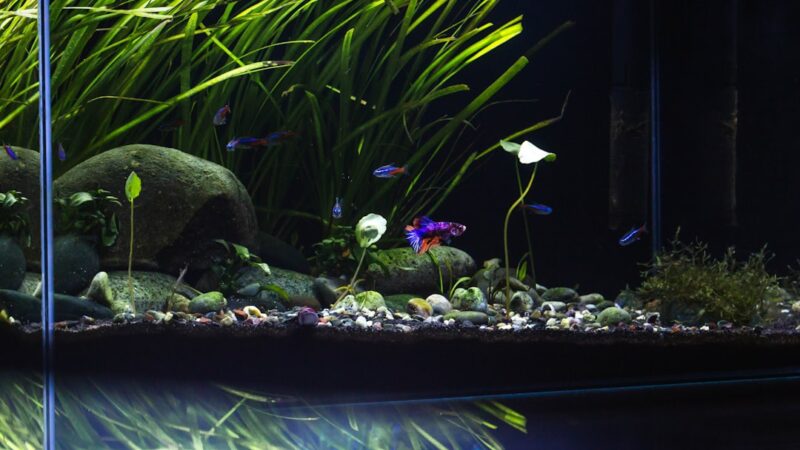
Reserve at least 50-60 percent of the tank footprint as open swimming area. Discus are social fish that form hierarchies and display to one another. Cramped layouts stress them and suppress natural behaviour. Concentrate hardscape and planting along the back wall and sides, leaving a generous central corridor. Think of it as a stage: the backdrop supports the performance, but the performers need room to move.
Background Planting for Height
Tall stem plants and large-leaved species create a lush backdrop behind the open zone. Echinodorus bleheri (Amazon sword) is the classic discus companion, thriving in warm water and reaching 40-50 cm tall. Vallisneria gigantea sends ribbon leaves to the surface, adding movement as they sway in the current. Hygrophila corymbosa fills background space quickly with broad green leaves. Plant densely at the rear and allow some stems to grow slightly into the midground for a natural, unmanicured look.
Hardscape That Complements Discus
Vertical driftwood pieces mimic tree roots descending into Amazonian waters, the natural habitat of wild discus. Malaysian driftwood and Manzanita branches positioned at angles create a dramatic frame. Avoid sharp rocks or dense stone arrangements that restrict swimming paths. If you use stone, keep it minimal: one or two pieces partially buried in substrate at the base of the wood. The warm brown tones of driftwood complement the reds, blues, and oranges of discus beautifully.
Substrate and Water Parameters
Discus prefer warm, soft, slightly acidic water: 28-32 degrees C, pH 5.5-7.0, GH 2-8. Singapore’s soft tap water is naturally well-suited once dechlorinated. Fine sand substrate looks clean and allows discus to forage naturally. Avoid sharp gravel that might injure their delicate fins. ADA La Plata sand or pool filter sand at $8-$15 SGD per bag provides a pale, uniform base that contrasts nicely with colourful fish. Nutrient-rich soil beneath the sand in planted zones feeds root-feeding plants.
Temperature and Plant Compatibility
Discus tanks run warm, typically 29-31 degrees C, which limits your plant palette. Many popular aquascaping plants prefer 22-26 degrees C and struggle in discus-temperature water. Stick with proven heat-tolerant species: Echinodorus, Vallisneria, Anubias, Java fern (Microsorum pteropus), and Cryptocoryne species all handle the warmth. Demanding carpeting plants and delicate stems like Rotala tend to melt or grow leggy at 30 degrees C. In Singapore’s climate, ambient heat already pushes tanks warm, so no heater is usually required.
Filtration and Flow
Discus produce significant waste relative to their size, so robust filtration is essential. A canister filter rated for 1.5-2 times the tank volume handles the bioload effectively. Direct the outlet along the back glass to create gentle circulation without strong currents across the open swimming area. Discus dislike turbulent water. Supplement with a sponge pre-filter on the canister intake to protect fry if breeding occurs, which it often does in well-maintained tanks.
Bringing the Show Tank Together
Light the tank with a warm-tone LED that enhances red and orange pigments in discus colouration. A black background intensifies the visual impact, making both fish and plants glow against the dark field. Feed a varied diet of quality pellets, frozen bloodworm, and beefheart paste for intense colour development. With clean water, warm temperatures, and an aquascape that prioritises open space, your discus show tank becomes a living centrepiece that draws every visitor’s eye.
Related Reading