Aquascaping for Restaurants and Cafes: Ambiance That Draws Customers
A beautifully aquascaped tank in a restaurant or cafe creates an unforgettable first impression and keeps customers lingering longer. This aquascape restaurants cafes guide covers everything hospitality business owners need to know about adding a living aquascape to their establishment, from design and placement to ongoing maintenance costs. At Gensou Aquascaping at 5 Everton Park, we have designed and installed aquascapes for commercial venues across Singapore and understand the unique demands of the hospitality environment.
Why Aquascaping Works in Hospitality Spaces
Research consistently shows that watching fish and underwater scenes reduces stress and creates a calming atmosphere. For restaurants and cafes, this translates to customers who relax, stay longer and order more. An aquascape also serves as a distinctive design feature that sets your venue apart from competitors. In Singapore’s food and beverage scene, where visual appeal drives social media sharing, a stunning aquarium becomes free marketing every time a customer posts a photo on Instagram or TikTok.
Choosing the Right Tank Size and Style
For commercial spaces, bigger generally works better. A tank of 120 to 180 centimetres in length creates a statement piece visible from across the room. Wall-mounted or built-in tanks save floor space and create a seamless architectural feature. Freestanding tanks on custom cabinetry work well as room dividers between dining zones. For smaller cafes, a well-designed 60 to 90-centimetre tank on the counter or a shelf near the entrance still makes a strong impression. Tank and equipment costs for commercial setups in Singapore typically range from $1,500 to $8,000 SGD depending on size and complexity.
Design Considerations for Commercial Environments
Commercial aquascapes must look good from multiple viewing angles and distances. Avoid layouts that only read well from directly in front. Island and convex compositions work well because they offer visual interest from both sides. Choose bold, high-contrast designs with strong focal points that read clearly even from across a busy dining room. Delicate, subtle layouts that reward close inspection are wonderful for home aquariums but may go unnoticed in a restaurant setting where diners are seated several metres away.
Low-Maintenance Plant and Fish Choices
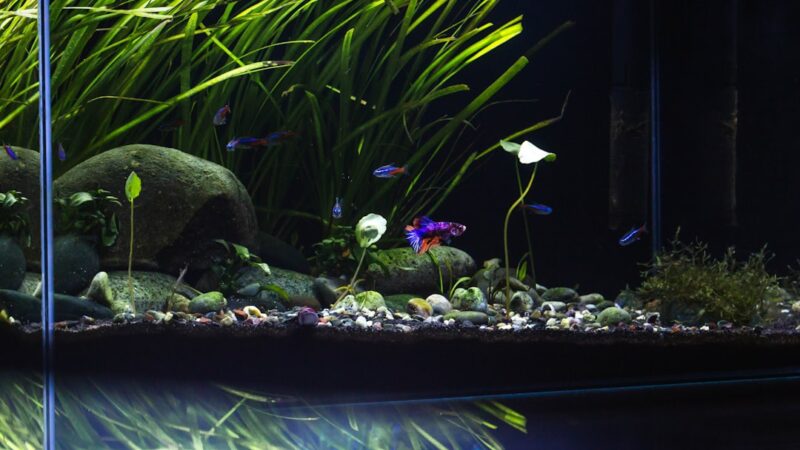
Commercial aquascapes must be robust and forgiving. Choose hardy plants that tolerate variable conditions: Anubias, Java fern, Bucephalandra and mosses are virtually indestructible and look lush without CO2 injection or intense lighting. For fish, select colourful, active species that are easy to care for. Cardinal tetras, rummy-nose tetras and cherry barbs add movement and colour. Avoid delicate species that require precise water parameters or frequent attention. A well-chosen stocking list keeps the tank looking vibrant with minimal daily input from staff.
Placement and Safety Requirements
Position the tank where it is visible to diners but safe from foot traffic, service routes and kitchen heat. Ensure the stand can support the full weight of the filled tank, which for a 150-centimetre setup exceeds 300 kilograms. Electrical connections must comply with Singapore’s wiring regulations, with waterproof sockets and proper earthing. All cables should be concealed and secured to prevent tripping hazards. If children will be present, ensure the tank is at a height where small hands cannot reach the water surface.
Maintenance Schedules and Costs
A commercial aquascape requires weekly maintenance including water changes, glass cleaning, plant trimming and equipment checks. Most restaurant owners prefer to outsource this to a professional aquarium maintenance service rather than tasking staff who have other responsibilities. Professional weekly maintenance in Singapore typically costs between $150 and $400 SGD per month, depending on tank size and complexity. This investment ensures the tank always looks its best and any problems are caught early before they become visible to customers.
Dealing With Common Commercial Challenges
Restaurants and cafes present environmental challenges that home aquariums do not face. Kitchen grease and cooking aerosols can settle on the water surface if the tank is near the food preparation area. Air conditioning cycling on and off causes temperature fluctuations. Vibration from music systems and heavy foot traffic can stress sensitive fish. A glass lid reduces airborne contamination, a reliable heater with thermostat maintains temperature stability and choosing robust fish species handles the rest. Discuss these factors with your aquascaping professional during the planning phase.
Getting Started With a Commercial Aquascape
Begin by defining your budget, preferred tank location and the aesthetic you want to achieve. Visit other restaurants and cafes with aquariums to see what works and what does not. Then consult a professional aquascaping service that has commercial experience. At Gensou Aquascaping, we offer end-to-end services for hospitality clients in Singapore, from initial consultation and custom tank design to installation, stocking and ongoing weekly maintenance. A professionally managed aquascape becomes a feature that elevates your venue’s atmosphere, delights your customers and requires nothing from you beyond enjoying it.
Related Reading