Aquascaping With Helanthium Only: Dwarf Chain Sword Meadow

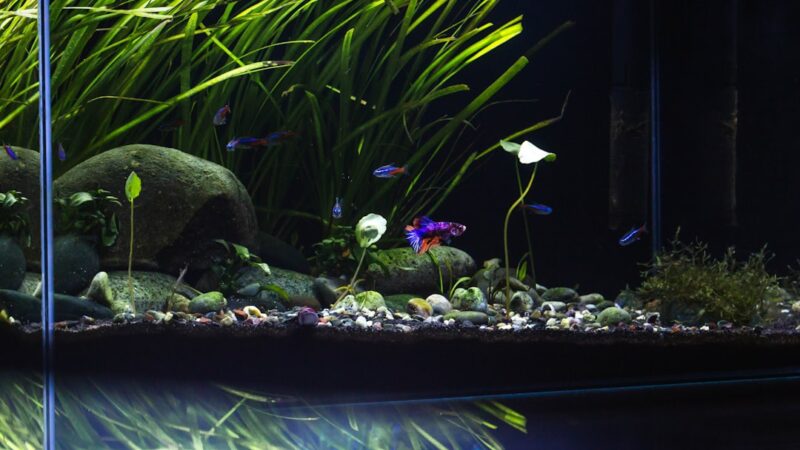
There is a quiet confidence to an aquascape that commits entirely to a single genus. A dense, healthy meadow of Helanthium — the dwarf chain sword and its relatives — carpeting a tank from edge to edge creates a visual cohesion that eclectic planted tanks rarely achieve. The Helanthium-only aquascape is approachable even for intermediate keepers, since these plants tolerate a range of light levels and will grow without CO2 injection, albeit more slowly. Gensou Aquascaping at 5 Everton Park, Singapore has guided many planted tank enthusiasts through mono-genus builds, and this guide covers everything from layout to long-term maintenance.
Understanding the Helanthium Genus
Helanthium (formerly classified under Echinodorus) includes several small, grass-like aquatic plants. Helanthium tenellum (pygmy chain sword) reaches just 5–8 cm and spreads aggressively through runners, making it a true carpeting foreground plant. Helanthium bolivianum grows slightly taller at 10–15 cm and is better suited to midground use. Helanthium quadricostatus falls between the two. Using all three species creates a natural height gradient — low foreground blending into slightly taller background growth — within a single genus aesthetic.
Substrate Requirements
Helanthium species are root-feeding plants that rely on substrate nutrition more than water column dosing. A nutrient-rich capping substrate — aquasoil brands like ADA Amazonia, Tropica Soil, or locally available alternatives — provides the iron and micronutrients these plants prefer. Cap with a fine sand layer (0.5–1 cm) if you prefer the look of pale substrate, or use the aquasoil directly for faster initial growth.
Substrate depth matters: Helanthium tenellum has very fine, delicate roots that penetrate a shallow substrate easily, but deeper aquasoil (5–7 cm) allows for a more established root mass over time, which supports denser, more vigorous runner production. In Singapore’s warm water, root metabolism is fast — nutrient-rich substrate becomes depleted sooner than in cooler European tanks, so root fertiliser tabs from month six onward keep growth healthy.
Layout Principles for a Meadow Effect
Begin by planting foreground sections with H. tenellum in a grid pattern — individual stems spaced 3–4 cm apart. Fill midground areas with H. bolivianum, and use any taller specimens toward the rear. Within 6–8 weeks under moderate light, runners will fill gaps and the carpet will self-connect without further intervention.
Hardscape in a helanthium scape should be minimal and subordinate — a single large stone or a branching piece of driftwood placed off-centre works well. The plant mass is the hero; hardscape serves as an anchor point rather than a focal element. A tank in the 60–90 cm range suits this style best — enough volume to display the meadow at scale without excessive maintenance time.
Lighting Requirements
These plants are among the more forgiving foreground species in terms of light. Under low to medium intensity (15–25 µmol/m²/s PAR at the substrate), Helanthium tenellum will grow slowly but steadily without CO2 supplementation. Under high-intensity lighting with CO2, growth is significantly faster and the carpet fills in within 3–4 weeks rather than 8–10.
Low light causes the plants to stretch and become lanky rather than forming a tight rosette. If plants are reaching upward rather than spreading laterally, increase light intensity rather than photoperiod. Aim for a 7–8 hour photoperiod with consistent intensity; irregular lighting encourages algae without improving plant growth.
CO2 and Fertilisation
Without CO2, keep macronutrient dosing lean — weekly half-doses of a comprehensive liquid fertiliser and root tabs every 2–3 months. With CO2 injection (target 20–30 ppm CO2, pH drop of 1 unit as a guide), you can increase fertiliser frequency and watch growth accelerate noticeably. The plants respond to CO2 with broader leaves and faster runner production, which is particularly visible in H. tenellum.
Iron deficiency shows as yellowing of new leaves. Dose with a chelated iron supplement like Seachem Flourish Iron at half-recommended dose, monitor for 2 weeks, and adjust. Singapore’s soft tap water is naturally low in iron, so supplementation is usually necessary in non-aquasoil setups.
Managing Runners and Maintaining the Carpet
Runner management is the primary ongoing task. Helanthium spreads prolifically once established — in a 60 cm tank, a single H. tenellum specimen can produce 20+ daughter plants in a season. Trim runners that cross into unintended zones with scissors, leaving the daughter plant in place if you want it to root, or removing entirely to keep edges clean. Runners growing over driftwood or rockwork can be gently redirected with planting weights or small stones.
Trim the tops of taller plants periodically to maintain height differentiation. Without occasional trimming, H. bolivianum can reach 20 cm and shade foreground sections.
Why Mono-Genus Scapes Work
Restraint is one of the hardest disciplines in aquascaping. A single-genus tank forces you to find beauty in texture, density, and negative space rather than species contrast. The result is an aquascape with visual clarity — the kind that reads cleanly across the room and improves rather than complicates as it matures. For Singapore hobbyists working with limited space, a 45–60 cm helanthium meadow on a desk or shelf is one of the most satisfying low-maintenance planted tanks you can build.
Related Reading