Aquascaping With Ludwigia Only: Red, Green and Everything Between
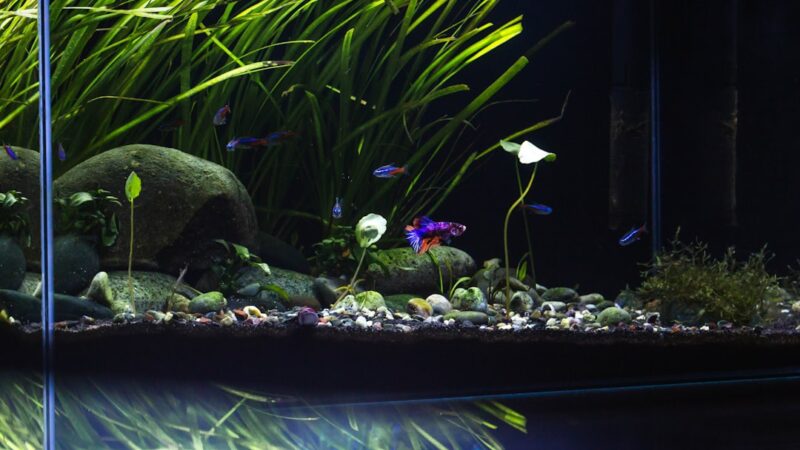
Most planted tanks mix genera freely, but there is something striking about a tank devoted to a single genus pushed to its full potential. An aquascape with Ludwigia only delivers a colour palette that ranges from lime green through burnt orange to deep crimson, all from plants that share similar care requirements. Gensou Aquascaping in Singapore has built several Ludwigia-dominant displays, and the visual impact of a well-grown mono-genus scape consistently surprises clients who assumed variety required dozens of different species.
Why Ludwigia Works as a Solo Genus
Ludwigia is one of the most diverse stem plant genera available to aquarists, with species varying dramatically in leaf shape, size, and colour. From the broad, round leaves of Ludwigia repens to the needle-fine foliage of Ludwigia arcuata, you can create visual contrast without leaving the genus. Colour depends heavily on light intensity and nutrient balance, meaning the same species can look different at the front versus the back of the tank. This built-in variability is what makes a Ludwigia-only layout work.
Choosing Your Ludwigia Species
Start with three to five species for sufficient contrast. Ludwigia repens ‘Rubin’ provides reliable deep-red mid-ground bulk. Ludwigia palustris ‘Super Red’ intensifies to almost maroon under high light. For green contrast, Ludwigia brevipes stays olive to light green under moderate light, shifting orange only at the tips under strong illumination. Ludwigia arcuata adds fine, wispy texture at the top of the canopy. For a showpiece, Ludwigia senegalensis produces stunning red and pink tones but demands high light, CO2, and iron dosing to perform. Avoid Ludwigia inclinata ‘Cuba’ unless you are confident in high-tech maintenance, as it melts easily.
Layout and Planting Strategy
Treat the different species as you would distinct plant families in a traditional scape. Place taller, fast-growing species like L. arcuata and L. brevipes at the rear. Mid-ground blocks of L. repens ‘Rubin’ or L. palustris create volume and rich colour in the focal zone. Leave the foreground open with a carpeting substrate or low hardscape. Plant each species in tight clusters of at least 8-10 stems to create defined colour blocks rather than scattering individual stems randomly. Defined blocks produce a much more dramatic effect.
Lighting for Maximum Colour
Ludwigia’s red pigmentation is a direct response to intense light. Under weak lighting, even red varieties stay greenish-brown. Aim for at least 60-80 PAR at substrate level, with 100+ PAR for the most demanding species. An 8-hour photoperiod is a good starting point; extend to 9-10 hours only if algae remains under control. In Singapore, most hobbyists run Chihiros or Twinstar LED units in the 30-60 watt range for 60-90 cm tanks, which comfortably delivers the intensity Ludwigia needs.
CO2 and Nutrient Demands
Pressurised CO2 at 25-30 ppm is essential for a dense Ludwigia scape. Without it, growth slows, colours fade, and lower leaves drop prematurely. Iron is the key micronutrient for red colouration; dose a chelated iron supplement two to three times per week, aiming for 0.1-0.2 ppm. Nitrogen and phosphorus should be maintained via Estimative Index or PPS-Pro dosing to prevent deficiency-driven leaf loss. Potassium at 10-20 ppm supports overall stem rigidity. Weekly 50 percent water changes keep nutrient levels from drifting.
Trimming and Maintenance
Stem plants grow relentlessly, and an all-Ludwigia tank needs trimming every 7-14 days. Cut stems to roughly two-thirds of their height and replant the healthy tops if the lower portions look leggy. Discard the bottom sections if they have lost leaves, as bare stems rarely recover attractively. Stagger your trimming across species: trim the background one week and the midground the next, so the tank never looks uniformly scalped. Remove any yellowing leaves promptly to prevent decay.
Common Issues in a Ludwigia-Only Tank
Green spot algae on older leaves signals low phosphate. Increase PO4 dosing and remove affected leaves. Pale new growth with green veins indicates iron deficiency; bump up your iron dose. Melting lower stems usually mean insufficient light penetration through the canopy above; thin out the top growth to let light reach the base. Because all your plants share similar vulnerabilities, a single nutrient imbalance affects the entire tank at once. Monitoring and consistent dosing are non-negotiable.
Achieving the Colour Gradient Effect
The ultimate goal of an aquascape with Ludwigia only is a seamless gradient from green at the edges to intense red at the focal point. Position your reddest species directly under the brightest zone of your light fixture and let the naturally greener species occupy the periphery. As the canopy grows in, the overlapping colours blend at the boundaries, creating a painterly transition that looks intentional rather than random. Few planted tanks achieve this kind of cohesive colour story, and that is precisely why the Ludwigia-only approach stands out.
Related Reading