Aquascaping With Myriophyllum Only: Parrot Feather Walls
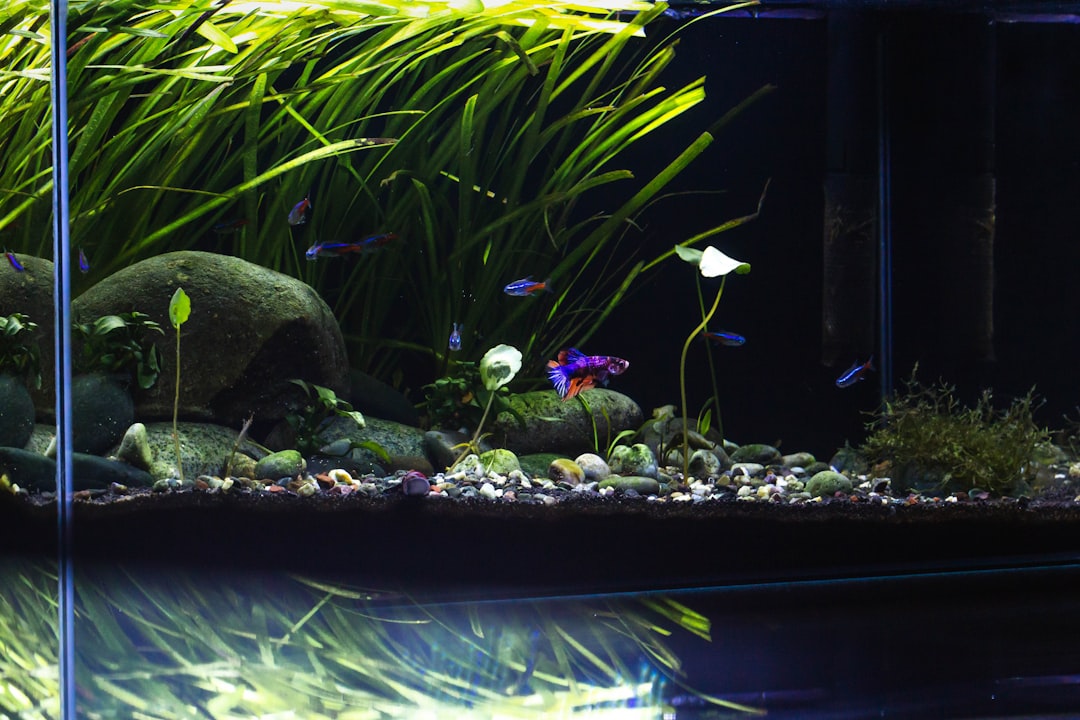
With its finely divided, feather-like leaves arranged in dense whorls, Myriophyllum creates some of the most textured backgrounds in aquascaping. An aquascape using Myriophyllum only transforms your tank into a wall of soft green plumes that sway hypnotically in the current — a look that is both lush and surprisingly easy to maintain. Gensou Aquascaping in Singapore has used this approach in display tanks where a single bold texture outperforms complex multi-species layouts.
Getting to Know Myriophyllum
Myriophyllum is a genus of around 70 species found across every continent except Antarctica. In the aquarium hobby, the most commonly kept species are M. mattogrossense (bright green, fast-growing), M. tuberculatum (reddish-brown under high light), and M. guyana (compact, fine-leaved). Each has a slightly different character, but all share the signature feathery architecture that makes this genus so visually distinctive.
Choosing the Right Species
M. mattogrossense is the best starting point for a mono-species tank. It tolerates moderate light, grows quickly, and maintains good colour without demanding high-intensity fertilisation. M. tuberculatum turns a rich coppery red under strong lighting with iron supplementation — stunning as a single-species display but more demanding. For nano tanks under 30 litres, M. guyana stays compact and proportionate without overwhelming the space.
Planting Strategy
Plant individual stems 2-3 cm apart in a nutrient-rich substrate. Push each stem 3-4 cm deep, burying at least two nodes to encourage root development. Unlike some stem plants, Myriophyllum roots readily and anchors firmly once established. For immediate impact, plant densely — 40-50 stems in a 60 cm tank. Within three weeks, side shoots fill the gaps and the wall effect begins to emerge.
Stagger the planting depth front to back: shorter stems in front, taller ones behind. This creates a gentle slope of feathery foliage that adds dimension to the mono-species layout.
Light, CO2, and Nutrients
Moderate lighting (30-50 PAR at substrate) keeps M. mattogrossense healthy and green. Higher light intensifies colour in red species but also accelerates algae risk if nutrients are not balanced. CO2 injection at 20-30 ppm is strongly recommended — Myriophyllum grows noticeably denser and more compact with supplemental carbon. Without CO2, stems elongate and leaves become sparse.
Dose a balanced NPK fertiliser alongside micronutrients. Iron is particularly important for red varieties — 0.1-0.2 ppm of chelated iron keeps M. tuberculatum glowing. Singapore’s soft tap water (GH 2-4) is naturally low in calcium and magnesium, so consider adding GH booster if you notice stunted tips.
Trimming and Propagation
Expect growth rates of 5-8 cm per week under optimal conditions. Trim stems to half their height and replant the cuttings to fill bare spots. Regular topping — every 7-10 days — forces side shoots and creates a bushier, more uniform wall. Neglect trimming for a fortnight and the lower portions lose light, shedding leaves and turning brown. Consistency is the key to a clean mono-species look.
Common Problems
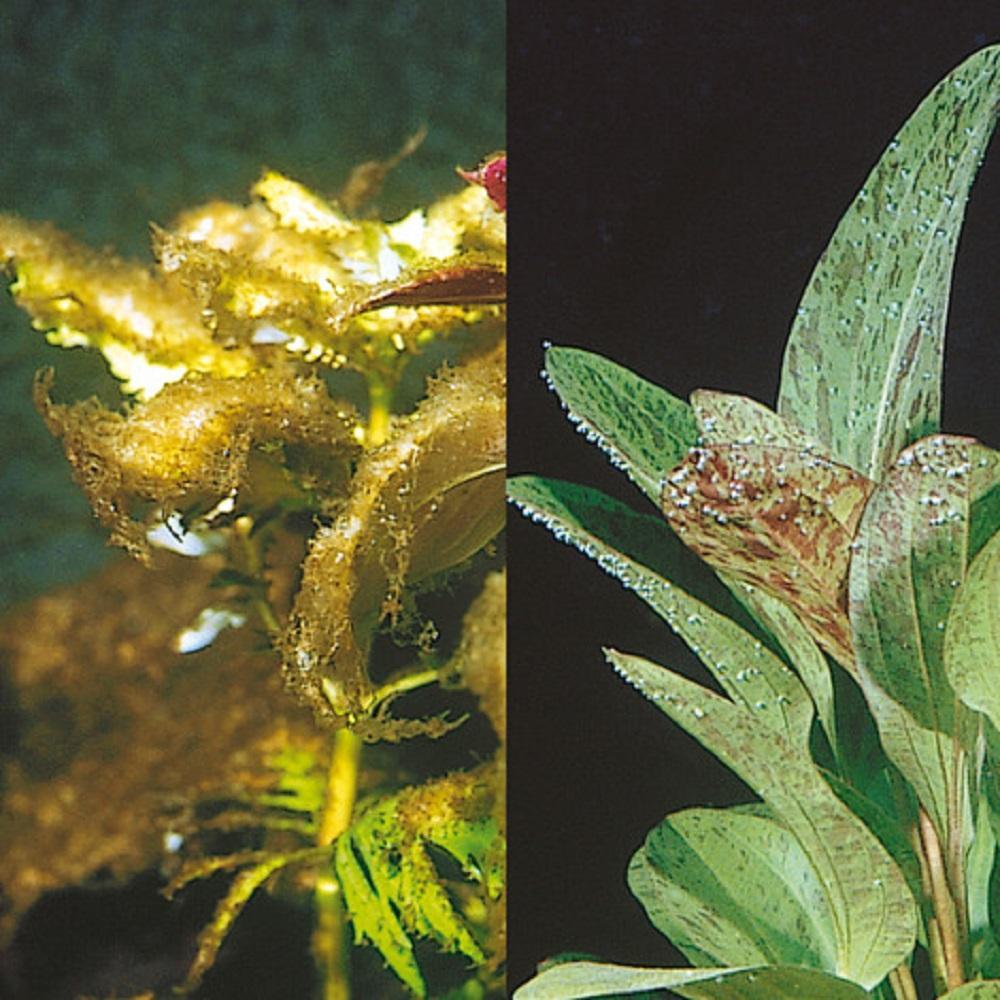
Melting lower leaves usually signal insufficient light penetration through the upper canopy — trim more aggressively. Thread algae tangling in the fine whorls is a sign of excess light or nutrient imbalance; reduce photoperiod to 7 hours and increase CO2. If stems become leggy with wide gaps between leaf whorls, light intensity is too low or the spectrum is wrong. A full-spectrum LED in the 6500K range suits Myriophyllum well.
Fish That Complement the Look
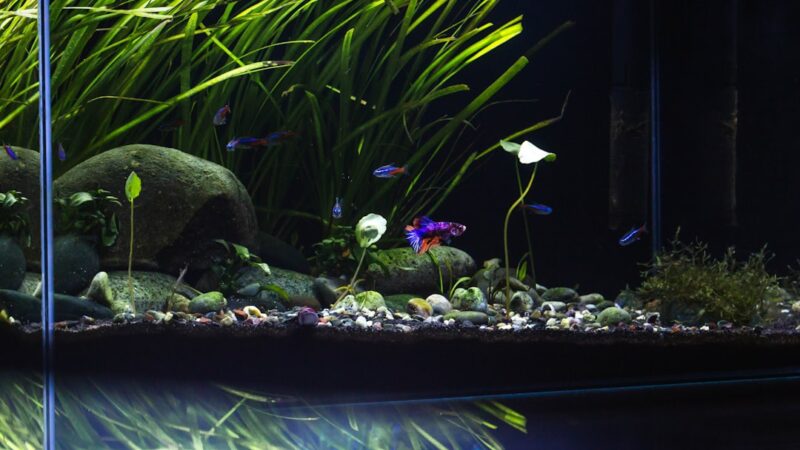
Small schooling fish disappear beautifully into a Myriophyllum forest. Rummy-nose tetras (Hemigrammus rhodostomus) add a flash of red against the green, while Trigonostigma heteromorpha (harlequin rasboras) bring warm copper tones. Avoid large or boisterous fish — they uproot stems and break fragile branches. Otocinclus and Amano shrimp (Caridina multidentata) handle algae duty without disturbing the planting.
Building Your Myriophyllum Wall
An aquascape with Myriophyllum only is a masterclass in simplicity — one genus, one texture, maximum impact. It suits both beginners willing to learn stem-plant trimming and experienced hobbyists looking for a striking display with minimal design complexity. Gensou Aquascaping Singapore recommends starting with M. mattogrossense in a 60 cm tank — within a month, you will have a feathery green wall that stops visitors in their tracks.
Related Reading