Aquascaping With Rocks and Live Plants Only: No Driftwood Needed
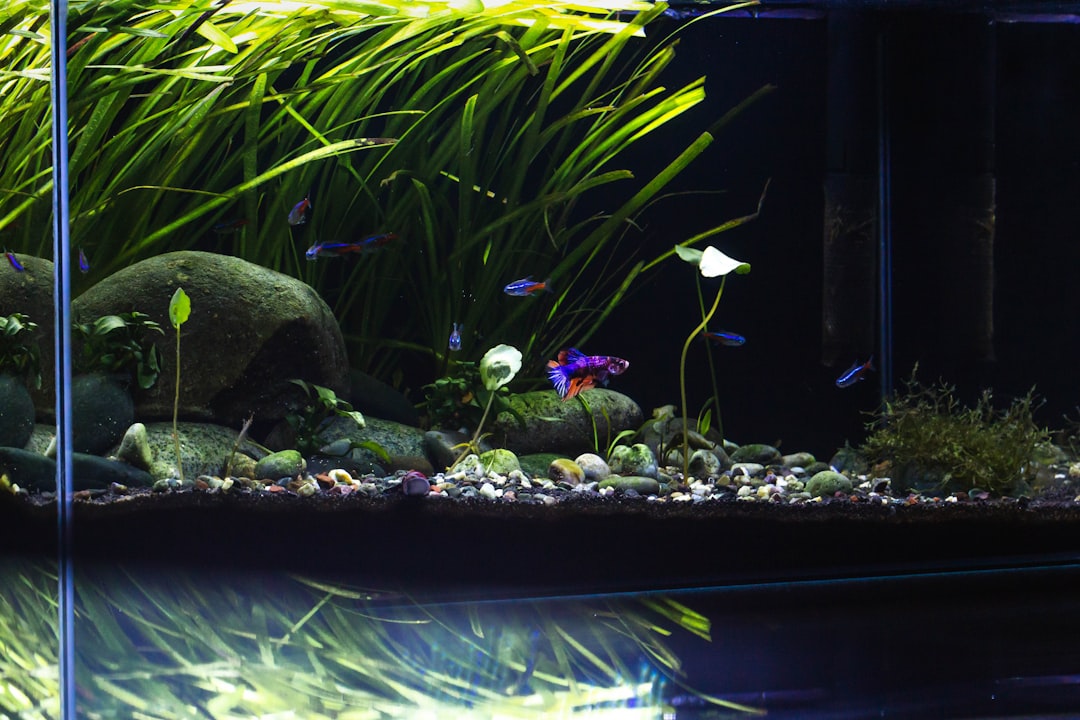
Driftwood dominates most aquascape inspiration photos, but some of the most striking competition entries use nothing but stone. Aquascape rocks live plants only designs deliver clean geometry, timeless appeal, and zero tannin leaching. This guide from Gensou Aquascaping Singapore — with over 20 years of hands-on experience at 5 Everton Park — shows you how to master the rock-and-plant aesthetic.
Why Skip Driftwood?
Driftwood releases tannins that tint water amber, lowers pH unpredictably, and often grows biofilm or white fungus during the first weeks. Rocks avoid all of these issues. They are structurally rigid, permanent, and create hard geometric lines that contrast beautifully with soft plant textures. For aquascapers who prefer crystal-clear water and precise layouts, stone-only hardscape is the natural choice.
Popular Rock Types
Seiryu stone features blue-grey tones with dramatic white calcite veins — the go-to for iwagumi layouts. It buffers GH and KH upward slightly, which suits livebearers and African cichlids but requires monitoring in softwater shrimp tanks. Dragon stone (ohko stone) is lightweight and deeply textured with orange-brown tones that complement green carpets. It is inert and does not affect water chemistry. Lava rock is the budget option at $2–$4 per kg from Serangoon North shops — porous, lightweight, and excellent for attaching moss or Bucephalandra.
Iwagumi: The Classic Rock-Only Style
Iwagumi aquascaping uses an odd number of stones — typically three, five, or seven — arranged according to strict compositional rules. The largest stone (oyaishi) anchors the layout at roughly one-third from one side. Secondary stones (fukuishi) support it at complementary angles, and smaller accent stones (soeishi) balance the composition. All stones should tilt in the same general direction, mimicking natural erosion patterns.
Carpeting plants like Eleocharis acicularis or Hemianthus callitrichoides fill the foreground, leaving the stone arrangement as the undisputed focal point. This style demands CO2 injection and strong lighting for the carpet to fill in densely within 4–6 weeks.
Mountain-Scape Layout
Stack rocks to create peaks and ridges that evoke a miniature mountain range. Use substrate dams (plastic dividers buried under the soil) to maintain steep slopes without collapse. Plant Micranthemum ‘Monte Carlo’ on the slopes to suggest alpine meadows and Riccardia chamedryfolia (coral moss) on stone faces for a lichen-like effect. The result is a landscape that feels vast despite fitting inside a 60 cm tank.
Planting Around Rocks
Tuck plants into crevices between stones for a natural, established look. Cryptocoryne parva and Staurogyne repens nestle convincingly at rock bases. Attach Anubias ‘Petite’ directly to stone surfaces with super glue gel — the roots grip within weeks. Behind the main rockwork, taller stems like Rotala rotundifolia or Hygrophila pinnatifida soften hard edges and add vertical interest.
Avoid planting directly in front of the main stone face. The exposed stone surface is the visual anchor — covering it with plants defeats the purpose of a rock-focused scape.
Colour and Texture Contrast
Grey stones pop against bright green carpets. Warm-toned dragon stone pairs well with red Ludwigia palustris or Rotala ‘H’ra’ planted behind it. Mixing rock colours within a single layout almost always looks messy — commit to one type and let plant colours provide the contrast. Fine-leaved plants against rough rock surfaces create textural tension that draws the eye.
Practical Considerations in Singapore
Rocks are heavy. A 60 cm iwagumi with 8–10 kg of seiryu stone, 10 litres of substrate, and 50 litres of water totals roughly 75 kg — ensure your stand handles the load. Source rocks locally to save on shipping: dragon stone and seiryu are stocked at most aquarium shops along Serangoon North and at C328 Clementi. Prices range from $3–$8 per kg depending on grade and shop. Hand-pick pieces in person whenever possible — shape and character vary dramatically between individual stones.
Maintaining a Rock-Dominant Scape
Algae on exposed stone faces is the main aesthetic threat. Green spot algae colonises stone surfaces under strong light; reduce photoperiod to 7 hours and add nerite snails or otocinclus for biological control. Brush stone surfaces gently with a soft toothbrush during water changes to keep textures visible. With disciplined maintenance, an aquascape with rocks and plants only ages gracefully — the stones never change, and the plants mature around them season after season.
Related Reading