Best Inline CO2 Diffusers for Canister Filter Setups
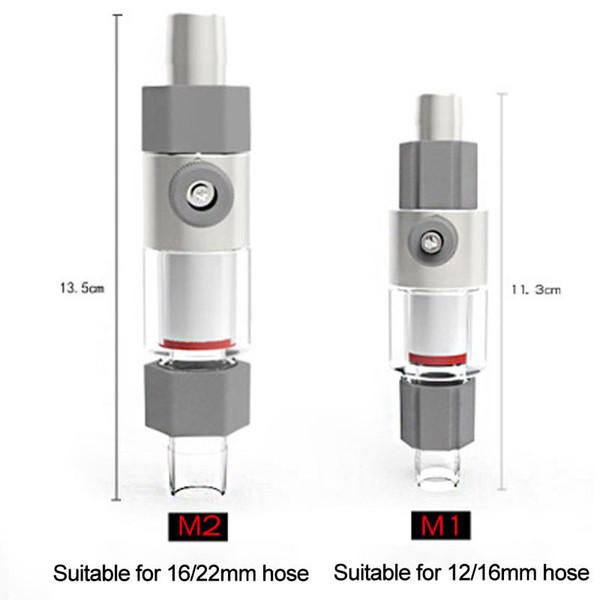
If you run a canister filter on your planted tank, an inline CO2 diffuser is one of the smartest upgrades you can make. The best inline CO2 diffuser for a canister filter sits on the return hose, dissolving carbon dioxide before the water even enters your aquarium. No ceramic disc inside the tank, no bubble mist clouding your layout, and near-total dissolution rates above 95%. Here at Gensou Aquascaping in Singapore, we fit inline diffusers on almost every high-tech client build at our 5 Everton Park studio.
Why Go Inline Instead of In-Tank?
A traditional ceramic diffuser creates a visible mist of micro-bubbles inside the aquarium. While effective, those bubbles can collect on plant leaves, create unsightly streams across a carefully composed hardscape, and contribute to surface agitation that off-gasses CO2. An inline diffuser eliminates all of that. The gas dissolves under pressure inside the tubing, so what enters your tank is already CO2-rich water with no visible bubbles at all.
Dissolution efficiency matters for your wallet, too. At Singapore prices of around $25-$40 per CO2 refill, wasting gas through poor diffusion adds up quickly over a year.
Key Features to Compare
Not every inline diffuser performs the same. Look for these details before purchasing:
- Hose diameter compatibility — most units fit 12/16 mm or 16/22 mm tubing, which matches popular canister filters like the Eheim Classic 250 and Oase BioMaster 350
- Internal ceramic disc quality — finer pores (below 50 microns) break CO2 into smaller bubbles for faster dissolution
- Chamber length — a longer mixing chamber gives the gas more contact time with the water column
- Ease of disassembly — you will need to soak the ceramic element in bleach every 2-3 months to remove biofilm buildup
Top Picks for Planted Tank Hobbyists
The UP Aqua Inline CO2 Atomizer remains a favourite among Singapore hobbyists for good reason. Its acrylic body is transparent, letting you see exactly how the gas behaves inside. Priced around $18-$25 on Shopee, it offers excellent value. For larger setups above 200 litres, the GLA Inline Reactor uses a turbine chamber rather than a ceramic disc, achieving near-100% dissolution even at higher bubble counts.
Budget-conscious aquarists can consider the ISTA inline diffuser, widely available at local fish shops in the Serangoon North area for under $15. It works well on smaller tanks up to 120 litres, though the ceramic disc tends to clog faster than pricier alternatives.
Installation Tips
Always install the diffuser on the outflow hose, not the intake. Placing it on the intake side can cause air locks inside your canister filter, reducing flow and potentially damaging the impeller. Position the unit vertically with the CO2 inlet pointing upward so gas rises into the ceramic element naturally. Secure both hose connections with jubilee clips — a pressurised leak at 2-3 bar will spray water across your living room floor.
Matching Flow Rate to Diffuser Size
An inline diffuser needs sufficient water velocity to push dissolved CO2 into the tank effectively. If your canister filter outputs below 500 litres per hour, stick with the smaller 12/16 mm models. Larger 16/22 mm diffusers paired with a weak pump will leave undissolved bubbles pooling at the top of the chamber. For high-flow setups like the Eheim 2217, the 16/22 mm UP Aqua or a full reactor-style unit handles the volume without restriction.
Maintenance and Cleaning
Over weeks, biofilm and mineral scale coat the ceramic element, reducing its ability to produce fine bubbles. You will notice larger, less efficient bubbles forming inside the chamber — that is your cue to clean. Remove the diffuser, disassemble it, and soak the ceramic disc in a 1:3 bleach-to-water solution for 30 minutes. Rinse thoroughly, then soak in dechlorinated water before reinstalling. In Singapore’s soft tap water (GH 2-4), mineral buildup is slower than in hard-water regions, so quarterly cleaning usually suffices.
Are Inline Diffusers Worth the Upgrade?
For any serious planted tank running pressurised CO2 with a canister filter, an inline diffuser is a straightforward yes. The improvement in dissolution efficiency, the cleaner look inside the aquarium, and the reduced CO2 waste justify the modest cost. Pair a quality inline CO2 diffuser with a good drop checker and solenoid timer, and your plants will thank you with visibly faster, healthier growth.
Related Reading