UHT Fairy shrimp – 100g (Frozen)
Out of stock
Ask on WhatsAppDescription
Fairy shrimps are a member in the class Branchiopoda, along side the clam shrimp, Diplostraca (or Cladocera), Notostraca and the Devonian Lepidocaris.
They live in shallow/dried pools (seasonal depressional wetlands) and hypersaline lakes across the world and have even been found in deserts, ice-covered mountain lakes and Antartic ice.
Their drought-resistant eggs are collected from lakeshores and are stored and transported dry. They hatch readily when submerged in salt water.
A study done on the fairy shrimp (Streptocephalus dichotomus) as feed for ornamental fishes revealed growth performance to be similar when fed with Artemia(Brine Shrimp)
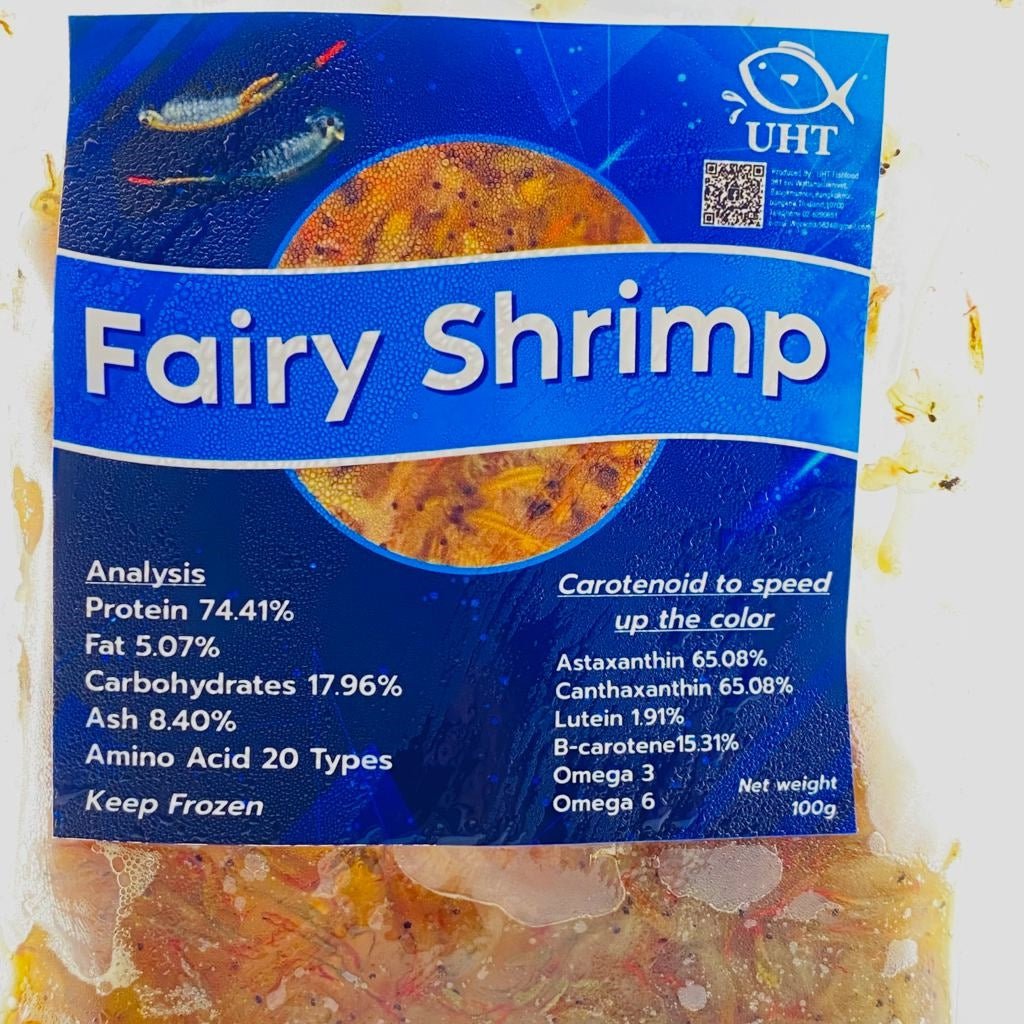
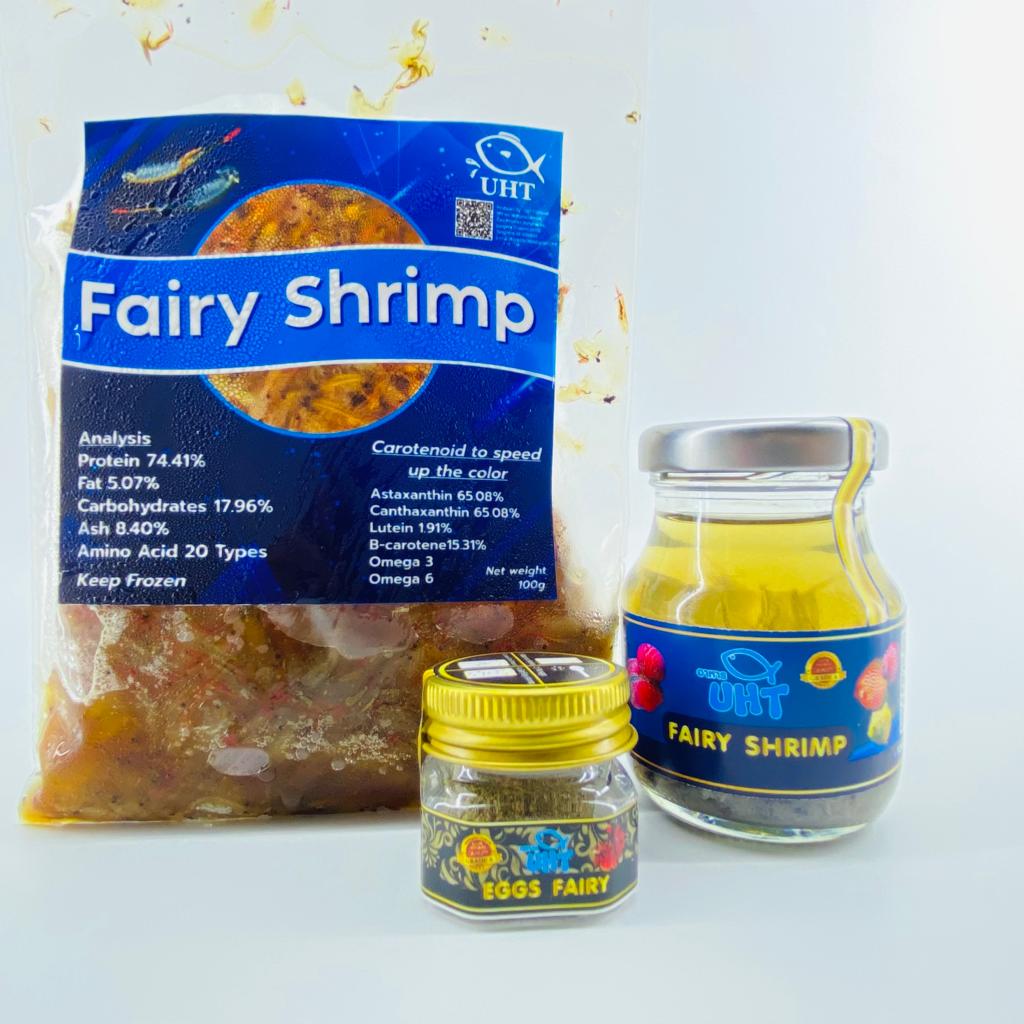
Analysis of the carotenoids showed the presence of astaxanthin, canthaxanthin and β-carotene.
In addition, the fatty acid and amino acid compositions of carcasses of fish fed with Fairy Shrimps revealed efficient nutrition consumption.
Energy budget analysis of fish fed on with fairy shrimp, revealed that about 99.6% of the consumed feed was assimilated with a conversion ratio of 1.59,
similar to Artemia (99.4% assimilated with a conversion ratio of 1.44).
The presence of carotenoids, high energy content and optimal nutritional value offers the advantages of Fairy Shrimp as live feed in freshwater aquaculture.
As such Fairy Shrimps are used as food for fish and other organisms in aquaria and aquaculture.
Directions For Use:
Ensure the cap is tightly sealed after each use.
User may seal the packet within a Ziplock bag for refrigeration purposes
Always keep refrigerated.
Feeding UHT Fairy Shrimp 100g (Frozen) to Your Fish
Fairy shrimp are a nutritious live-style feed valued in the hobby for their carotenoid content, including astaxanthin, which supports vivid colour, alongside a strong amino-acid and fatty-acid profile. Studies feeding ornamental fish have found growth performance comparable to brine shrimp, which makes this frozen 100g pack a solid staple or rotation food for a wide range of fish. Frozen format gives you that quality without the work of culturing live.
For Singapore keepers, frozen foods are a practical workhorse, but our climate demands care. Thaw only the portion you need in a little tank water, never refreeze, and feed promptly, because warm 27-29C tanks turn thawed leftovers into a water-quality issue quickly. During monsoon-season power cuts, watch your freezer, since a long outage can compromise frozen stock. Storing the pack inside a ziplock bag helps keep moisture and freezer odours out so the food stays in good condition between feeds.
It sits in our betta food & feeding range. For balanced portions read our feeding amounts and frequency guide, and betta keepers should see our betta feeding guide.