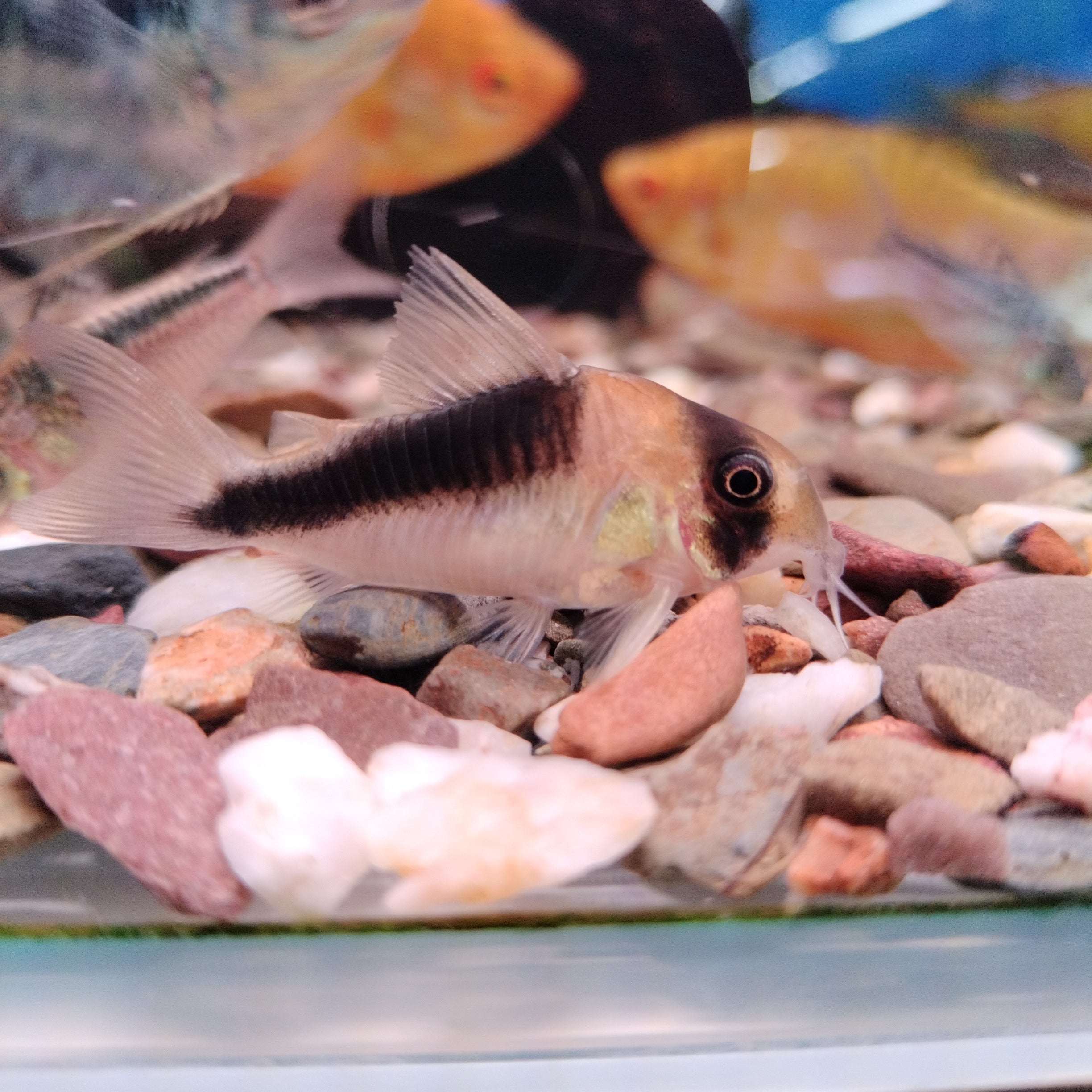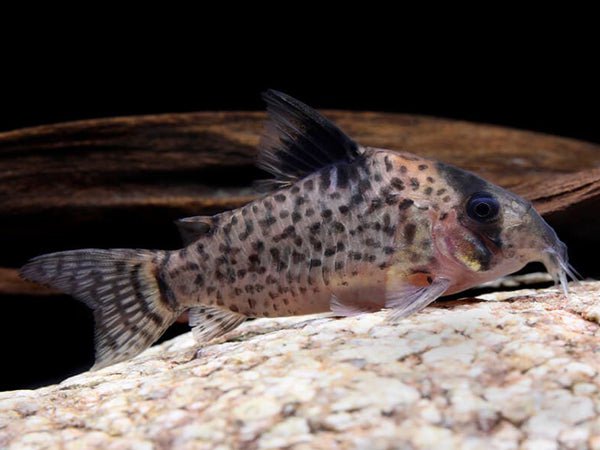

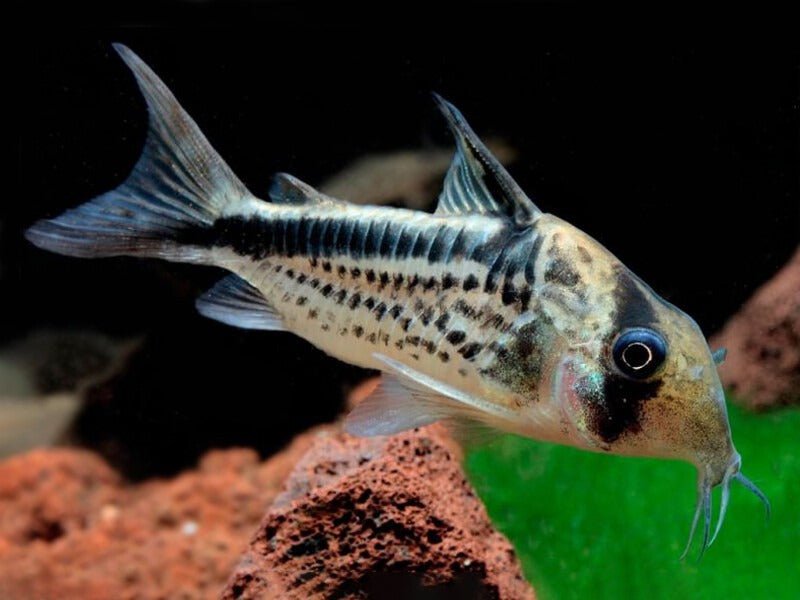
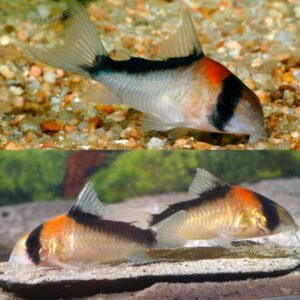
Loxozonus Cory
Corydoras loxozonus · Peaceful · Intermediate care
You save
Out of stock
Ask on WhatsAppAt a glance
Species profile Corydoras loxozonus
Origin
Rio Meta drainage, Colombia (Orinoco basin)
Family
Callichthyidae (armoured catfish family)
Adult size
Up to 5.5 cm (2.2 in)
Diet
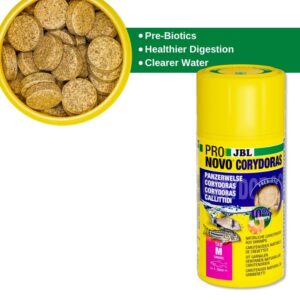
Sinking pellets, frozen bloodworm, live/frozen foods and quality flake (Omnivore)
Temperament
Peaceful
Swimming level
Bottom
Minimum group
6+ (shoaling)
Lifespan
5-8 years
Minimum tank
90 L (24 gal)
Water type
Freshwater
Size to scale
5.5 cm adult length, shown to scale against an iPhone 15 Pro (14.66 cm).
Natural range
Where it comes from — South America
Rio Meta drainage, Colombia (Orinoco basin)
Water
Singapore tap water vs its needs
Hardness: Soft to medium-hard (2-15 dGH).
In the aquarium
How it lives in the tank
Swims in the bottom of the tank
Keep in a group of 6+
Sensitivity Index — Moderate
Adaptable, but happiest with stable parameters in a matured tank.
Our own read on how forgiving this species is of water changes — not a formal standard.
Keeping & care
What this fish needs
Family
About the Callichthyidae family armoured catfish family
The Callichthyidae are South American armored catfishes, so called for the two rows of overlapping bony plates (scutes) that run along each flank in place of scales. The family is best known in the hobby for Corydoras and the closely related Aspidoras and Brochis (now often folded into Corydoras/Scleromystax), small, peaceful bottom-dwelling catfishes with downturned barbeled mouths used to sift sand for food; larger genera such as Callichthys, Hoplosternum and Megalechis also occur. Members are almost universally gentle, gregarious shoalers that suit calm community tanks and are undemanding once given clean, oxygenated water and a soft substrate.
Keep in groups of six or more over smooth sand or rounded fine gravel to protect their barbels, and maintain clean, well-oxygenated water; they are excellent, peaceful companions in a planted community.
Breeding
Egg-depositor (adhesive eggs; larger genera are bubble-nesters)Corydoras and their small relatives are egg-depositors: a cooler, water change (mimicking rain) often triggers spawning, after which the female clamps a few eggs between her pelvic fins and presses them onto glass, plants or hardscape in the classic "T-position" with the male. Eggs hatch in roughly three to five days and the fry take crushed dry food, microworm and baby brine shrimp; many hobbyists remove the eggs to a separate container to protect them from being eaten. The larger genera such as Hoplosternum and Megalechis differ in building floating bubble nests that the male guards, but these are seldom bred in home aquaria.
Feeding
Recommended food
Compatibility
Best tankmates
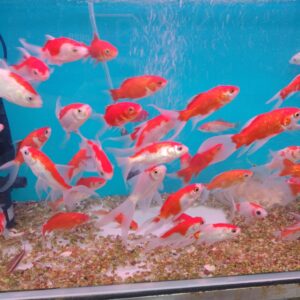
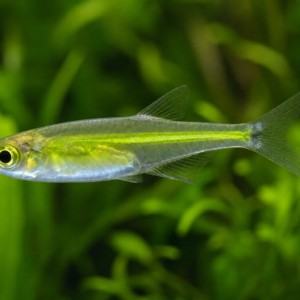
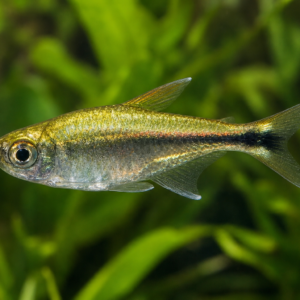
Community