
Community Fish Tank Ideas Guide: Multi-Species Scapes
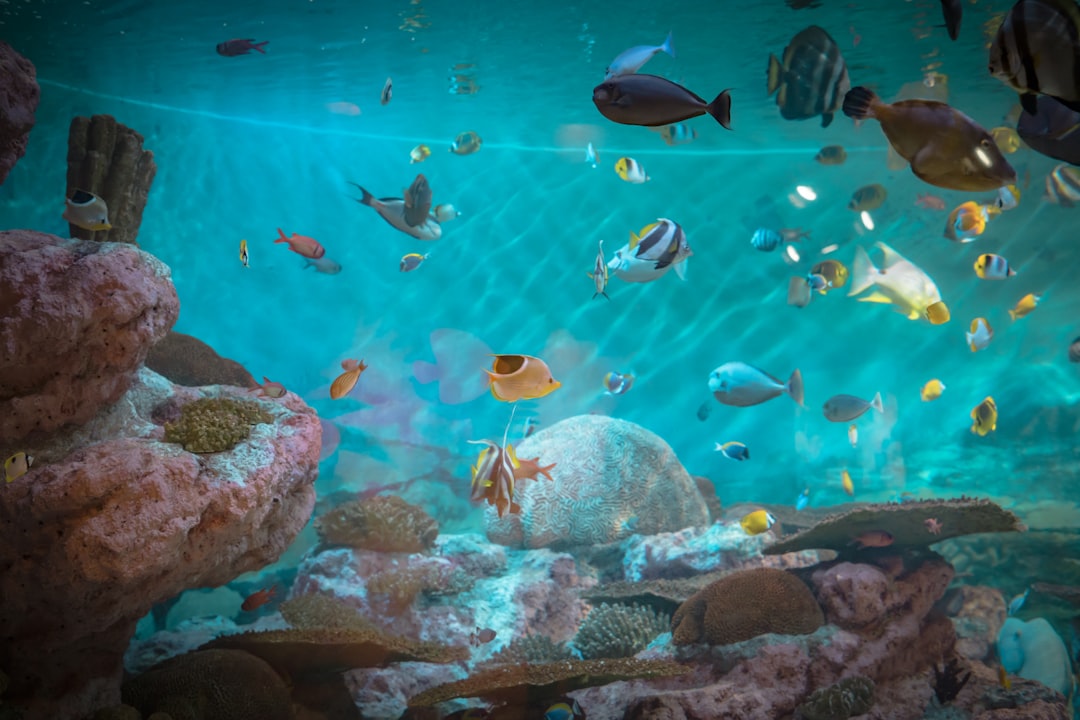
A genuine community tank is not a random assortment of fish the pet shop happened to have that afternoon — it is a deliberately composed group where every species occupies a different water column level, feeds without fighting and ideally shares a geographic origin. This community fish tank ideas guide from Gensou Aquascaping at 5 Everton Park covers multi-species scapes that actually work, the stocking templates that avoid aggression and parameter conflicts, and the tank sizing needed to host them comfortably in Singapore homes. Community done well shows as much behaviour as colour.
The Level-Stratification Principle
Well-built communities stock three levels of the water column. Top swimmers (hatchetfish, Pearl gouramis, Endler’s livebearers) occupy the surface; mid-water schoolers (tetras, rasboras) fill the midrange; bottom-dwellers (Corydoras, kuhli loaches, dwarf cichlids) use the substrate. Stocking all three levels creates visual depth and reduces competition. A flat stock of nine mid-water tetras leaves top and bottom empty.
South American Classic Community
The textbook South American community: 12-15 cardinal tetras, 8 Corydoras sterbai or panda corys, 5-6 rummynose tetras, a pair of Apistogramma cacatuoides or German blue rams, and a Bristlenose pleco. Soft acidic water, driftwood hardscape, Amazon swordplants and Cryptocoryne. This stocking suits 200-250 litre tanks (90 cm footprint) and reads as a miniature Amazon tributary. Plants from the live plants collection.
Southeast Asian Community
Closer to Singapore waters: 15-20 harlequin rasboras, 8-10 Boraras (chilli rasbora), 4-5 Pearl gouramis or Sparkling gouramis, and 6-8 kuhli loaches. Low-to-moderate light, Malaysian driftwood, Cryptocoryne wendtii and Bucephalandra. These species originate from Singapore-proximate waters and thrive on PUB tap water with minimal adjustment. A 150-200 litre tank is plenty.
West African Softwater Community
A less-common but striking option: Congo tetras (8-10), African butterfly fish (1-2), Pelvicachromis pulcher kribensis pair, and upside-down catfish (Synodontis nigriventris). Dark substrate, leaf litter, modest Anubias and Bolbitis heudelotii planting. Congo tetras show their iridescent fin trailers best under restrained lighting. Needs 200+ litres.
Nano Community Builds
Community works at nano scale with discipline. A 40-litre (45 cm) tank can host 12 Boraras brigittae, 6 Otocinclus, and 15 Neocaridina shrimp. A 60 cm nano tank (75-90 litres) stretches to a pair of Apistogramma borellii, 15 neon tetras, 6 Corydoras pygmaeus and shrimp. Nano community demands daily observation — aggression compounds fast in small volumes.
Species to Avoid Mixing
Classic community mistakes: angelfish with neon tetras (angels eat them), tiger barbs with long-finned species (fin nipping), Betta splendens males with any colourful fish (they attack), large cichlids with small tetras (predation), and Otocinclus in hard alkaline water (they require soft). Research compatibility before buying, not after.
Hardscape and Planting for Communities
Community tanks need cover for smaller species and open swimming space for schoolers. Driftwood pieces create mid-water structure; Anubias and Bucephalandra attached to wood provide hiding crevices; a patch of Vallisneria or Cryptocoryne midground gives bottom-dwellers refuge. Keep 40-50% of the tank floor open for swimming. Source hardscape and plants from the decoration range and live plants range.
Sizing for Comfortable Stocking
Stocking densities that work long-term: 1 cm of adult fish per 2 litres of water for small community fish, halved for larger species or cichlid-dominated tanks. A 90 cm 200-litre tank sustains roughly 40-50 cm of mixed small community fish comfortably. Overstocking shows as chronic nitrate elevation, aggression and disease — not always immediately, but within six months.
Equipment and Parameters
Community tanks suit external canister filtration rated 5-6x turnover per hour, quality LED tuned to plant needs, and a rimless starphire tank for viewing clarity. Singapore PUB tap water at GH 2-4, pH 6.8-7.2 suits most South American and Southeast Asian communities without adjustment. See the tanks range, filtration range, and LED lighting. The Custom Aquarium Cabinet sizes for 90 cm and 120 cm community tanks.
Observing and Adjusting Over Time
Community tanks evolve over the first year. Species establish pecking orders, plants grow in, some fish turn out to be less compatible than expected, others breed unexpectedly. Expect to rehome one or two individuals, add a second school to balance stocking, or swap a midground plant that failed to thrive. A community built in six months and left untouched for three years is not a community — it is a set-and-forget aquarium pretending to be one.
Related Reading



