Fish Tank Coloring Page Ideas Guide: Printable Templates
Coloring pages remain one of the quietest, most focused activities a kid or stressed adult can settle into — and aquarium scenes are particularly good subjects because they mix simple shapes (fish, plants) with detail opportunities (scale patterns, water ripples). This fish tank coloring page ideas guide covers template concepts for ages 3 to adult, colour-picking logic rooted in real species, and the pencil and marker supplies available at Popular and Art Friend. Gensou Aquascaping at 5 Everton Park creates coloring-page handouts for our children’s workshops, and the designs below come from that library.
Why Aquarium Coloring Works Across Ages
Aquatic scenes give licensed creative freedom — a purple fish with green spots is plausible because some real fish actually look stranger. The format forgives colour mistakes that would ruin a realistic subject. Plants, bubbles and swirling water patterns offer flowing lines perfect for mandala-style adult meditation coloring, while simple fish and castle shapes suit toddler motor skill development. One subject, five age-appropriate designs.
Ages 3 to 5: Big Shapes, Thick Lines
Toddler designs use 6 to 8 large shapes only — one big fish, one castle, three rounded plants, a smiling clam. Lines are thick (at least 4 mm), spaces between shapes are generous, and no internal detail demands precision. Chunky Crayola crayons work best; markers bleed through thin paper. Print on 160 gsm cartridge paper from Popular at SGD 8 for a 20-sheet pack to avoid bleed-through. The goal is colour-in practice, not realism.
Ages 6 to 9: Themed Scenes
Primary-age designs layer a few more details — individual scales on the fish, leaves on each plant, bubbles rising in groups, a small crab or starfish on the substrate. Lines are 2 mm, child-friendly markers or coloured pencils work. Themed scenes (pirate ship tank, mermaid castle, coral reef) add narrative. Kids this age start caring about colour accuracy — point them towards photos of real tropical fish from our planted tank inspiration posts for reference.
Ages 10 to Teen: Detailed Aquascapes
Pre-teens and teens handle detail. Dwarf hairgrass individual blades, rotala stems with multiple leaves, tetras in schools with fin detail, driftwood with bark texture. Lines thin to 1 mm. Introduce coloured pencil blending — layering two or three pencils on one area to mix colours rather than flat fill. Staedtler Ergosoft or Faber-Castell Polychromos at Art Friend (SGD 25 to 60 for a 12-pencil set) support this progression well.
Adult Mandala: Meditative Detail
Adult coloring pages replace narrative with pattern. A circular mandala of a central fish radiating outward into concentric rings of scales, fin patterns, water ripples and plant motifs fills an A4 sheet with an hour or two of quiet work. Micron pens for owned sketches or printed templates for ready-to-colour works. Fine-tip coloured pencils and gel pens suit the small spaces. This is the aquarium equivalent of adult floral mandala books sold at Kinokuniya for SGD 20 to 35.
Realistic Species-Accurate Pages
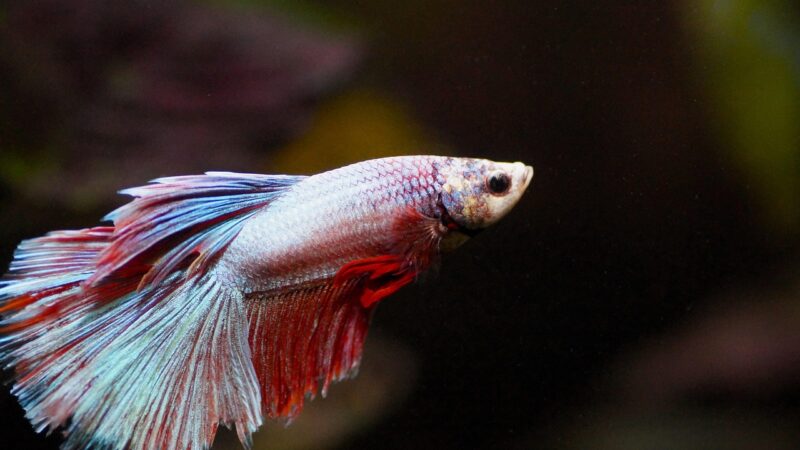
For older kids and adults who want to learn species while colouring, design pages featuring real fish with their natural palette. Cardinal tetras are red bottom, electric blue stripe, silver belly, translucent fins. Betta splendens come in solid red, solid blue, marble patterns. Corydoras sterbai have white-and-orange spotted bodies. Labelling the page with species names teaches identification. Many of our shop customers started with coloring pages before keeping real aquarium tanks.
Freshwater vs Marine Themes
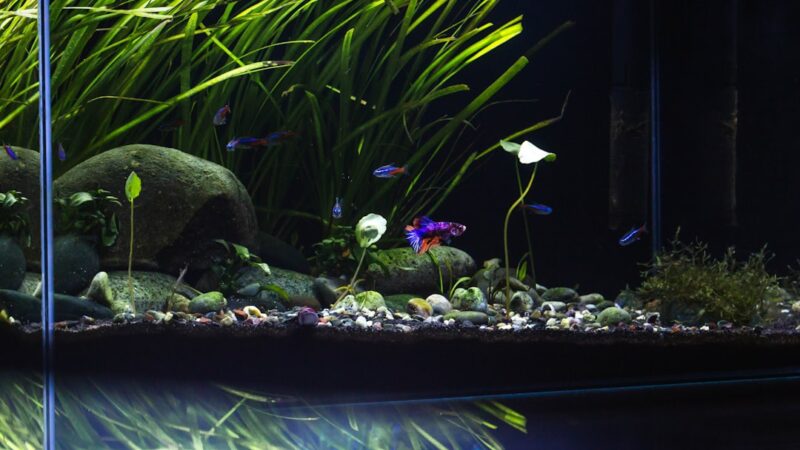
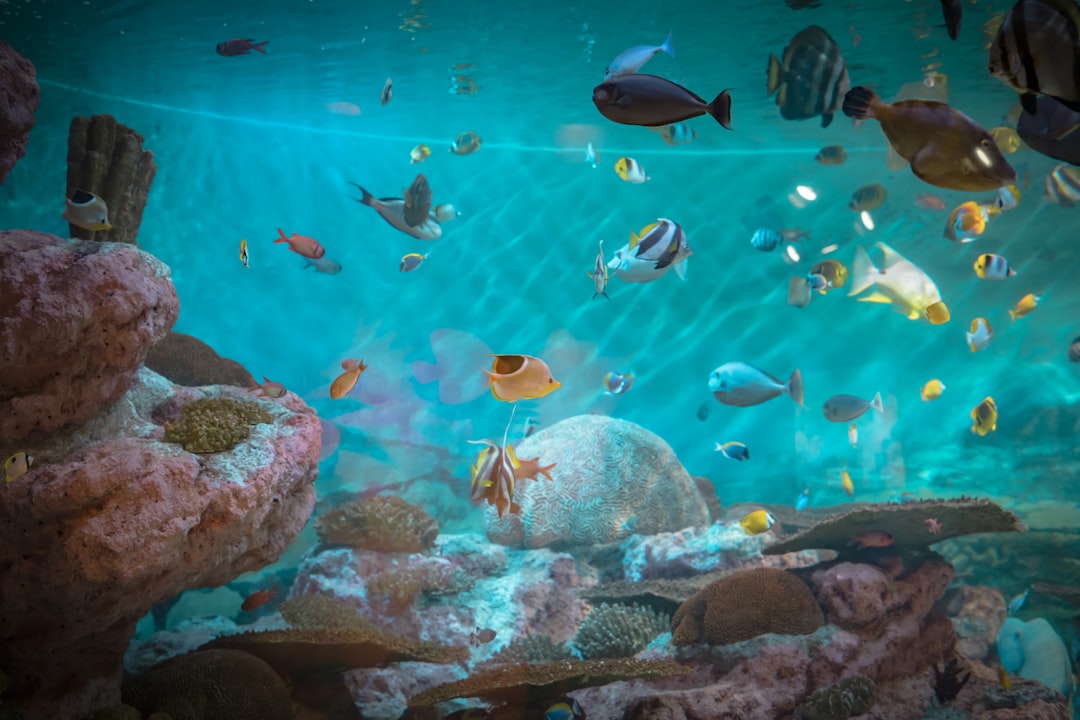
Freshwater scenes feature plants, driftwood and muted-to-moderate colour fish — realistic and calming. Marine scenes are chromatically wild — yellow tangs, purple wrasse, orange clownfish, blue damsels, hot-pink coral. Marine designs are more fun for young children because bright colours win attention; freshwater designs appeal to older colourists who enjoy subtle palette control. Both formats work on the same tank outline from the drawing guide.
Colour-Picking Logic
Warm colours (reds, oranges, yellows) advance visually; cool colours (blues, greens, purples) recede. Apply this to your coloring: warm-coloured fish in the foreground, cool-coloured plants in the background, and the tank feels deeper. A uniformly yellow tank looks flat; a yellow-fish-and-blue-background tank has depth. Teach this to kids by asking “which fish feels closer to us?” after they finish — the lesson sticks without explicit instruction.
Printing and Paper Choice
Standard 80 gsm printer paper works for pencils but bleeds through with markers. 160 to 200 gsm cartridge paper handles markers, light watercolour washes and heavy pencil pressure. Print on matte, not glossy — glossy paper resists pencil pigment. Kinokuniya and Popular both stock suitable cartridge paper in A4 and A3. For large-format family activities, A3 prints give kids room to work without running off the edge.
Turning Coloured Pages Into Real Planning
Older kids and adult aquascapers sometimes use coloured pages as mood boards for real tanks. The palette you instinctively reach for while colouring often reveals what you will enjoy seeing daily. A consistently warm-toned palette signals a need for red and orange fish — ember tetras, rasbora brigittae. Cool-tone preference steers towards blue dream shrimp and green neon tetras. Your coloring choices become quiet design research when you eventually build the real thing.
Related Reading