Florida Everglades Biotope Aquascape: Subtropical Swamp Habitat
The Florida Everglades present aquascapers with one of the most visually distinct freshwater habitats in the world — shallow, slow-moving water through emergent grass, cypress knees, and floating vegetation, tinted amber with tannins and dappled by filtered light. A Florida Everglades biotope aquascape recreates this subtropical swamp atmosphere with a combination of tannin-stained water, emergent plant life, and fish species that are genuinely adapted to warm, oxygen-variable, vegetated environments. Gensou Aquascaping at 5 Everton Park, Singapore, finds this biotope appealing for its atmosphere and for how naturally it suits Singapore’s warm climate — no chiller required.
Understanding the Everglades Habitat
The Everglades is a river of grass — a 160-kilometre-wide, slow-moving shallow water system rarely more than 1 metre deep. Water chemistry is variable: near freshwater sources it’s soft and slightly acidic (pH 6.5–7.0, GH 2–5), while areas near tidal influence become harder and slightly brackish. For aquarium purposes, recreating the freshwater sawgrass marsh zone is most practical. The substrate is organic muck — dark decomposed plant matter — overlaid with fine sand. Cypress wood and fallen tree debris characterise the hardscape. Light filters through emergent vegetation, creating a dynamic dappled effect at the surface.
Hardscape: Cypress Wood and Fine Sand
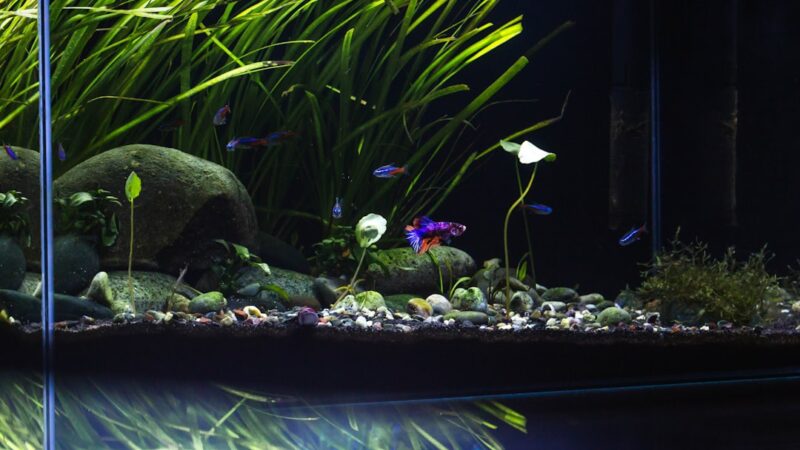
Driftwood is central to the Everglades aesthetic. Specifically, the gnarled, pale forms of cypress knees — submerged root projections from cypress trees — define the visual character. Mopani wood, cholla wood, or spider wood (all available from Singapore aquarium suppliers and Shopee) can represent these forms without exact species accuracy. Sand substrate in warm tan or grey, covered partially with leaf litter, completes the bottom layer. Indian almond leaves are biotope-appropriate substitutes for the fallen subtropical leaves of the actual habitat, and their tannin release suits the water chemistry.
Water Chemistry and Tannin Staining
Everglades water is characteristically tea-coloured from tannins leaching out of decaying organic material. In the aquarium, achieve this with a generous initial leaf litter dose, several pieces of driftwood, and optionally a small bag of alder cones in the filter. Target pH 6.5–7.0, GH 3–6, temperature 26–30°C. Singapore’s PUB water, being soft and slightly acidic after dechlorination, suits this biotope well with minimal adjustment. The tannin staining also serves a practical function — it reduces UV penetration, naturally subduing algae growth in low-light areas while giving the setup its characteristic amber tones.
Everglades Fish Species
The native Everglades fish fauna includes several hobbyist favourites. Florida flagfish (Jordanella floridae) are small, colourful American killifish at 5–6 cm that graze algae and are extremely hardy. Least killifish (Heterandria formosa) — among the smallest livebearing fish in the world at 2 cm — suit nano interpretations of this biotope. Bluefin killifish (Lucania goodei) add vivid colour and tolerate the warm, tannin-stained conditions naturally. Larger setups can include Florida gar or bowfin, but these require very large tanks and specialist care. Availability in Singapore varies — check Carousell hobbyist listings for killifish species.
Plant Selection for the Swamp Effect
Emergent plants are the defining feature. Sagittaria subulata and Vallisneria americana are both native to Florida and grow tall, creating the grass-like appearance of the sawgrass marsh. For floating cover, Pistia stratiotes (water lettuce) and Limnobium laevigatum (frogbit) float naturally and filter light to the tank below. Both grow vigorously in Singapore’s warm conditions — expect weekly trimming to prevent complete surface coverage. Bacopa caroliniana, another native American plant, works as a mid-ground stem plant and tolerates the warm, slightly shaded conditions of this setup.
Lighting: Filtered and Natural-Looking
The Everglades is not a bright open-water habitat. Light reaching the water surface filters through emergent vegetation and floating plants, creating variable intensity and colour across the tank. Aim for moderate lighting — 30–50 PAR at substrate level — with floating plants covering 40–60% of the surface to create the natural dapple. This lower light intensity also suppresses algae growth and suits the shade-tolerant plants used in this biotope. LED lights with warm-spectrum output (5,000–6,500K) give a more natural swamp feel than cool white or planted tank spectrum LEDs.
Suitability for Singapore Keepers
Unlike cooler-water biotopes, the Everglades setup runs at 26–30°C — comfortable at Singapore ambient without any heating or chilling in most indoor environments. The plants used are fast-growing and forgiving, the fish species are hardy and adaptable, and the tannin-rich environment suppresses many common pathogens. For aquarists who want a biotope with visual drama and low maintenance demands, the Everglades interpretation is one of the most accessible options available. Leaf litter topping up every 4–6 weeks and a 30% water change weekly are the main recurring tasks.
Related Reading