Southeast Asian Peat Swamp Biotope Aquascape: Dark Water and Leaf Litter
Peat swamp forests across Peninsular Malaysia, Borneo, and Sumatra harbour some of the most fascinating freshwater species on the planet — all in tea-dark water barely a foot deep. A southeast asian peat swamp biotope aquascape recreates this unique environment in your living room, and few places are better positioned to attempt it than Singapore, where many of these species are practically local. This guide from Gensou Aquascaping, with over 20 years of experience at 5 Everton Park, covers every detail from water chemistry to stocking.
What Defines a Peat Swamp Biotope
Peat swamps are characterised by extremely soft, acidic water (pH 3.5–5.5, GH below 2 dGH) stained dark amber by humic acids leaching from decomposing plant matter. The substrate is a deep bed of leaf litter and peat, the canopy is dense, and submerged aquatic plants are nearly absent. Light barely penetrates. Life thrives in the litter layer — tiny cyprinids, bettas, gouramis, and cryptic invertebrates.
Tank Size and Layout
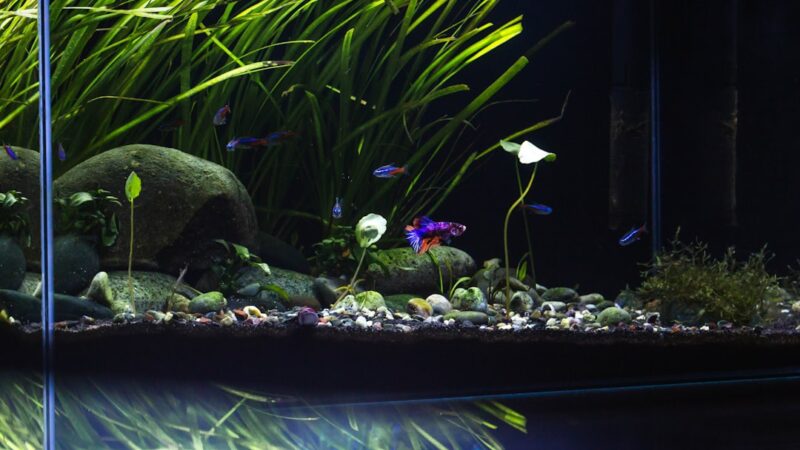
A 60 x 30 x 30 cm tank (roughly 54 litres) gives enough floor space for a convincing leaf-litter bed. Shallow is more authentic than deep — peat swamp streams are rarely more than 30 cm deep in the wild. A rimless, open-top tank lets tannin-stained water catch ambient light naturally.
Cover the bottom with 2–3 cm of fine sand or peat substrate, then layer dried leaves generously. Indian almond leaves (Terminalia catappa), readily available at $2–$4 for a pack of 20 on Shopee, are the go-to. Add driftwood branches — gnarled, twisted pieces mimic fallen forest debris. No stone is needed; the aesthetic is purely organic.
Water Chemistry
Singapore’s PUB tap water starts soft (GH 2–4 dGH), which gives you a head start. Dechloraminate, then lower pH gradually using peat filtration media, alder cones, or sustained leaf litter decomposition. Target pH 4.5–5.5 and keep GH below 3 dGH. An RO unit helps if your tap water runs higher than usual.
Tannins are the soul of this biotope — do not filter them out with activated carbon. Let the water darken naturally. The amber tint reduces light penetration, which is exactly what the inhabitants prefer. Water changes should use similarly prepared soft, acidic water to avoid pH swings.
Species Selection
Stick to species found in peat swamp habitats for authenticity:
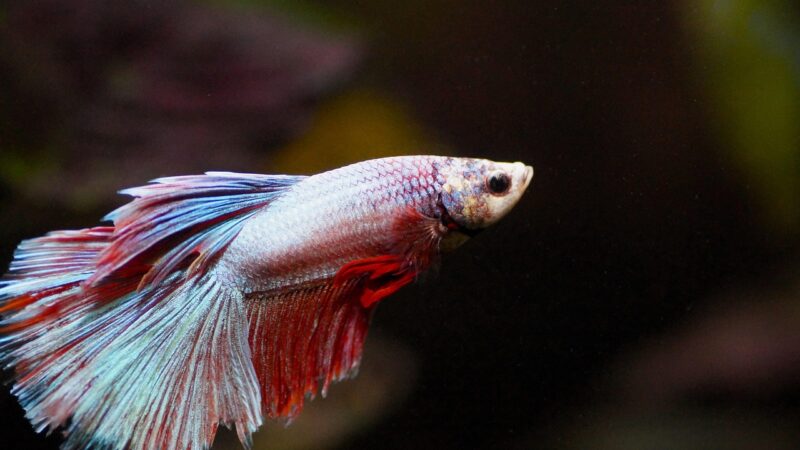
- Betta persephone or B. coccina: Tiny, jewel-like wild bettas endemic to these swamps. Males glow wine-red under subdued light.
- Boraras maculatus: A micro-rasbora reaching barely 2.5 cm. Shoals of ten or more look mesmerising against dark water.
- Sphaerichthys osphromenoides: The chocolate gourami — a classic peat swamp resident, demanding but rewarding.
- Pangio species: Kuhli loaches weave through leaf litter, perfectly camouflaged.
Avoid mixing peat swamp species with hard-water fish. The chemistry is too extreme for generalist community fish.
Planting (or Lack Thereof)
True peat swamps have almost no submerged vegetation. If you want greenery, limit it to Cryptocoryne species that naturally inhabit swamp margins — C. cordata and C. griffithii are authentic choices. A few stems emerging from the leaf litter add life without breaking the biotope’s realism.
Floating plants like Salvinia cucullata or Riccia fluitans dim the light further and give surface-dwelling bettas overhead cover. Keep coverage to about 50–60 % of the surface to allow gas exchange.
Filtration and Flow
Current in peat swamps is negligible. A small sponge filter or a gentle hang-on-back with reduced flow is sufficient. Peat granules or a mesh bag of alder cones placed inside the filter chamber continuously release tannins and soften incoming water. Clean mechanical media frequently — decomposing leaves produce fine particulate that clogs sponges quickly.
Lighting
Dim the lights. Seriously. Peat swamp fish are adapted to near-darkness, and bright LEDs stress them into hiding. A single low-wattage LED strip at 10–15 lumens per litre, filtered through floating plants, creates the subdued, moody atmosphere these species need. Many hobbyists use a desk lamp angled from one side for a dramatic shaft-of-light effect.
Maintenance and Long-Term Care
Replace decomposing leaves every three to four weeks as they break down. Small, frequent water changes (10–15 % twice weekly) maintain water quality without dramatically shifting pH. Test pH and TDS regularly with a digital pH pen and TDS meter — in such extreme water conditions, small parameter drifts can stress sensitive species.
A southeast asian peat swamp biotope aquascape is not for everyone, but for hobbyists drawn to the wild side of fishkeeping, it offers an unmatched connection to one of the region’s most threatened ecosystems. Gensou Aquascaping has helped clients in Singapore build these biotopes as living tributes to our local natural heritage.
Related Reading