Panda Loach
Yaoshania pachychilus · Peaceful · Advanced care
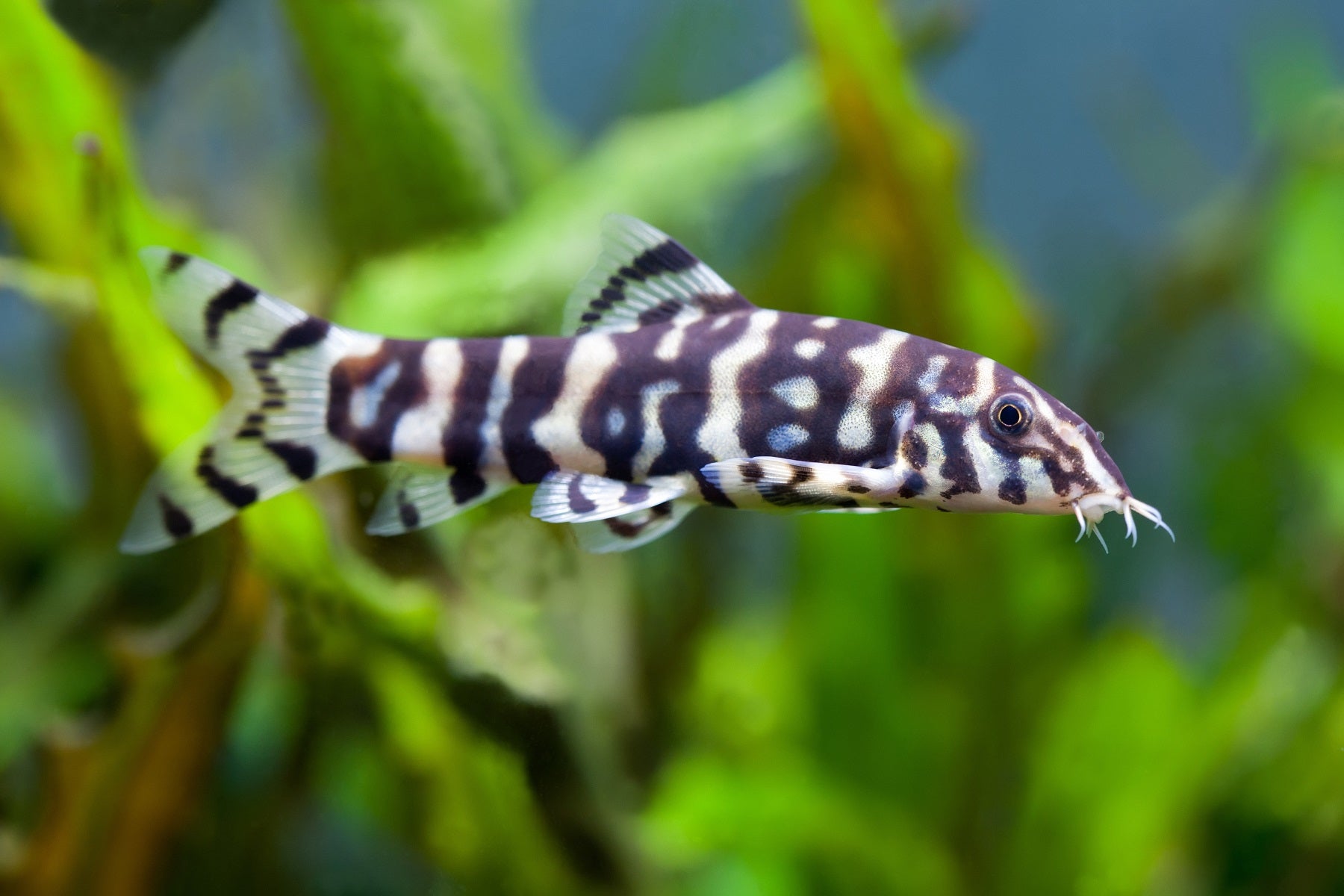
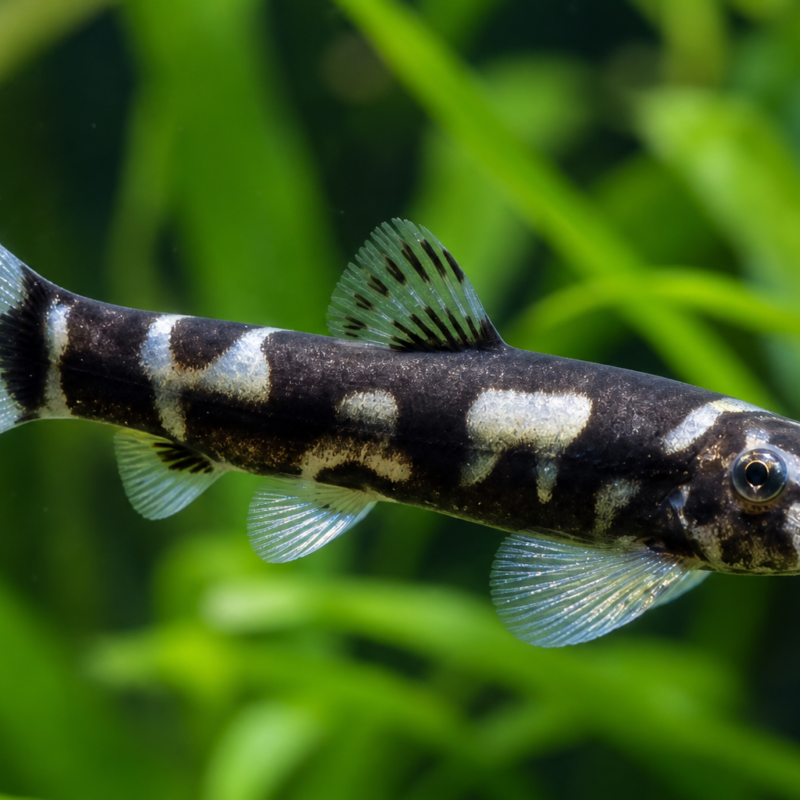
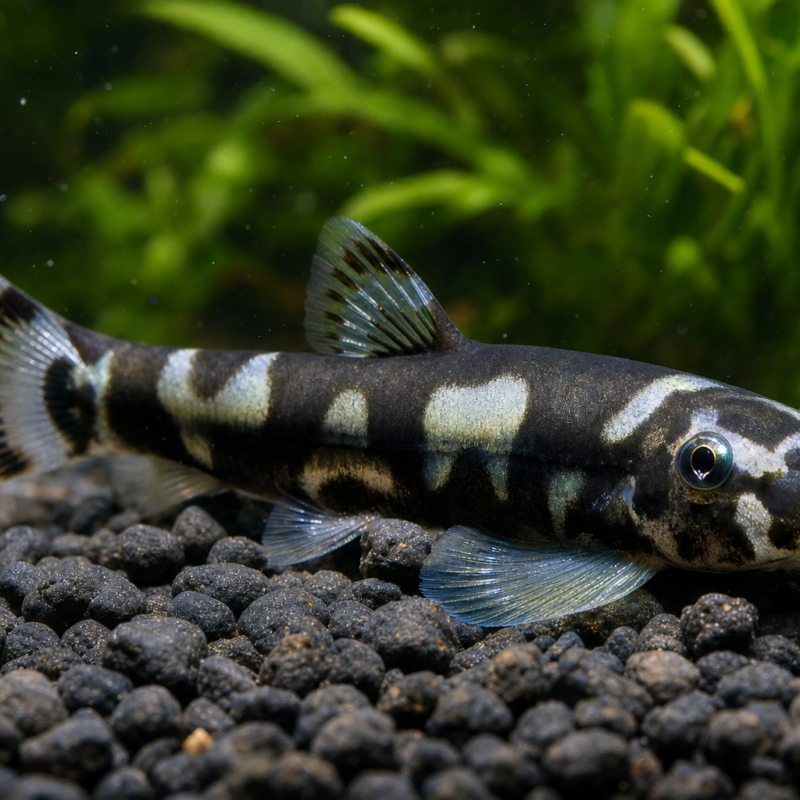
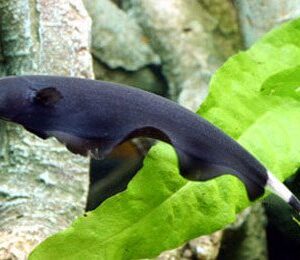
A little hillstream character in bold black-and-white — juveniles wear full panda banding. Needs cool, fast, oxygen-rich water over smooth stone, where it grazes biofilm all day.
Out of stock
Ask on WhatsAppAt a glance
Species profile Yaoshania pachychilus
Origin
Guangxi, southern China (fast hillstreams)
Family
Gastromyzontidae (hillstream loach family)
Adult size
Up to 6 cm (2.5 in)
Diet
Grazes biofilm/algae plus sinking wafers, blanched veg and small frozen foods (Omnivore)
Temperament
Peaceful
Swimming level
Bottom
Minimum group
5+ (shoaling)
Lifespan
5-8 years
Minimum tank
75 L (20 gal)
Water type
Freshwater
Size to scale
6 cm adult length, shown to scale against an iPhone 15 Pro (14.66 cm).
Natural range
Where it comes from — East Asia
Guangxi, southern China (fast hillstreams)
Water
Singapore tap water vs its needs
Hardness: Soft to medium (4-12 dGH).
In the aquarium
How it lives in the tank
Swims in the bottom of the tank
Keep in a group of 5+
Sensitivity Index — Sensitive
Reacts to swings — add only to a cycled, stable tank and change water little-and-often.
Our own read on how forgiving this species is of water changes — not a formal standard.
Keeping & care
What this fish needs
Family
About the Gastromyzontidae family hillstream loach family
Gastromyzontidae are the hillstream (hillstream sucker) loaches of fast-flowing Asian streams — flattened little fish with sucker-like paired fins that let them cling to rocks in strong current. Aquarium favourites include the reticulated and butterfly hillstream loaches (Sewellia, Beaufortia, Gastromyzon). They are peaceful algae- and biofilm-grazers that demand cool, highly-oxygenated, fast-moving water, unlike a typical warm, still community tank.
Give them a cool (around 20-24 C), turbulent, oxygen-rich tank with smooth rocks, strong powerhead flow and plenty of algae to graze — they struggle in warm, low-flow community setups.
Breeding
Egg-depositor (occasionally bred)Some hillstream loaches (notably Sewellia lineolata) will breed in a well-established, cool, high-flow tank with little intervention: they deposit eggs in crevices and gravel, and tiny fry appear grazing on biofilm-covered rocks. A mature tank rich in algae and aufwuchs is the key, as the fry feed on it; there is no parental care.
Feeding
Recommended food
Compatibility
Best tankmates
Community