Riparium Setup Guide: The Riverbank in Your Living Room
Table of Contents
- What Is a Riparium?
- Riparium vs Paludarium: Key Differences
- Riparium Planters and Cups
- Plant Choices for Ripariums
- The Riverbank Aesthetic
- Benefits of a Riparium
- Step-by-Step Setup Guide
- Combining with an Aquascape Below
- Maintenance
- Frequently Asked Questions
What Is a Riparium?
A riparium is a style of planted aquarium where emergent plants grow above the waterline from special planters attached to the back or side glass. The result is a tank that looks like a natural riverbank or lake margin — lush greenery spilling upward from the water’s surface, with an aquascape visible below the waterline.
The term was popularised by American hobbyist Devin Biggs in the mid-2000s, and the concept has since spread across the global aquarium community. In Singapore, ripariums are particularly rewarding because the warm, humid conditions (28-32 degrees Celsius, 70-90 per cent relative humidity) closely mirror the tropical riverbank environments that riparium plants originate from. Plants grow faster and more vigorously than they would in air-conditioned, drier climates.
Ripariums occupy a unique niche between a standard planted aquarium and a paludarium. They bring the beauty of emergent vegetation into your living space without the structural complexity of building a land section.
Riparium vs Paludarium: Key Differences
While both ripariums and paludariums feature plants growing above water, they differ in approach and complexity:
| Feature | Riparium | Paludarium |
|---|---|---|
| Land section | None (plants grow from planters in water) | Built-up land area above waterline |
| Structural work | Minimal (attach planters to glass) | Significant (foam, cork bark, egg crate) |
| Water volume | Full tank (water level near the top) | Partial (land section displaces water) |
| Complexity | Low to moderate | Moderate to high |
| Terrestrial animals | Not typically | Possible (frogs, geckos, crabs) |
| Conversion from existing tank | Very easy | Requires significant modification |
The simplicity of a riparium is its greatest advantage. You can convert any existing aquarium into a riparium by simply adding planters and appropriate plants — no draining, no construction, no structural modification. For hobbyists who want the aesthetic of emergent plants without rebuilding their tank, a riparium is the ideal solution.
Riparium Planters and Cups
The defining equipment of a riparium is the planter — a small container that hooks onto the rim of the tank or attaches to the glass with suction cups, holding the plant’s roots in water while the foliage grows above the surface.
Types of Planters
- Hang-on planters: These clip onto the rim of the aquarium, with the planting cup hanging inside the tank below the waterline. The plant roots grow into the water, drawing nutrients directly from the aquarium. These are the most common and easiest to use.
- Suction cup planters: Attached to the inside of the back glass via suction cups, these can be positioned at any height. They are useful for creating a staggered arrangement with plants at different levels.
- DIY planters: Small plastic cups, net pots (from hydroponics suppliers) or cut-down plastic bottles secured with suction cups work perfectly. Many hobbyists in Singapore use mesh cups from aquatic plant suppliers as budget-friendly alternatives.
- Trellis rafts: Plastic or foam grids that float on the water surface, with net pots inserted into holes. These are useful for creating a densely planted surface layer but can restrict light to the aquascape below.
Planting Media
Inside the planter, use a loose, inert medium that supports the plant while allowing water to flow through. Options include:
- LECA (lightweight expanded clay aggregate) — the most popular choice
- Pumice or perlite
- Coarse gravel
- Sphagnum moss (retains moisture but can decompose over time)
Avoid using soil or compost in riparium planters, as these will leach nutrients and organics into the aquarium water, potentially causing algae problems and clouding.
Plant Choices for Ripariums
The best riparium plants are species that naturally grow along waterways with their roots submerged and their foliage above the surface. Many common houseplants in Singapore are perfect candidates:
Pothos (Epipremnum aureum)
The undisputed champion of riparium plants. Pothos is nearly indestructible, tolerates low light, grows rapidly and absorbs nitrates voraciously from the water. Available in green, golden, marble queen and neon varieties at almost every plant nursery in Singapore. Simply place a cutting with an aerial root into the planter and watch it grow. Within weeks, trailing vines will cascade over the back of the tank.
Peace Lily (Spathiphyllum)
Peace lilies produce elegant white flowers and lush dark green foliage. They adapt remarkably well to growing with their roots in water. Choose compact varieties for smaller tanks. Peace lilies tolerate the lower light levels found at the back of an aquarium and are excellent nitrate absorbers.
Cyperus (Umbrella Palm)
Cyperus species, particularly Cyperus alternifolius, create a striking, grass-like appearance that evokes a natural marshland. They grow vertically to 30-60cm above the waterline and produce distinctive umbrella-shaped leaf clusters. Cyperus loves wet conditions and grows quickly in Singapore’s warmth.
Lucky Bamboo (Dracaena sanderiana)
Despite its name, lucky bamboo is not a true bamboo but a Dracaena species that grows well with its roots submerged. It produces clean, vertical stems that add a structured, architectural element to the riparium. Widely available and inexpensive in Singapore. Ensure only the roots and lower stem are submerged — the leaves must remain above water.
Other Suitable Plants
- Philodendron: Similar care requirements to pothos, with larger, more dramatic leaves
- Sword plants (Echinodorus) grown emersed: Develop different, more robust leaves above water and often flower
- Bacopa monnieri emersed: Compact growth with small, rounded leaves and delicate white flowers
- Hygrophila species emersed: Grow vigorously above water and develop stronger stem structure
The Riverbank Aesthetic
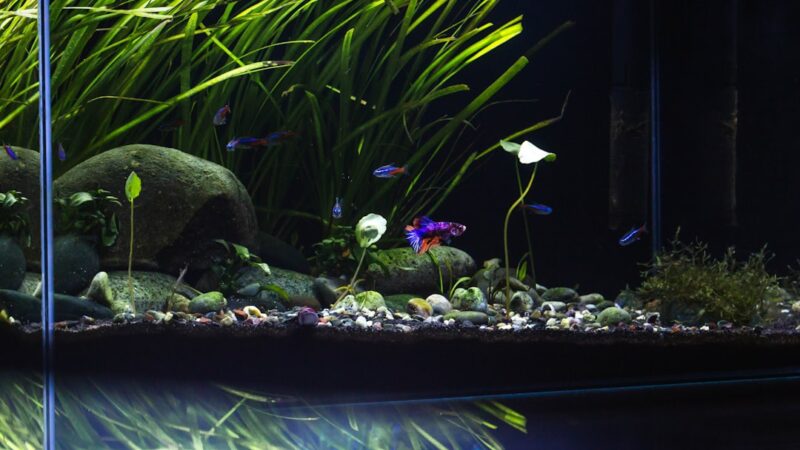
The visual appeal of a riparium lies in the seamless transition between water and land. When viewed from the front, you see an aquascape below the waterline — hardscape, aquatic plants, fish swimming among stones and wood — and above the waterline, a natural canopy of emergent vegetation that frames the top of the tank like a riverbank overhang.
This dual-layer effect creates depth and naturalism that a standard aquarium, no matter how beautifully aquascaped, cannot achieve. The emergent plants soften the hard edge of the tank rim and create the impression that you are looking through a window into a natural waterway rather than at a glass box of water.
For the most natural appearance, arrange plants in clusters rather than in a uniform row. Mix species with different leaf shapes and growth habits — trailing pothos alongside upright Cyperus and broad-leaved peace lilies. Allow some plants to drape over the front glass slightly, breaking the straight line of the rim.
Benefits of a Riparium
Beyond aesthetics, ripariums offer practical advantages:
- Nitrate absorption: Emergent plants are far more efficient at absorbing nitrates than submerged aquatic plants. Their access to atmospheric CO2 (which is far more abundant than dissolved CO2 in water) allows them to grow faster and consume more nitrogen. Many riparium keepers report measurably lower nitrate levels and reduced need for water changes.
- Algae reduction: By drawing excess nutrients from the water, emergent plants compete directly with algae for the resources that fuel algae growth. A well-established riparium can significantly reduce algae problems.
- Humidity regulation: In air-conditioned rooms in Singapore, the evaporation from a riparium adds beneficial humidity to the indoor environment. This is a side benefit for both human comfort and the health of any indoor plants nearby.
- Low maintenance: Once established, riparium plants require minimal care beyond occasional pruning. They are hardier than submerged aquatic plants and less prone to the challenges of underwater cultivation (algae on leaves, CO2 deficiency, nutrient imbalances).
Step-by-Step Setup Guide
- Choose your planters: Select hang-on planters or suction cup planters sized to fit your tank rim. For a 60cm tank, three to five planters along the back glass provide good coverage without overwhelming the tank.
- Fill planters with medium: Add LECA, pumice or coarse gravel to each planter. Rinse the medium thoroughly before use to remove dust.
- Prepare the plants: Remove plants from their pots and gently wash away all soil from the roots. Trim any damaged or brown roots. For pothos or philodendron cuttings, ensure each cutting has at least one node and aerial root.
- Plant into the planters: Position the plant in the planter so that the roots are in the medium and will sit below the waterline, while the stem and foliage are above. Pack the medium gently around the roots for stability.
- Attach planters to the tank: Hang or suction the planters onto the back glass. Arrange them at slightly different heights for a natural look. Ensure the lower portions of the planters are submerged so roots have access to the aquarium water.
- Adjust water level: Fill the tank so the water level reaches the bottom of the planters. The roots should be submerged; the planting medium should be partially submerged.
- Provide light: Suspend or mount your aquarium light to cover both the aquatic section and the emergent plants. If your existing light does not reach the emergent foliage, a small clip-on grow light supplements nicely.
- Wait and grow: Within two to four weeks, roots will extend into the water and foliage will begin growing vigorously. Pothos cuttings typically show new growth within a week in Singapore’s warm conditions.
Combining with an Aquascape Below
One of the greatest strengths of the riparium format is that the aquatic section can be aquascaped exactly as you would a standard planted tank. The emergent plants above add natural beauty without interfering with the underwater layout.
Consider these design tips when combining a riparium with an aquascape below:
- Place planters primarily along the back glass so they do not obstruct the front viewing panel.
- Use tall background plants in the aquascape (Rotala, Ludwigia, Vallisneria) to create a visual bridge between the submerged plants and the emergent foliage above.
- Leave the foreground open for carpeting plants and swimming space.
- The shadow cast by emergent plants can create natural dappled-light effects on the substrate below, which looks remarkably natural.
Maintenance
Riparium maintenance is straightforward:
- Pruning: Trim emergent plants every two to four weeks to prevent them from blocking light to the aquascape below. Pothos and philodendron can grow aggressively in Singapore’s climate and will need regular cutting back.
- Root management: Over time, roots from emergent plants will grow extensively through the water column. Trim roots if they become overly dense or interfere with equipment, filter intakes or the aesthetic of the aquascape.
- Water changes: Perform regular water changes as you would with a standard aquarium. Treat replacement water with a conditioner suitable for PUB’s chloramine-treated supply.
- Planter cleaning: Every few months, remove planters and rinse the LECA or planting medium to remove accumulated debris and biofilm.
- Pest management: In Singapore, mealybugs and spider mites can sometimes affect emergent foliage. Inspect plants regularly and treat infestations early with a neem oil spray (applied only to foliage above water — keep neem oil out of the aquarium water as it is toxic to fish).
For more on related topics, explore our paludarium and terrarium guide and our Java moss guide, which covers a versatile plant that works beautifully in the transition zone of a riparium. Visit us at Gensou, 5 Everton Park, for hands-on advice — with over 20 years of aquascaping experience in Singapore, we are always happy to help you plan your next project.
Frequently Asked Questions
Can I add a riparium to my existing aquarium without draining it?
Yes, this is one of the main advantages of a riparium. Simply attach planters to the back glass above the waterline and add your emergent plants. There is no need to drain the tank, remove livestock or modify the existing setup in any way. You can add a riparium element to any functioning aquarium.
Will riparium plant roots clog my filter intake?
If roots grow extensively near the filter intake, they can reduce flow. Position planters away from the filter intake, or trim roots that encroach on equipment. Most hobbyists find root management to be a minor task during routine maintenance rather than a significant problem.
Do riparium plants need fertiliser?
In most cases, the nutrients already present in the aquarium water (from fish waste, fish food decomposition and any fertiliser dosing) are sufficient to feed emergent plants. In fact, the plants absorbing these nutrients is one of the key benefits of a riparium. You generally do not need to add additional fertiliser for the emergent plants unless they show signs of deficiency (yellowing leaves, stunted growth).
Will the emergent plants block too much light for my aquatic plants?
This depends on the density of your emergent planting. A few planters along the back glass will cast minimal shadow on the aquascape below. If you plant very densely or use large-leaved species like peace lilies across the entire back wall, light to the rear of the tank may be noticeably reduced. Prune regularly and consider a stronger aquarium light if shading becomes an issue.
Related Reading