Indian Backwater Biotope Aquascape: Kerala’s Hidden Waterways
An indian backwater biotope aquascape draws inspiration from the lush, slow-moving waterways of Kerala in southern India, where freshwater channels wind through dense tropical vegetation. At Gensou Aquascaping, located at 5 Everton Park in Singapore, we find this biotope style particularly appealing because Kerala’s climate closely mirrors our own tropical conditions.
The Kerala Backwater Ecosystem
Kerala’s backwaters are an interconnected network of lagoons, lakes, and canals that run parallel to the Malabar Coast. The water is typically warm, between 26 and 30 degrees Celsius, slightly acidic to neutral at pH 6.0 to 7.2, and moderately soft. The bottom is covered in fine silt and organic detritus, and the water itself often carries a subtle tea-coloured tint from decaying vegetation. Dense marginal plants line the banks, while submerged roots and fallen branches provide shelter for fish.
This environment supports a remarkable diversity of freshwater species, many of which are available in the Singapore aquarium trade. Recreating it in a home aquarium is both achievable and visually stunning.
Hardscape Selection
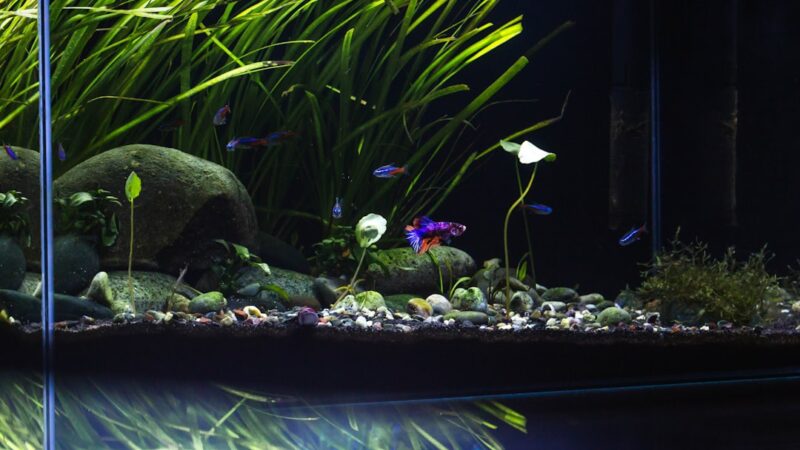
Driftwood is the primary hardscape element for a Kerala backwater biotope. Choose branching wood with a tangled, root-like appearance to replicate the submerged mangrove and tree roots found along the canal banks. Spider wood and Malaysian driftwood are excellent choices, available at Singapore shops such as East Ocean Aquatic and Seaview Aquarium for SGD 10 to SGD 40 per piece depending on size.
Stones play a minimal role in this biotope. If you include any, opt for smooth, rounded river pebbles in dark grey or brown tones. Scatter a few pebbles naturally across the substrate rather than creating prominent rock formations. The focus should remain on wood and organic matter.
Substrate and Leaf Litter
A fine, dark substrate best represents the silty bottom of the backwaters. ADA Amazonia or a similar nutrient-rich aqua soil works well if you plan to keep rooted plants. Alternatively, a layer of fine river sand topped with scattered dried leaves creates an authentic detritus-covered bed. Indian almond leaves are ideal and readily available in Singapore for SGD 3 to SGD 8 per pack. Their tannins tint the water to a natural amber tone and provide infusoria for fry and shrimp.
Add a few dried seed pods, such as alder cones or casuarina cones, to enhance the organic look. These small details make the difference between a generic tank and a convincing biotope.
Authentic Plant Species
Several popular aquarium plants originate from the Indian subcontinent. Cryptocoryne species are perhaps the most iconic, with varieties like Cryptocoryne wendtii, Cryptocoryne spiralis, and Cryptocoryne retrospiralis all native to southern Indian waterways. Rotala rotundifolia and Hygrophila polysperma are excellent stem plants that grow vigorously in Singapore’s warm water temperatures.
For floating cover, Pistia stratiotes and Salvinia natans are authentic choices that dim the light reaching the lower levels, replicating the shaded conditions of a backwater canal. Keep floating plants trimmed to avoid blocking too much light from submerged species. Arrange plants in naturalistic clusters along the wood, leaving open water areas in the centre to suggest the canal channel itself.
Fish Selection
Indian barbs are the cornerstone species for this biotope. Puntius denisonii, the Denison barb, is a spectacular schooling fish with a bold red lateral stripe. Pethia conchonius, the rosy barb, is a hardier and more affordable option at SGD 2 to SGD 5 each. Dawkinsia filamentosa, the filament barb, displays beautiful extended fin rays and thrives in groups of six or more.
For the lower levels, Schistura and Nemacheilus loaches are native bottom dwellers that sift through the substrate for food. Indian glass fish and blue panchax killifish add interest to the mid and upper water columns. Avoid mixing these species with aggressive cichlids, as the peaceful community dynamic is central to the backwater character.
Water Parameters and Maintenance
Target a pH of 6.2 to 7.0, general hardness of 4 to 10 dGH, and a temperature of 26 to 29 degrees Celsius. Singapore tap water may need to be softened slightly using peat filtration or diluted with reverse osmosis water. The tannins released by Indian almond leaves and driftwood will naturally lower pH over time, so monitor levels during the initial weeks.
Perform weekly water changes of 20 to 30 per cent, replacing removed leaves and seed pods as they decompose. Gentle filtration with minimal surface agitation preserves the calm water surface characteristic of the backwaters. A canister filter set to low flow or a sponge filter is ideal.
Lighting and Atmosphere
Kerala’s backwaters are shaded by overhanging vegetation, so subdued lighting is both authentic and practical. Set your LED fixture to 60 to 70 per cent intensity, or use floating plants to naturally filter the light. A colour temperature of 3000 to 4000 Kelvin enhances the warm, amber tones of the tannin-stained water and brings out the red and gold hues in Indian barb species.
Creating Your Kerala Backwater at Home
This biotope rewards patience and attention to natural detail. The combination of tangled wood, scattered leaves, lush Cryptocorynes, and colourful Indian barbs creates a living snapshot of one of the world’s most beautiful freshwater ecosystems. If you would like guidance on sourcing authentic materials or stocking your Indian backwater tank, visit Gensou Aquascaping at 5 Everton Park in Singapore. We are always happy to share our passion for biotope aquascaping.
Related Reading