West African Forest Stream Biotope: Kribensis and Anubias
A west african forest stream biotope recreates the shaded, tannin-rich waterways of Cameroon and Nigeria where Kribensis cichlids hunt among Anubias roots and fallen branches. At Gensou Aquascaping, located at 5 Everton Park in Singapore, we find this biotope style particularly rewarding because it suits our warm climate and uses hardy, low-light plants that thrive without CO2 injection. This guide sits inside our broader Aquascaping Styles Design Hub reference.
Understanding the Natural Habitat
Forest streams in West Africa flow through dense equatorial rainforest, where the canopy filters most direct sunlight. The water is typically soft and slightly acidic, with a pH between 5.5 and 7.0 and a GH of 3 to 8. The substrate is a mix of fine sand, leaf litter and fallen twigs, with exposed tree roots along the banks. Anubias species grow attached to rocks and submerged wood rather than rooted in the substrate. The gentle current carries a steady supply of decomposing organic matter, lending the water a light amber tint from tannins.
Choosing the Right Tank Size
A 60-litre tank is the minimum for a pair of Kribensis, but a 120 to 200-litre setup gives you more room for accurate habitat recreation and a small group of dither fish. A standard 90 by 45 by 45 centimetre tank works particularly well, providing enough horizontal swimming space and depth for layered hardscape. Tanks of this size are readily available at shops along Sims Avenue and Clementi pet stores in Singapore, typically priced between SGD 80 and SGD 200 depending on glass quality.
Hardscape Selection
Driftwood is the foundation of this biotope. Choose pieces with branching structure to mimic fallen trees and exposed roots. Malaysian driftwood, locally available for SGD 10 to SGD 40 per piece, works well and sinks without much soaking. Mopani wood is another authentic choice with its dual-tone colouring. Avoid dragon stone and seiryu stone, which belong to different geographical regions. Instead, use dark river pebbles and small rounded stones to replicate the stream bed. Stack wood pieces to create caves and overhangs, as Kribensis are cavity spawners that need enclosed spaces for breeding.
Substrate and Leaf Litter
Fine river sand in a natural brown or beige tone forms the base layer. Pool filter sand, available at hardware stores in Singapore for around SGD 8 to SGD 12 per bag, is an affordable and appropriately grained option. Scatter dried Indian almond leaves, also known as ketapang leaves, across the sand bed to replicate the forest floor. These leaves release tannins that tint the water amber, lower pH slightly and provide grazing surfaces for shrimp and fry. Replace leaves as they decompose, roughly every two to three weeks. Dried oak leaves are an alternative if ketapang is unavailable.
Plants for the Biotope
Anubias is the star of this layout. Anubias barteri var. nana, Anubias coffeefolia and Anubias hastifolia all originate from West Africa and grow beautifully attached to driftwood with fishing line or superglue. Bolbitis heudelotii, the African water fern, is another geographically accurate species that attaches to hardscape and adds a lush, feathery texture. Avoid using Asian or South American plants if you want strict biotope accuracy. These plants tolerate low to moderate lighting, making them ideal for the shaded conditions this biotope replicates. A basic LED light running at 30 to 50 per cent intensity for eight hours is sufficient.
Livestock Selection
Pelvicachromis pulcher, the common Kribensis, is the centrepiece fish. A single pair is best for tanks under 120 litres; larger setups can house two pairs with adequate territory separation. Suitable tankmates include Congo Tetras, African Butterfly Cichlids (Anomalochromis thomasi) and African Dwarf Frogs. Nerite snails help control biofilm on hardscape surfaces. Avoid mixing with aggressive cichlids or fin-nipping species. Source Kribensis from local breeders or reputable shops; a pair typically costs SGD 8 to SGD 15 in Singapore.
Water Parameters and Maintenance
Target a pH of 6.0 to 7.0, GH of 4 to 8 and a temperature of 24 to 27 degrees Celsius. In Singapore’s climate, the tank may sit naturally at 28 to 30 degrees without a chiller, which Kribensis generally tolerate well. Use a fan or clip-on cooler during the hottest months to keep temperature below 30 degrees. Weekly water changes of 25 to 30 per cent maintain water quality. If your tap water is harder than the target range, consider blending with RO water. A gentle sponge filter or small canister filter with a spray bar provides adequate flow without creating excessive current.
Bringing the Biotope Together
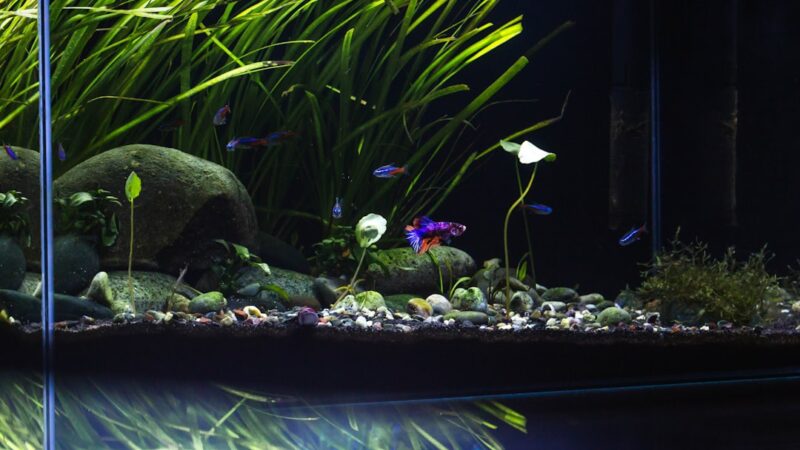
The beauty of a West African forest stream biotope lies in its naturalness. Resist the urge to over-plant or over-decorate. Leave open sand pathways for the Kribensis to patrol, let leaf litter accumulate in corners and allow biofilm to develop on wood surfaces. The amber-tinted water, the slow movements of the fish through shaded caves and the deep green of Anubias leaves create a mood that manicured Dutch-style tanks cannot match. Visit Gensou Aquascaping at 5 Everton Park for hardscape sourcing advice and biotope planning consultations.
Related Reading
- West African Mangrove Biotope Aquascape: Roots and Brackish Edges
- West African River Rapids Biotope Aquascape: Fast Current Rockwork
- How to Create an African River Biotope Aquascape
- Borneo Peat Forest Biotope Aquascape: Blackwater and Leaf Litter
- Borneo Stream Biotope: Crystal Water and Ancient Fish