
Anubias Coffeefolia Care Guide: Textured Leaves Like Coffee
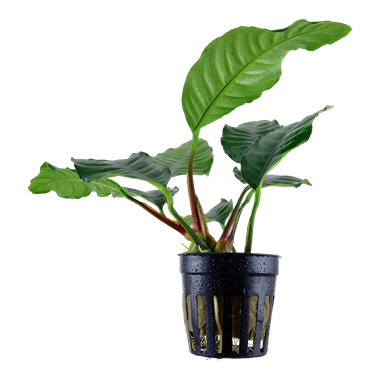
With its deeply ridged, dark green leaves that resemble coffee plant foliage, Anubias barteri var. coffeefolia brings a rugged, prehistoric texture to any aquascape that smooth-leaved plants simply cannot match. It grows slowly, tolerates low light, and shrugs off herbivorous fish — making it one of the most forgiving plants in the hobby. This anubias coffeefolia care guide from Gensou Aquascaping at 5 Everton Park, Singapore, walks you through optimal placement, nutrient needs, and the one persistent challenge every anubias keeper faces: algae on those broad, slow-growing leaves.
Plant Profile
Anubias barteri var. coffeefolia is an epiphytic plant from West Africa’s tropical rainforest streams. Its leaves are its defining feature — thick, leathery, and corrugated with pronounced veining that catches light at interesting angles. New leaves emerge a coppery bronze colour before maturing to deep green over several weeks. Individual leaves reach 10-15 cm in length on mature specimens, with the entire plant growing to about 15-25 cm tall. Growth rate is glacial by aquarium plant standards, producing one new leaf every two to three weeks under good conditions.
Placement and Attachment
Never bury the rhizome in substrate — this is the single most common mistake with anubias and leads to rot and death within weeks. Attach coffeefolia to driftwood, rocks, or lava stone using super glue gel (cyanoacrylate) or fishing line. Over time, the roots will anchor themselves firmly to the surface. Mid-ground placement works best; the textured leaves create visual depth when positioned between fine-leaved foreground carpets and taller background stems. In Singaporean aquascapes, pairing coffeefolia with dragon stone or seiryu stone creates a natural, low-maintenance hardscape focal point.
Lighting Requirements
Low to moderate light — 20-40 micromoles PAR at the leaf surface — is ideal. Under high light, coffeefolia survives but becomes a magnet for algae due to its slow growth and inability to outcompete fast-growing algae species for nutrients. If your tank runs high light for demanding carpet plants, position anubias in shaded areas behind hardscape or under the canopy of taller stem plants. Floating plants that filter overhead light also help. A photoperiod of 7-8 hours is sufficient; longer periods invite algae without benefiting this slow grower.
Water Parameters and CO2
Coffeefolia thrives across a wide parameter range: pH 6.0-8.0, GH 3-15, KH 2-12, temperature 22-28 °C. Singapore’s tap water suits it perfectly without modification beyond dechlorination. CO2 injection is not required but does modestly accelerate growth and improve leaf size and colour. In non-CO2 setups, the plant performs admirably — it just grows even more slowly. A liquid carbon supplement like Seachem Excel can provide a mild boost, though some hobbyists report leaf melt at higher doses, so start conservatively.
Nutrient Requirements
As a slow grower with a modest nutrient appetite, coffeefolia draws most of what it needs from fish waste and water column traces. Regular dosing of a comprehensive liquid fertiliser — Tropica Premium or APT Complete are popular choices locally — covers iron and micronutrients that keep leaves dark green and free from chlorosis. Potassium deficiency shows as tiny pinholes in older leaves; a dedicated potassium supplement corrects this quickly. Root tabs placed near the attachment point benefit the extensive root system without requiring substrate planting.
Algae Management on Anubias Leaves
Broad, slow-growing leaves are prime real estate for green spot algae (GSA), black beard algae (BBA), and diatoms. Prevention is far easier than treatment. Keep phosphate levels above 1 ppm to discourage GSA, maintain stable CO2 if injecting, and avoid placing anubias directly under intense lighting. For existing algae, spot-treat with a syringe of diluted hydrogen peroxide (3%) or liquid carbon applied directly to affected leaves during a water change. Algae-eating crew members — Amano shrimp, otocinclus, and nerite snails — help keep surfaces clean between manual interventions.
Propagation
Propagation is straightforward. Once the rhizome reaches 10 cm or longer, use a sharp blade to cut it into sections, ensuring each piece has at least three to four leaves and healthy roots. Attach the new section to a fresh piece of hardscape. The cut end heals within a week and new growth resumes from the tip. Avoid cutting too small — fragments with fewer than three leaves often stall or die back before recovering. Divisions can be shared with fellow hobbyists or sold at local plant swaps.
Timeless Texture for Any Tank
Anubias coffeefolia will never win a speed contest, but its distinctive corrugated leaves and near-indestructible nature make it a staple worth including in almost any setup. From low-tech HDB desktop tanks to full CO2 competition scapes, it adapts without complaint. This anubias coffeefolia care guide covers the essentials — attach it properly, keep the light moderate, feed lightly, and manage algae proactively. In return, you get a plant that looks better with every passing month and requires attention only in small, infrequent doses.
Related Reading
- Anubias Barteri Round Leaf Care Guide: Broad Circular Foliage
- Anubias Barteri var. Glabra Care Guide: Narrow Lance-Shaped Leaves
- How to Propagate Anubias Nana Petite: Rhizome Division Guide
- Anubias Hastifolia Care Guide: The Largest Aquarium Anubias
- Anubias Nana Flowering Underwater: Why It Happens and What to Do



