
Aquascaping With Dwarf Sagittaria Only: Grass Fields Underwater
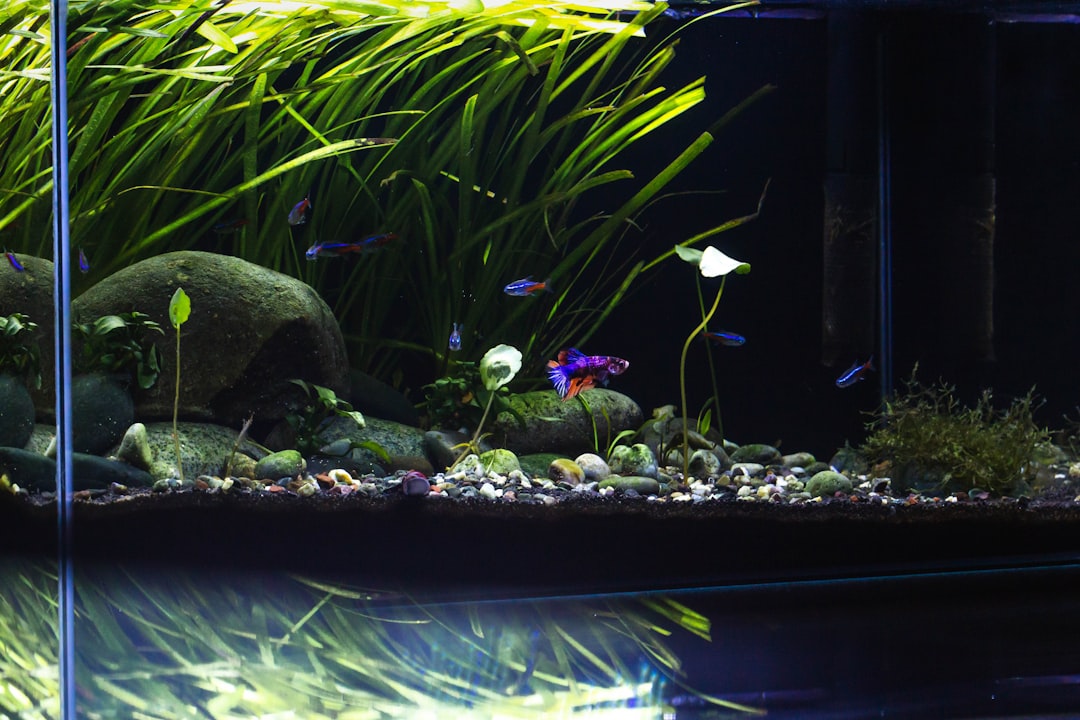
There is something deeply calming about an underwater meadow, and few plants deliver that effect as reliably as Sagittaria subulata. An aquascape using dwarf sagittaria only strips the hobby down to its simplest, most satisfying form: one species, one vision, endless green. This guide from Gensou Aquascaping at 5 Everton Park, Singapore walks you through every step, from choosing the right substrate to maintaining a carpet that stays low and dense.
Why a Single-Species Sagittaria Scape Works
Dwarf sagittaria spreads aggressively through runners, filling gaps on its own without the tedious replanting that other carpet plants demand. Its grass-like leaves sway gently in current, creating natural movement that no hardscape arrangement can replicate. A mono-species layout also simplifies your fertilisation routine since every plant in the tank has identical nutrient needs. The result is low maintenance and high visual impact, ideal for hobbyists who want a stunning tank without weekly trimming sessions.
Choosing Substrate
Dwarf sagittaria is a root feeder that thrives in nutrient-rich substrate. ADA Amazonia, Tropica Aquarium Soil, or any quality aquasoil provides the ideal foundation. Layer it 4-5 cm deep at the front and slope to 7-8 cm at the rear for a sense of depth. Inert substrates like sand can work if you supplement with root tabs every six to eight weeks, but growth will be noticeably slower compared to active soil. For a single-species scape where the plant is the entire show, investing in good substrate pays dividends.
Planting Technique
Purchase at least 5-6 pots for a 60 cm tank or 10-12 pots for a 90 cm tank. Separate each pot into individual plantlets, trimming any brown or mushy roots with sharp scissors. Plant each rosette roughly 2-3 cm apart using tweezers, pushing the root crown just below the substrate surface. Stagger your rows rather than planting in a grid; this looks more natural and allows runners to fill the gaps evenly. Within four to six weeks, runners will bridge the spaces and the carpet will begin to look continuous.
Lighting and CO2
Medium light of 30-50 lumens per litre on a 7-8 hour photoperiod is sufficient. Dwarf sagittaria does not demand intense illumination the way Hemianthus callitrichoides or glossostigma does, which means fewer algae problems in the early stages. CO2 injection accelerates growth and keeps leaves compact, but it is not essential. Without CO2, expect the carpet to take eight to twelve weeks to fill in fully rather than four to six. In Singapore’s warm climate (28-30 degrees C ambient), growth rates are naturally higher even without supplemental carbon.
Keeping the Carpet Low
Left unchecked, dwarf sagittaria can stretch to 15-20 cm, transforming your carpet into a jungle. Regular trimming is the answer. Once leaves exceed 5-6 cm, use curved scissors to mow the tops uniformly. Trim no more than one-third of the leaf height at a time to avoid stressing the plants. Higher light intensity also encourages compact growth; if your carpet keeps reaching upward despite trimming, consider increasing your light output by 20 percent. Some aquascapers remove the tallest leaves entirely and let shorter new growth fill in, which works but requires patience.
Fertilisation for Dense Growth
Root tabs are the primary fertiliser for dwarf sagittaria. Insert one tab per 10-15 cm grid spacing, pushing it 2-3 cm into the substrate near root zones. Replenish every six to eight weeks. A lean water column dosing of nitrogen and potassium supports leaf health without fuelling algae. Avoid overdosing iron in the water column; sagittaria absorbs iron primarily through its roots. If leaf tips yellow, that signals a potassium or nitrogen deficiency rather than an iron shortage.
Hardscape: Less is More
In a mono-species sagittaria scape, hardscape plays a supporting role. A single piece of driftwood or a small cluster of stones emerging from the grass adds focal interest without competing with the meadow effect. Dragon stone with its warm tones contrasts beautifully against bright green sagittaria. Position any hardscape slightly off-centre and let the grass grow around it naturally. The goal is an underwater pasture interrupted by a single landmark, not a complicated rock formation fighting the plants for attention.
Fish and Shrimp That Complement the Look
Schooling fish enhance the meadow illusion. A group of 15-20 ember tetras or green neon tetras hovering above the grass looks like a flock moving over open fields. Corydoras habrosus or Corydoras pygmaeus root around the base of the plants, adding bottom-level activity without uprooting anything. Cherry shrimp browse the leaf surfaces for biofilm and contribute subtle colour. Gensou Aquascaping has set up several sagittaria meadow tanks for clients in Singapore, and the combination of swaying grass and a tight school of small fish never fails to draw admiration.
Related Reading



