How to Aquascape a Bookshelf Tank: Long, Shallow and Striking

Bookshelf tanks, sometimes called long-low tanks, flip conventional aquarium proportions on their side. Typically 60-90 cm long but only 20-25 cm tall and 15-20 cm deep, they sit neatly on shelves, desks and narrow console tables. The unusual dimensions demand a different aquascaping approach than standard rectangles. This aquascape bookshelf tank guide from Gensou Aquascaping in Singapore covers layout principles, plant choices and equipment suited to these long, shallow formats, drawing on over 20 years of design experience.
Why Bookshelf Tanks Work in Small Spaces
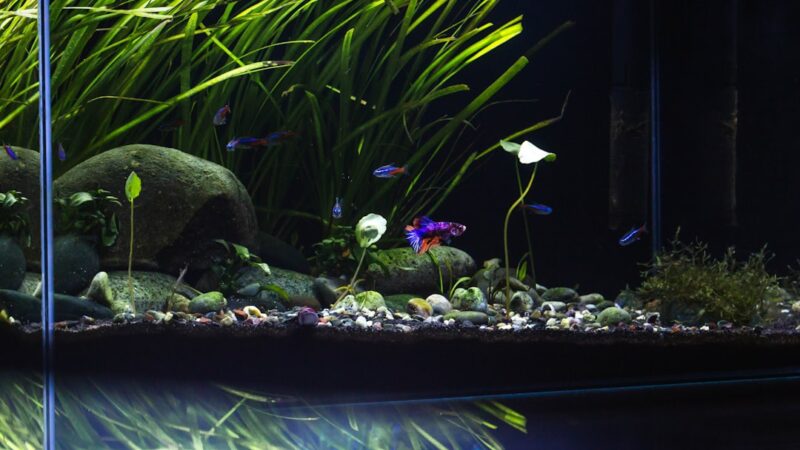
HDB flats and condos in Singapore often lack floor space for a full-sized aquarium stand, but a narrow shelf or counter offers a perfect home for a bookshelf tank. At just 15-20 cm deep, the tank barely protrudes from the wall. The elongated viewing window creates a cinematic, panoramic effect that draws the eye along the entire length, making the aquascape feel larger than its modest volume.
Choosing the Right Tank
ADA, UNS and local glass fabricators all produce bookshelf formats. Common sizes include 60 x 20 x 20 cm (roughly 24 litres) and 90 x 20 x 25 cm (roughly 45 litres). Ultra-clear low-iron glass is strongly recommended because the shallow depth means you look through less water, and any green tint in standard glass becomes very noticeable. Budget $60-$120 for a quality 60 cm bookshelf tank from local shops on Carousell or Shopee.
Layout Principles for Long, Shallow Tanks
Horizontal flow is your primary design axis. Arrange hardscape and plants to guide the eye from one end to the other, not upward. A single piece of driftwood running two-thirds the tank length, angled slightly, creates a powerful sense of direction. Avoid symmetry. Place the visual weight toward one end, roughly following the rule of thirds.
Height is severely limited, so every centimetre counts. Build the substrate from 2 cm at the front to 5-6 cm at the back to create depth. Small stones placed in a line or scattered grouping suggest a riverbed running through the tank. Keep hardscape no taller than two-thirds the tank height to preserve a sense of open water above.
Plant Selection for Shallow Tanks
Tall stems are out. Focus on low-growing and carpeting species. Eleocharis acicularis mini (dwarf hairgrass) creates a flowing carpet that emphasises the horizontal plane. Marsilea hirsuta forms clover-like patches that stay under 3 cm. Hemianthus callitrichoides (HC Cuba) provides the finest-textured carpet but demands high light and CO2.
For midground texture, Cryptocoryne parva stays compact at 3-5 cm, and small Anubias varieties like A. nana petite attached to pebbles add dark green accents. Mosses draped over the driftwood, particularly Riccardia chamedryfolia (mini coral moss), give the hardscape a weathered, aged appearance.
Lighting a Shallow Tank
Shallow water means light reaches the substrate easily, so you need less intensity than a tall tank. A slim LED bar rated at 30-40 PAR at substrate level is sufficient for carpeting plants with CO2. Twinstar, Chihiros and ONF all produce compact lights that fit bookshelf tank dimensions. Run the light for 7-8 hours. Algae appears quickly in shallow tanks because the entire substrate sits in the high-light zone, so do not overdo the photoperiod.
Filtration and Equipment
Internal filters are too bulky for a tank this shallow. A small hang-on-back filter or a nano canister filter like the Oase Filtosmart 60 keeps water clean without dominating the interior. Position the inlet and outlet at opposite ends to create gentle flow along the full length. Inline CO2 diffusers work well with canister setups and eliminate the visual clutter of an in-tank diffuser.
Heating is unnecessary in Singapore. A small thermometer strip on the side glass is enough to monitor temperature. Avoid suction-cup-mounted equipment inside the tank because every visible piece of hardware is magnified in a shallow, narrow space.
Stocking for Bookshelf Dimensions
Small, active fish that swim horizontally suit the format best. A school of 8-10 Boraras brigittae (chili rasboras) adds vibrant red without overwhelming the space. Corydoras pygmaeus or C. habrosus work along the sand bed. Neocaridina shrimp are ideal inhabitants, contributing colour and algae control without bioload concerns. Avoid anything that grows above 3 cm in body depth, as the tank simply does not offer enough vertical swimming room.
Maintaining the Panoramic Effect
Trim plants regularly to prevent anything from touching the water surface, which destroys the sense of openness. Clean the front glass twice weekly because algae on a shallow viewing panel is far more conspicuous than on a deep tank. Weekly 30% water changes keep the tank healthy, and the small volume means changes take just five minutes. A well-executed bookshelf tank aquascape proves that impressive design does not require a massive footprint.
Related Reading