Aquascaping With 3D-Printed Hardscape: Custom Shapes Underwater
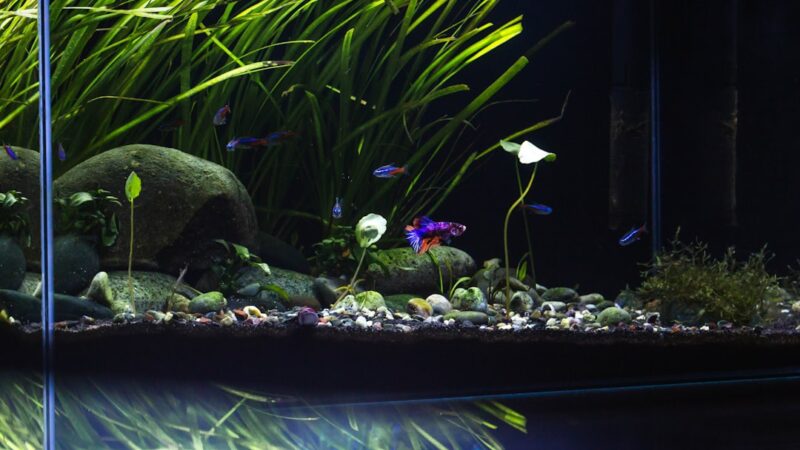
What if you could design the exact rock formation, cave, or root structure your aquascape needs — to the millimetre — and print it on your desk? Aquascaping with 3D-printed hardscape is a growing niche that blends technology with nature, giving hobbyists unprecedented control over layout and form. Gensou Aquascaping in Singapore has experimented with printed structures in client tanks, and the results range from functional breeding caves to elaborate fantasy landscapes impossible to achieve with natural stone.
Why Print Your Hardscape
Natural stone and driftwood are beautiful but unpredictable. You spend hours at the fish shop testing combinations, and the piece you need — a perfectly arched bridge, a hollow rock with multiple entrances — simply does not exist. 3D printing solves that problem. Design a cave sized precisely for your Apistogramma pair, an arch that frames your focal plant, or a plinth that elevates a rock to the exact height you want. The creative freedom is essentially unlimited.
Safe Filament Materials
Not every 3D-printing material belongs in an aquarium. PLA (polylactic acid) is the most common hobbyist filament and is generally considered aquarium-safe — it is a biodegradable thermoplastic derived from cornstarch. However, PLA softens in water above 50°C and degrades slowly over months, which can be a feature (temporary structures) or a flaw (permanent hardscape). PETG is a better long-term choice: chemically inert, does not leach, and holds up indefinitely in water at aquarium temperatures.
Avoid ABS — it can leach styrene. Resin prints (SLA/DLP) require thorough post-curing under UV light and multiple soaks to remove uncured resin, which is toxic to fish. If in doubt, soak a test print in a bucket with a few hardy snails for two weeks and monitor for any adverse reactions.
Design Considerations
Aquarium hardscape needs to look natural, or at least intentional. Layer lines — the visible ridges from FDM printing — can be an advantage, mimicking the texture of sedimentary rock. Designing with 1-2 mm layer heights and a rough infill pattern produces a surprisingly stone-like surface. For a smoother finish, sand the print and coat it with aquarium-safe epoxy or cement to create a more organic appearance.
Include drainage holes in hollow prints so water circulates freely. Trapped air pockets make the piece buoyant, and stagnant water inside a sealed cavity becomes anaerobic and foul-smelling.
Weighting and Anchoring
Printed hardscape is much lighter than natural rock — a piece that looks like a 2 kg stone might weigh 150 grams. Fill hollow compartments with aquarium gravel, lead plant weights, or stainless-steel bolts sealed inside with silicone to add mass. Alternatively, design a flat base with holes that pin into the substrate, or attach the print to a piece of natural rock with aquarium-safe cyanoacrylate gel. A floating “rock” bobbing on the surface is not the look you are going for.
Coating for Realism
Bare PLA or PETG looks obviously plastic. A coat of aquarium-safe cement (thin-set morite or tile adhesive without additives) pressed into the surface before curing creates a convincingly rocky texture. Alternatively, drylok masonry sealer in grey or white gives a stone-like matte finish. Once submerged, biofilm and algae colonise the surface within weeks, further disguising the artificial origin. Some hobbyists encourage Java moss or Bucephalandra to grow over the print, blending it seamlessly into the aquascape.
Practical Applications
Breeding caves are the most popular use case. Print a cave with an entrance diameter of exactly 3 cm for shell-dwelling Lamprologus, or a flat ledge for Hypancistrus pleco spawning. Custom filter guards, lily pipe holders, and equipment covers are practical everyday prints. More ambitious projects include modular rock walls that stack and interlock, allowing you to reconfigure your hardscape without a full rescape.
Where to Start
Free 3D modelling software like Tinkercad or Fusion 360 handles basic aquarium hardscape design. Thingiverse and Printables host downloadable aquarium-specific models if you prefer not to design from scratch. A basic FDM printer — the Creality Ender 3 series starts at around $250-$350 in Singapore — prints PETG reliably. Build volume of 22 x 22 x 25 cm covers most aquarium hardscape pieces; larger structures can be printed in sections and glued together.
Blending Technology and Nature
An aquascape using 3D-printed hardscape does not have to look artificial. With the right material choice, surface treatment, and plant coverage, printed structures become invisible foundations for natural beauty. The technology is a tool, not a style — use it to solve specific layout problems or create forms that nature cannot provide. Gensou Aquascaping Singapore encourages hobbyists to experiment, test materials carefully, and let creativity drive the design.
Related Reading