
How to Aquascape for a Honey Gourami Pair
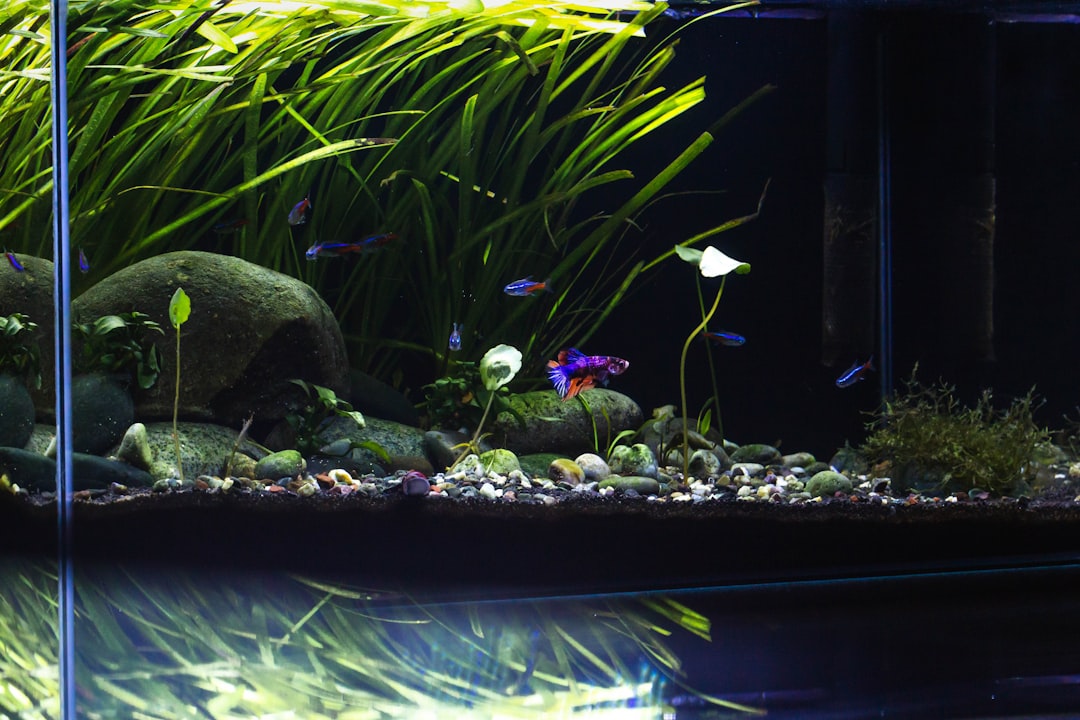
Honey gouramis (Trichogaster chuna) are gentle, golden-hued fish that thrive in planted tanks with calm water and plenty of surface cover. Building an aquascape for a honey gourami pair means designing around their natural behaviours: bubble-nest building at the surface, cautious mid-water hovering, and a preference for dimly lit, densely planted corners. Gensou Aquascaping in Singapore frequently includes honey gouramis in client tanks, and getting the layout right transforms a shy pair into confident, colourful centrepiece fish.
Why Layout Matters for Honey Gouramis
In bare or sparsely decorated tanks, honey gouramis hide constantly and show washed-out colour. They evolved in slow-moving, vegetation-choked waters of northeastern India and Bangladesh. Dense planting and surface cover signal safety, triggering natural behaviour and vibrant golden-orange breeding colours in males. A well-aquascaped tank is not decoration for these fish; it is habitat that directly affects their health and confidence.
Tank Size for a Pair
A 40-litre tank is the practical minimum for a single pair. Something in the 50-60 litre range provides more aquascaping flexibility and better territory separation if the male becomes pushy during breeding. Avoid tall, narrow tanks; a standard 60 cm x 30 cm x 30 cm footprint gives the horizontal space honey gouramis prefer. The water level can be dropped 3-5 cm below the rim to create a humid air pocket above the surface, important for labyrinth fish that breathe atmospheric air.
Surface Plants: The Most Important Element
Floating plants are essential. Salvinia minima, Limnobium laevigatum (Amazon frogbit), or red root floaters (Phyllanthus fluitans) provide the surface cover where males build bubble nests. Cover roughly 40-60 per cent of the surface, leaving some open areas for light penetration and feeding access. The trailing roots of frogbit double as shelter for fry if breeding succeeds. In Singapore’s bright ambient light, floating plants grow fast, so thin them weekly to prevent total surface blockage.
Mid-Ground and Background Planting
Tall stem plants create the vertical structure honey gouramis weave through. Limnophila sessiliflora grows quickly and adds feathery texture. Rotala rotundifolia provides colour contrast with pink-tipped stems under moderate light. Plant these densely along the back and sides, leaving the front third more open for viewing and feeding. A stand of Vallisneria nana in one rear corner adds movement without overwhelming the layout.
Hardscape: Keep It Minimal
Heavy rockwork is unnecessary and can create dead spots in flow that trap debris. One or two small pieces of driftwood positioned mid-ground provide perching spots and break sight lines between the pair. Spider wood or manzanita with fine branches suits the delicate scale of the fish. Attach Anubias nana ‘Petite’ or java moss to the wood for a natural, established look. The hardscape should support the plants, not dominate the aquascape.
Water Flow and Filtration
Honey gouramis dislike strong current. A sponge filter rated for the tank volume provides gentle biological filtration and creates minimal surface disturbance, exactly what bubble-nest builders need. If using a hang-on-back filter, baffle the outflow with a piece of filter sponge or aim it against the glass wall to disperse the current. Flow rates below 3-4 times tank volume per hour work well. Still corners where floating plants cluster become preferred nesting sites.
Lighting and Colour Enhancement
Moderate lighting of 30-50 PAR at substrate level supports plant growth while keeping the honey gourami pair comfortable. A warm-toned LED (3500-4500K) enhances the golden-orange body colour far better than cool white. Floating plants naturally filter the light, creating dappled shade that mimics their wild habitat. Avoid sudden on-off lighting; a ramp timer that takes 15-30 minutes to reach full brightness reduces stress noticeably.
Putting It All Together
The ideal honey gourami aquascape is lush, calm, and slightly dim. Dense background planting, a generous layer of floating plants, one or two pieces of wood with epiphytes, and fine sand or soil substrate. Singapore’s warm tap water (28-30°C) suits the species perfectly without a heater, and PUB water parameters (soft, slightly acidic) sit within their preferred range after dechlorination. Gensou Aquascaping recommends this setup as one of the most rewarding small-tank projects: low-tech, low-maintenance, and endlessly charming to watch.
Related Reading
- How to Aquascape for Chocolate Gouramis: Dark Water Sanctuary
- How to Aquascape for Licorice Gouramis: Ultra Soft Blackwater Nano
- How to Aquascape for a Pearl Gourami Tank: Surface and Shelter
- How to Aquascape for Sparkling Gouramis: Shallow and Dense
- How to Aquascape a Breeding Pair Tank: Privacy and Spawning Sites



