Aquascaping With Mopani Wood Only: Dense Grain and Tannins
Mopani wood is one of the most visually distinctive hardscape materials available to aquarists — two-toned in dark espresso and pale cream, dense enough to sink without soaking, and textured with deep grain patterns and natural crevices that look genuinely ancient. Building an aquascape with mopani wood only — no stone, no other wood species, no planted substrate — challenges you to create visual interest through structure, scale, and the natural patina that develops over time. At Gensou Aquascaping at Everton Park, Singapore, mopani-only tanks are a bold creative choice that works exceptionally well in commercial settings where a dramatic, low-maintenance display is needed. This guide sits inside our broader Planted Tank Complete Hub reference.
Selecting and Sourcing Mopani Wood in Singapore
Mopani wood is widely available in Singapore’s aquarium shops and on Shopee, typically sold in pre-packaged mixed-size pieces. When building a mopani-only aquascape, buy pieces in three distinct size categories: one or two large anchor pieces (15–25 cm), several medium connector pieces (8–15 cm), and a quantity of small accent pieces (3–8 cm) for filling gaps and adding foreground detail.
Look for pieces with interesting natural shapes — angles, bifurcations, and hollowed sections create far more visual interest than straight lengths. Inspect for cracks that extend through the wood, which can cause pieces to split after weeks of immersion — these are not worth purchasing regardless of their shape.
Preparation: Boiling, Soaking and Tannin Management
Mopani releases significant quantities of tannins, staining the water a dark amber-brown that many hobbyists find attractive but others want to minimise. Boiling each piece for 30–60 minutes per session, repeated three to five times over a week, leaches out the bulk of surface tannins. The water colour shifts from very dark brown in early boiling sessions to a much lighter amber as tannins exhaust from the outer layers.
Even after thorough preparation, mopani will continue to release some tannins for several months in the tank. In Singapore’s warm water at 28–30°C, this process accelerates compared to cooler climates. Activated carbon in the filter removes tannins efficiently; alternatively, embrace the amber colouration as part of the blackwater aesthetic — it actually flatters the two-tone wood grain beautifully under warm LED lighting.
Composition Principles for Mopani-Only Layouts
Without plants or stone to add visual variety, the arrangement of the wood itself must carry the entire composition. Apply the rule of odds — group pieces in threes or fives rather than even numbers, which tend to look artificially symmetrical. Create a strong primary focal point with the largest, most interesting piece, positioned slightly off-centre according to the rule of thirds. Secondary pieces should lead the eye toward this focal point rather than competing with it.
Vary the orientation dramatically: some pieces should be nearly vertical, others nearly horizontal, and a few angled at 30–45 degrees. This variation prevents the layout from looking like a pile of wood and instead suggests a complex submerged root system or a natural tangle of fallen timber.
Substrate for a Mopani-Only Tank
With no plants to root and no aquasoil required, the substrate choice is purely aesthetic. Fine dark sand — black or very dark grey — makes the pale sections of mopani wood stand out dramatically and creates a clean, minimalist look. Natural beige sand produces a warmer, more naturalistic effect. Avoid coloured gravel — it clashes with the organic tones of the wood.
Keep the substrate layer thin (1–2 cm) since there is no biological reason for depth without rooted plants. A thin layer is also easier to keep clean — detritus is visible and easily siphoned during water changes.
Fauna for a Mopani-Only Aquascape
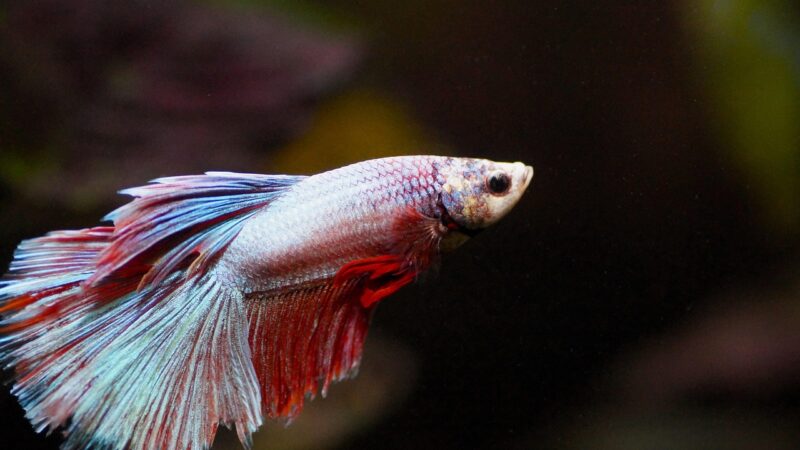
The creviced, complex surface of mopani wood is ideal for catfish species that hide in woody structure during the day. Ancistrus (bristlenose plecos) graze biofilm from the wood surface and create constant low-level movement without disturbing the composition. Betta splendens in a solo display is another excellent choice — the tannins suit their water preference, and the wood provides territories and visual breaks that reduce stress in a single-species tank.
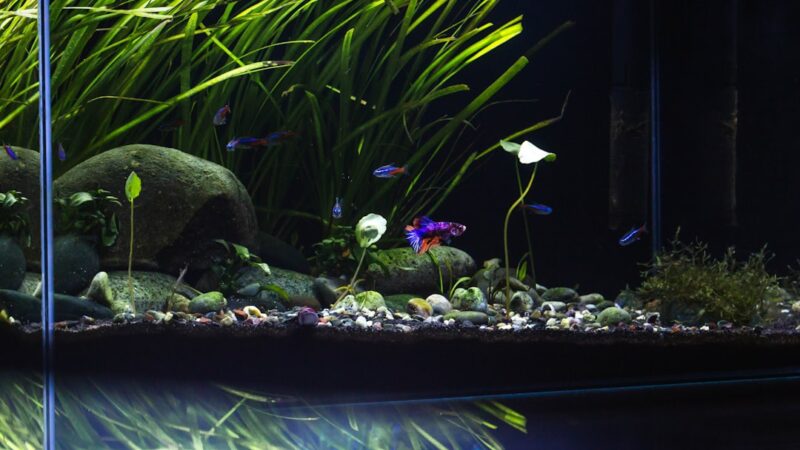
For a schooling fish display, small tetras — particularly species with reddish or orange colouration like ember tetras or flame tetras — contrast strikingly against the dark wood and amber water. Keep stocking light to maintain water clarity and reduce the frequency of water changes needed.
Long-Term Appearance and Biofilm
Within two to four weeks of setup, a white-grey fungal bloom typically appears on mopani surfaces — this is harmless and consumed readily by shrimp and plecos, disappearing within a week or two as the wood’s exterior fully saturates. After several months, a natural dark biofilm establishes on all surfaces, unifying the composition visually and creating the aged, submerged-for-years look that is the aesthetic hallmark of a mature mopani-only aquascape.
Related Reading