
Aquarium CO2 and pH Relationship: Reading the KH-pH Chart
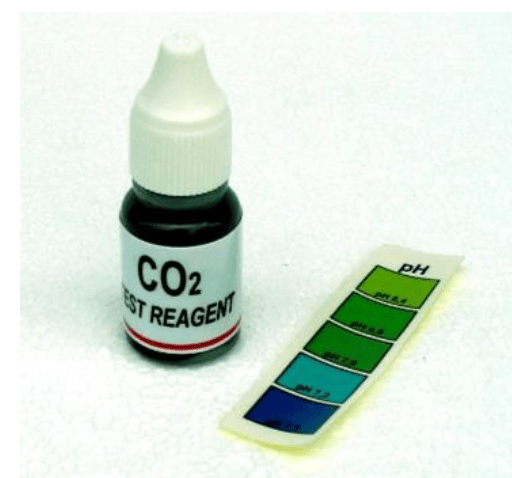
Dialling in the right CO2 level for a planted aquarium requires more than watching a bubble counter — you need to understand the chemistry behind how dissolved carbon dioxide interacts with water hardness and acidity. The KH-pH-CO2 relationship chart is the tool that connects these variables, and once you can read it, optimising your injection becomes straightforward. This aquarium CO2 pH relationship chart guide from Gensou Aquascaping at 5 Everton Park, Singapore, explains the science in practical terms. This guide sits inside our broader Planted Tank Complete Hub reference.
The Chemistry in Simple Terms
When CO2 dissolves in water, it forms carbonic acid, which lowers pH. The extent of this pH drop depends on the water’s carbonate hardness (KH), which acts as a buffer. High KH resists pH changes, meaning you need more CO2 to shift the needle. Low KH allows pH to swing more dramatically with less CO2. The KH-pH chart maps these relationships so you can determine your dissolved CO2 concentration by measuring just two things: KH and pH.
How to Read the Chart
Find your KH value along the left column and your pH value across the top row. The cell where they intersect shows your approximate dissolved CO2 in parts per million (ppm). For planted tanks, the target is 20-30 ppm — enough to fuel vigorous plant growth without stressing fish. At a typical Singapore tap water KH of 2-3 and a target CO2 of 25-30 ppm, your pH should sit around 6.2-6.6 during the CO2 injection period. These numbers may surprise hobbyists who assume a pH below 7.0 is dangerous — in soft water, it is perfectly normal.
Why KH Matters So Much
Singapore’s PUB tap water typically has a KH of 2-4, which is relatively low. This means small changes in CO2 injection produce noticeable pH swings. A tank with KH 2 might drop from pH 7.0 to pH 6.2 with moderate CO2 injection, while the same injection rate in KH 6 water might only shift pH from 7.2 to 6.8. Neither is problematic for fish, but understanding the relationship prevents panic when you see your pH meter reading 6.0 in a soft-water planted tank — that reading likely corresponds to a perfectly safe 30 ppm CO2.
Limitations of the Chart
The KH-pH-CO2 chart assumes that KH is the only buffer present in your water. In practice, organic acids from driftwood, tannins from Indian almond leaves, and certain commercial pH buffers can lower pH independently of CO2, making the chart overestimate your actual CO2 concentration. If you use these additives, the chart becomes unreliable. A drop checker filled with 4 dKH reference solution and bromothymol blue indicator provides a more accurate real-time CO2 reading that accounts for interfering substances.
Using a Drop Checker Alongside the Chart
Hang a drop checker inside your tank where you can easily see it. The indicator liquid changes colour based on CO2 concentration: blue means too little (below 15 ppm), green indicates the ideal 20-30 ppm range, and yellow signals excessive CO2 above 35 ppm. Cross-reference the drop checker colour with your calculated chart value — if both agree, you have confidence in your reading. If they diverge, trust the drop checker and investigate what is skewing your KH or pH measurement.
Adjusting CO2 Based on Your Readings
Start with a low bubble rate and increase gradually over several days, testing pH each afternoon when CO2 has been running for at least two hours. If your pH has not dropped to the target range based on the chart, increase the bubble rate by one bubble per second and retest the next day. Watch fish behaviour closely — gasping at the surface or lethargy indicates excessive CO2 regardless of what the chart says. Reduce injection immediately if you observe distress. For a typical 60-litre tank, 1-2 bubbles per second through an efficient diffuser usually reaches the target range.
pH Swings and Fish Safety
CO2 injection creates a daily pH cycle: pH drops during the injection period and rises overnight when CO2 off-gasses. A swing of 0.5-1.0 pH units over 24 hours is normal and well-tolerated by most tropical fish. Problems arise when the swing exceeds 1.5 units or happens abruptly — starting CO2 injection at full blast rather than ramping up slowly can shock sensitive species. Using a solenoid valve on a timer that aligns CO2 injection with the light period is standard practice. Turn CO2 on one hour before lights on and off one hour before lights off.
Putting It All Together
Mastering the aquarium CO2 pH relationship chart transforms CO2 management from guesswork into precision. Measure your KH and pH, consult the chart, verify with a drop checker, and adjust incrementally. For Singapore hobbyists working with our naturally soft tap water, the maths consistently points to a target pH in the low 6s during CO2 hours — a number that looks alarming until you understand the buffering context. Once you do, consistent plant growth and minimal algae follow naturally.
Related Reading



