Best Shrimp-Safe Water Conditioners for Aquariums
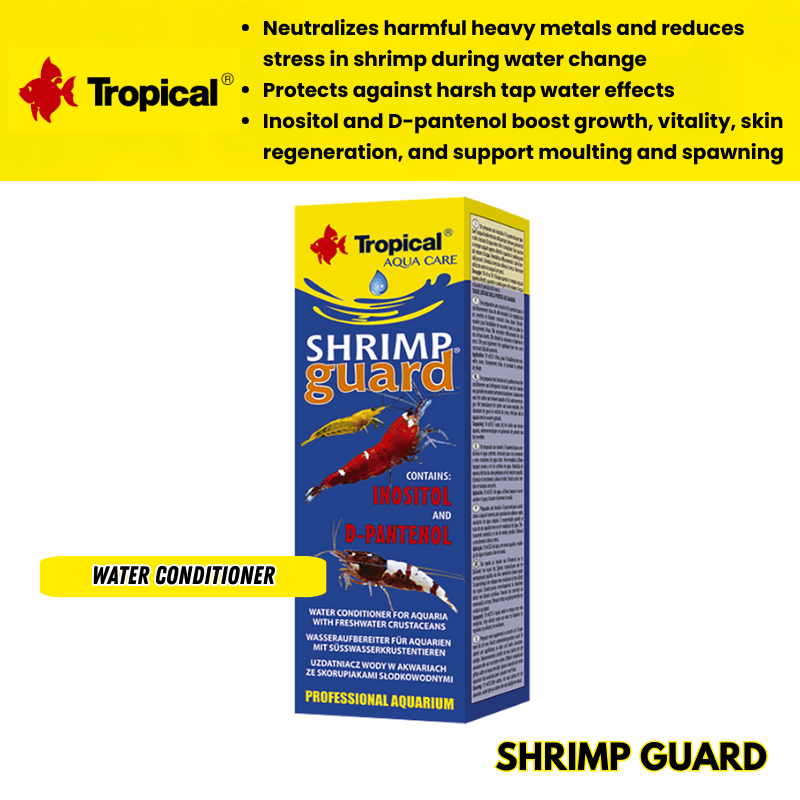
Shrimp are far more sensitive to chemicals in tap water than most fish, which makes choosing the right water conditioner critical. The best shrimp-safe water conditioner for your aquarium neutralises chloramine and heavy metals without introducing additives that stress or kill invertebrates. Singapore’s PUB tap water is treated with chloramine — not free chlorine — so a basic dechlorinator alone will not cut it. At Gensou Aquascaping, our 5 Everton Park studio maintains over a dozen shrimp breeding tanks, and conditioner choice is something we take seriously.
Why Shrimp Need Special Consideration
Chloramine is a stable bond between chlorine and ammonia. Standard dechlorinators break that bond, releasing free ammonia into the water — harmless in a well-cycled fish tank where bacteria process it quickly, but potentially deadly in a shrimp tank where even 0.25 ppm ammonia can trigger moulting failures and deaths. A shrimp-safe conditioner must neutralise both the chlorine component and the released ammonia simultaneously. Some conditioners also bind heavy metals like copper, which is lethal to shrimp at concentrations as low as 0.01 ppm.
Top Shrimp-Safe Conditioners
Seachem Prime is the industry standard and the product we use most often. It detoxifies chlorine, chloramine, and ammonia, and temporarily binds heavy metals and nitrite for 24-48 hours — long enough for your biofilter to process them. Dosing is economical: just 2 drops per 4 litres, or 5 ml per 200 litres. A 250 ml bottle runs about $12-$15 on Shopee and treats 10,000 litres. The concentrated formula means you need very little per water change.
For keepers who prefer a product specifically formulated for invertebrates, SL-Aqua Black More Stabilizer is popular in the Taiwanese and Singaporean Caridina breeding community. It conditions water and adds trace minerals beneficial to moulting. A 250 ml bottle costs around $18-$22 on Carousell.
Salty Shrimp Aquarium Mineral GH/KH+ is technically a remineraliser rather than a conditioner, but many shrimp keepers who use RO water add this alongside Prime. It provides calcium, magnesium, and carbonates in ratios tailored for Neocaridina and Caridina species.
Conditioners to Avoid Around Shrimp
Some popular water conditioners contain aloe vera extract or “stress coat” slime enhancers designed for fish. These ingredients are unnecessary for shrimp and, in some keeper reports, have been linked to bacterial blooms and water cloudiness in shrimp-only setups. Products with added herbal extracts or “healing” formulations are best kept away from invertebrate tanks. Stick with conditioners that do one job well: neutralise chloramine and heavy metals, nothing more.
Dosing Tips for Water Changes
Always condition the new water before adding it to the shrimp tank, not after. Fill your water change bucket, add the conditioner, stir, and wait two minutes. Then drip or slowly pour the treated water into the aquarium. Overdosing Prime by 2-3 times is considered safe — Seachem themselves recommend a 5x dose during ammonia emergencies — but do not make a habit of it. Consistent, accurate dosing matters more than dumping in extra “just in case.”
For Singapore tap water specifically, the standard dose of Prime is sufficient. Our water is soft (GH 2-4) with low heavy metal content, so you do not need the heavy-metal-focused conditioners marketed for areas with older copper plumbing.
RO Water and Remineralisation
Serious Caridina breeders in Singapore often use RO/DI water, which eliminates the need for a conditioner entirely since there is no chloramine to neutralise. However, pure RO water has zero mineral content and must be remineralised before use. Products like Salty Shrimp GH+ (for Caridina) or GH/KH+ (for Neocaridina) bring the water to the correct TDS, typically 100-120 for Caridina and 150-200 for Neocaridina. If you go this route, a TDS meter ($8-$12 on Lazada) becomes essential.
How Often to Condition
Condition every single batch of new tap water that enters your shrimp tank — no exceptions. Even small top-ups to replace evaporated water should be treated, because chloramine does not evaporate like free chlorine does. If you use an auto top-up system connected to tap water, install a small carbon block filter inline to remove chloramine continuously. A shrimp-safe water conditioner is cheap insurance; skipping it even once can cause a cascade of moulting deaths that takes weeks to recover from.
Related Reading