Best Moss Mesh and Pads for Aquascaping Attachment
Growing moss into dense, uniform mats is one of aquascaping’s most satisfying techniques — but only if the moss stays put while it attaches. The best moss mesh and pads for aquascaping hold your moss flat against surfaces, letting rhizoids grip hardscape or substrate while the fronds fill in evenly. Without proper mesh, moss drifts loose, tangles in your filter intake, and creates a mess instead of a carpet. This guide from Gensou Aquascaping at 5 Everton Park, Singapore covers the top options and how to use them effectively.
Stainless Steel Mesh vs Plastic Canvas
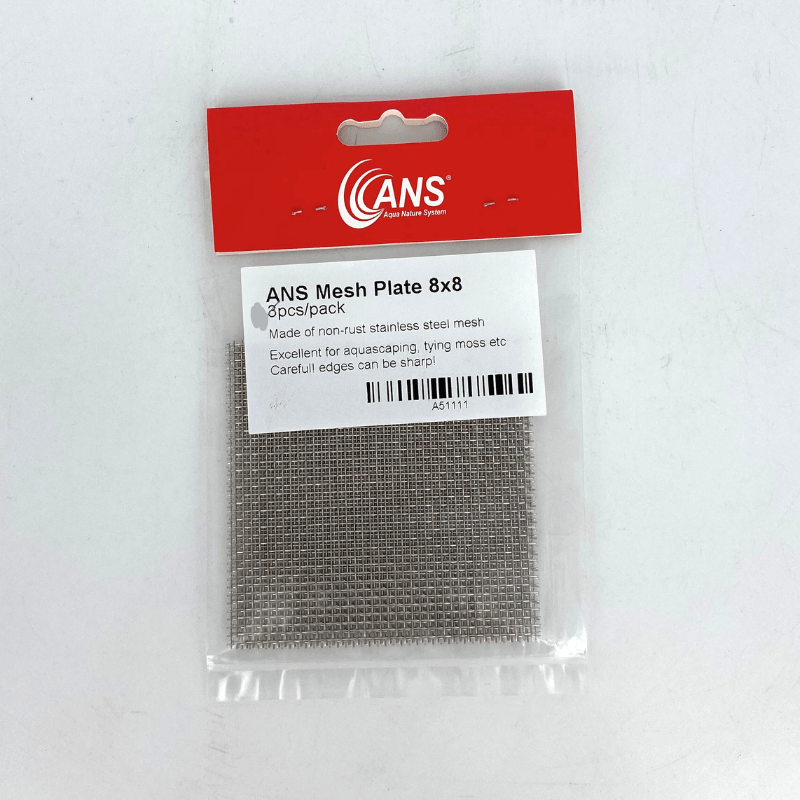
Two materials dominate the moss attachment world. Stainless steel mesh (usually 304 or 316 grade) is rigid, sinks immediately, and can be bent to conform to curved surfaces like driftwood. Plastic craft canvas — the perforated sheets sold at craft stores — is lighter, cheaper, and easier to cut with ordinary scissors. Steel mesh costs about $3-$6 per 15×15 cm sheet on Shopee; plastic canvas runs under $2 for a much larger A4-sized sheet at Daiso or Art Friend.
For flat moss walls and dividers, plastic canvas wins on convenience. For wrapping around irregular wood or rocks, stainless steel’s rigidity and weight make it the better choice.
Pre-Made Moss Pads
Several brands sell ready-to-use moss pads with suction cups attached. These are designed to stick directly onto aquarium glass for instant moss walls. The quality varies — some use dense foam backing that blocks light and causes the moss to yellow, while better versions use an open mesh that lets light and water circulate through. Look for pads from brands like Aquario or DOOA that use a grid-style backing. Pre-made pads typically cost $5-$8 each and save considerable setup time.
How to Attach Moss to Mesh
Start by tearing your moss into thin, single-layer pieces. Taxiphyllum barbieri (Java moss) and Vesicularia montagnei (Christmas moss) both work well. Lay the mesh flat, spread a thin, even layer of moss across it — resist the urge to pile it thick, as dense clumps trap debris and rot underneath. Secure the moss by threading fishing line (4-6 lb monofilament) in a criss-cross pattern across the surface, or sandwich it between two sheets of mesh tied together at the edges with cable ties.
The sandwich method produces the neatest results. Within 3-4 weeks under moderate lighting (40-60 PAR), the moss grows through the mesh openings and covers the surface completely. At that point, the mesh becomes invisible.
Choosing the Right Moss Species
Not every moss attaches equally well. Riccardia chamedryfolia (coral moss) grips slowly and benefits from mesh support for 6-8 weeks. Christmas moss attaches faster and drapes beautifully once established. Java moss is the most forgiving — it grows in almost any conditions and fills mesh quickly, though it can look untidy without regular trimming. For a refined look, Fissidens fontanus (phoenix moss) is stunning but needs cooler water around 22-25°C, making it trickier in Singapore without a chiller or fan.
Moss Walls: Setup and Maintenance
A moss wall transforms the back panel of your aquarium into a living green backdrop. Attach a plastic canvas sheet to suction cups at each corner, press it against the rear glass, and let the moss grow in. Maintenance involves trimming every 2-3 weeks with sharp scissors to keep the wall flat and prevent it from bulging outward. Pull the entire panel off quarterly to rinse out trapped detritus behind it — this is especially important in Singapore’s warm water, where organic waste decomposes faster and can create anaerobic pockets.
Where to Buy in Singapore
Stainless steel moss mesh is readily available on Shopee and Lazada. Search for “aquarium moss mesh 304 stainless” for the best results. Plastic canvas is stocked at most Daiso outlets and craft shops islandwide. For pre-made moss pads with suction cups, check the aquascaping section at C328 Clementi or browse Carousell for hobbyist-made options, which are often higher quality than mass-produced imports and support the local community.
Tips for Faster Coverage
Moderate lighting and liquid fertiliser with iron accelerate moss growth noticeably. CO2 injection helps but is not essential — most mosses grow respectably without it. Keep water temperature below 28°C if possible; moss species generally prefer cooler conditions, and Singapore’s ambient heat can slow growth in uncooled tanks. A small clip-on fan blowing across the water surface drops the temperature by 2-3°C and costs very little to run.
Related Reading