Freshwater vs Marine Aquascaping: Key Differences in Approach
Aquascaping is aquascaping, right? Not quite. The freshwater vs marine aquascaping differences run deeper than just swapping plants for corals, and understanding them saves time, money and frustration when crossing over between the two worlds. At Gensou Aquascaping Singapore, we design both freshwater planted tanks and marine reef systems, and after over 20 years the contrasts still fascinate us. Whether you are a planted tank enthusiast eyeing your first reef or a reefer curious about iwagumi, this comparison clarifies what changes and what stays the same.
Hardscape Materials
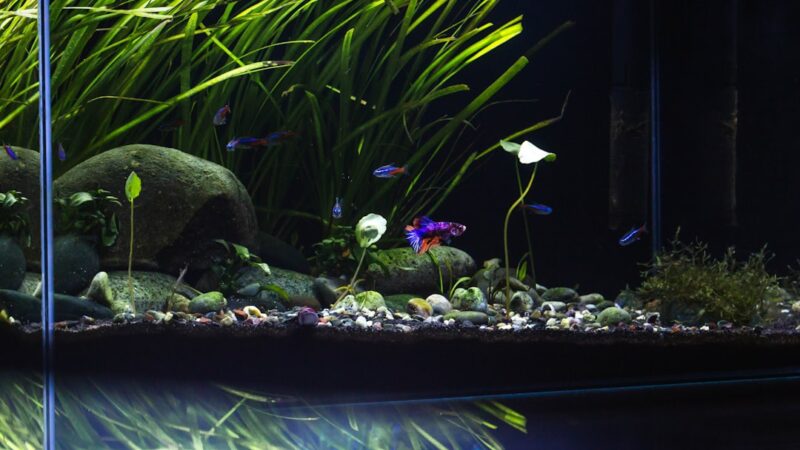
Freshwater aquascaping uses inert stones like Seiryu, dragon stone and lava rock alongside driftwood — mopani, spider wood and Malaysian driftwood are staples. Marine aquascaping relies almost exclusively on porous calcium-based rock: dry rock, live rock or man-made reef rock. Driftwood is rarely used in marine tanks because it leaches tannins that discolour water and lower pH, though it appears in brackish paludariums. The weight and porosity of reef rock make it behave differently during stacking — it bonds well with epoxy but lacks the dense, angular edges that make freshwater stone easy to wedge into place.
Design Philosophy
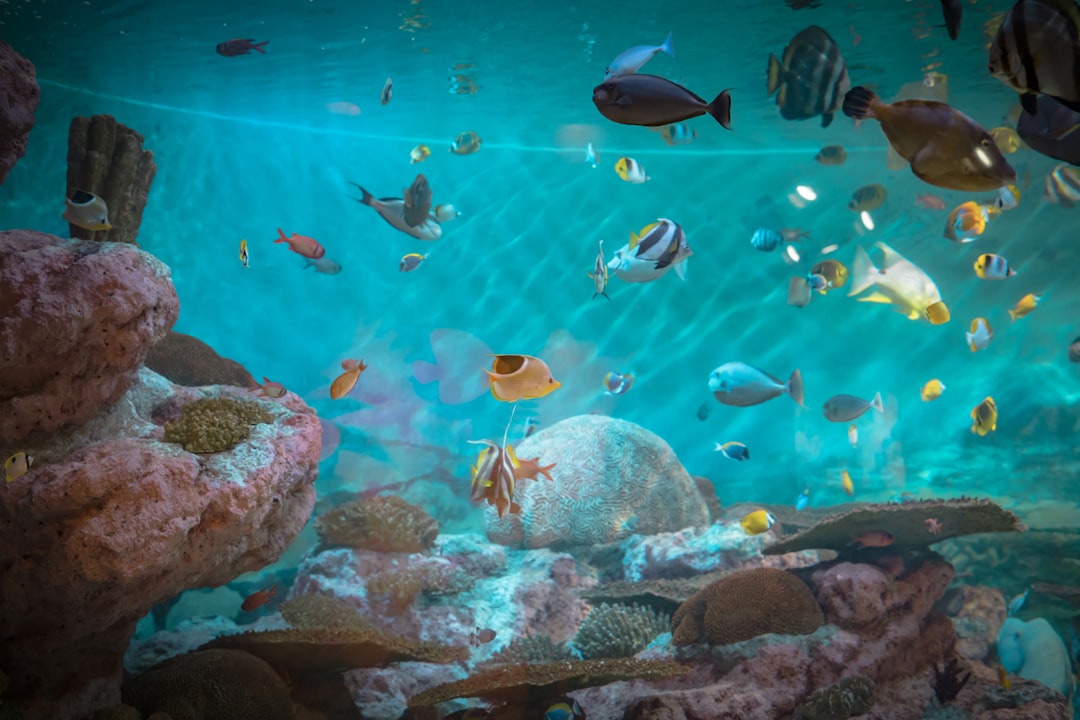
Freshwater aquascaping borrows heavily from landscape art. Styles like iwagumi, Dutch and nature aquarium follow strict compositional rules — the golden ratio, focal points, foreground-to-background layering. Marine aquascaping is more architectural. You build a structure, then let corals colonise it over months and years. The initial rock layout is a skeleton that coral growth transforms into the final design. Patience plays a larger role on the marine side because you cannot simply replant a coral the way you trim and replant stem plants.
The Role of Substrate
In planted freshwater tanks, substrate is functional — nutrient-rich aquasoils like ADA Amazonia or Tropica Soil fuel root-feeding plants. Marine tanks use inert aragonite sand primarily for aesthetics and minor biological filtration. Some reefers skip substrate entirely, opting for bare-bottom setups that simplify maintenance. The substrate in a freshwater scape is an active part of the ecosystem; in marine, it is largely decorative.
Light and Growth Direction
Freshwater plants grow upward toward the light and outward along the substrate. Stem plants reach the surface within weeks, requiring regular trimming to maintain shape. Corals grow much more slowly and in all directions — encrusting species spread across rock surfaces, branching corals extend outward and upward, and some soft corals drape downward. A freshwater aquascape reaches maturity in two to three months. A reef aquascape takes one to two years to fill in, and the journey is part of the appeal.
Flow Requirements
Freshwater planted tanks prefer gentle, directional flow — enough to distribute CO2 and nutrients without uprooting delicate carpeting plants. Marine tanks demand strong, turbulent flow, often 20–40 times the tank volume per hour. This fundamental difference affects rock placement: marine structures need open channels for water to pass through, while freshwater hardscapes can sit densely without flow concerns. In Singapore’s compact living spaces, the noise from marine powerheads is a practical consideration that freshwater setups avoid entirely.
Cost Comparison in Singapore
A quality freshwater planted tank (60 cm) with CO2 injection, lighting and premium substrate runs approximately $400–$800 SGD to set up. An equivalent-sized marine tank with rock, basic corals, a protein skimmer, reef light and chiller costs $1,200–$2,500 SGD. Ongoing costs differ too — CO2 refills and liquid fertilisers for freshwater versus salt mix, RO/DI water and coral supplements for marine. Both hobbies reward investment, but marine aquascaping carries a higher financial entry point.
What Transfers Between Both Worlds
Compositional skills transfer perfectly. Understanding the rule of thirds, creating depth through layering and using negative space apply equally to a nature aquarium and a reef tank. Water chemistry knowledge overlaps — the nitrogen cycle, pH buffering and the importance of consistency are universal. Maintenance discipline and observation habits built in one hobby serve you well in the other. Many of our most skilled clients at Gensou Aquascaping maintain both a planted tank and a reef, applying lessons learned in each to improve the other.
Related Reading