Can Betta Fish See in the Dark Guide: Vision Biology
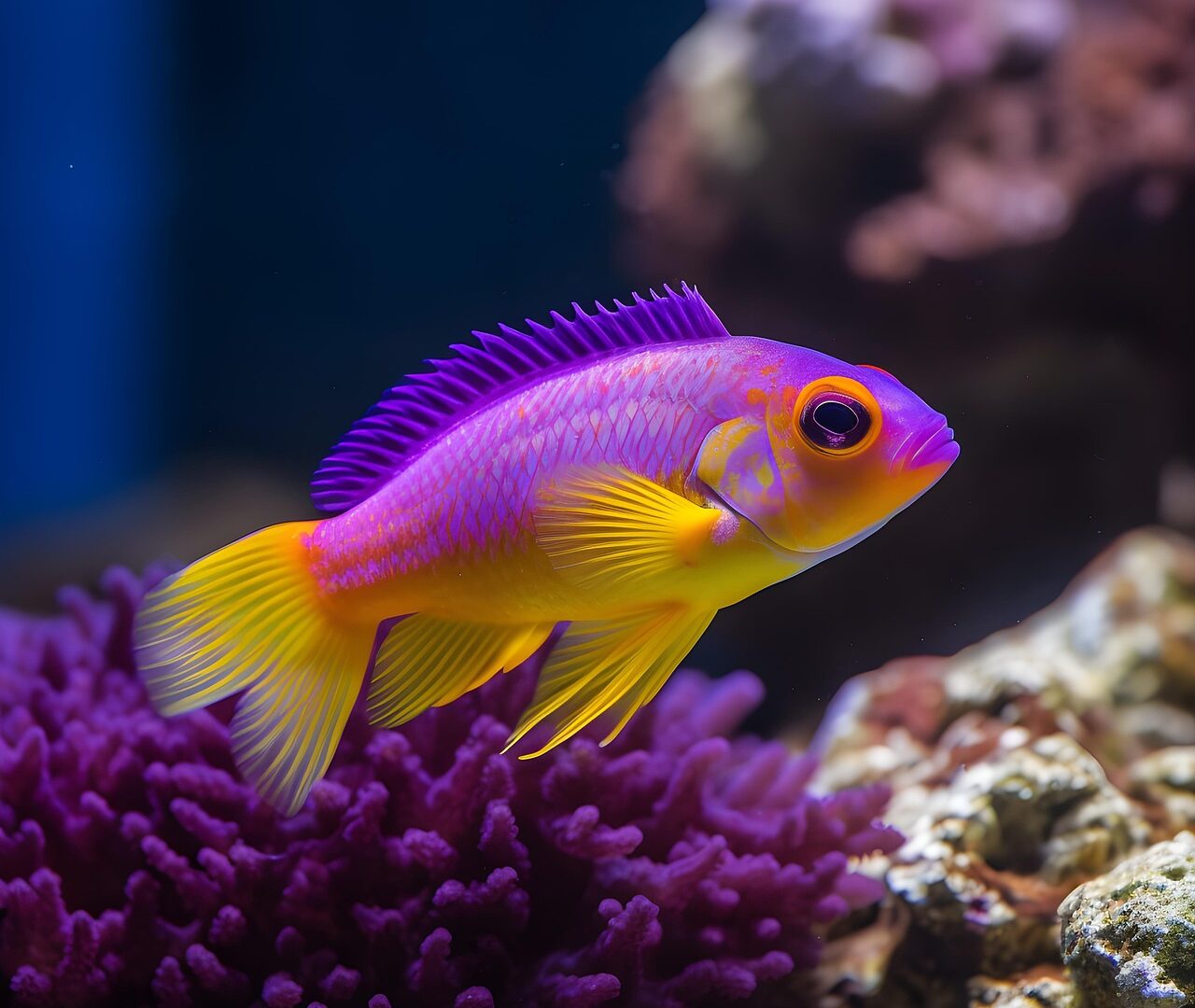
Betta fish see poorly in complete darkness and rely on lateral-line sensing to navigate at night. Their eyes are built for daytime hunting in shallow, sun-lit Thai paddies, with cone-dominant retinas that handle colour and detail brightly but lose acuity once light drops below about 5 lux. The phrase can betta fish see in the dark turns up in voice search because owners worry about leaving lights off overnight, but the honest answer is that bettas tolerate darkness well — they just navigate by feel rather than sight when the room is black. This FAQ from Gensou Aquascaping at 5 Everton Park unpacks the vision biology and the photoperiod that suits HDB tanks.
How Betta Eyes Are Built
The retina of Betta splendens contains four cone types and a relatively low density of rods. Cones drive daylight colour vision; rods handle dim light. Because the cone-to-rod ratio is high, bettas excel at spotting prey against bright backgrounds but struggle when illumination falls below dawn levels. Their lateral line, a row of pressure-sensitive neuromasts running along each flank, fills the gap by detecting water vibrations from objects within 10-15 cm.
What Bettas See During the Day
In bright light bettas perceive colour vividly across red, green, blue and ultraviolet spectra. They recognise shapes from across a 60-litre tank, track moving prey at 20-30 cm, and respond to your finger tapping the glass before sound reaches them. This visual sharpness is why mirror flaring sessions stimulate them so strongly and why a colourful decoration and substrate layout enriches their day.
What Happens at Night
Once room lights and tank lights both go off, a betta’s vision degrades to vague shape detection at best. They settle on a leaf, sponge filter or substrate ridge and rest, often listing slightly to one side without losing balance. Some keepers panic the first time they see a sleeping betta motionless against the glass — it is healthy sleep, not death. The lateral line keeps them aware enough to flee if a predator silhouette appears, which in your tank means almost never.
Should You Run a Night Light
No, bettas do not need a night light, and an always-on blue moonlight actually disrupts their circadian rhythm. Wild bettas evolved with full darkness for 11-13 hours every night near the equator. Constant low light suppresses melatonin and over weeks reduces immune function and colour intensity. If you keep a moonlight purely for aesthetics, run it for no more than two hours after lights-out, then switch fully off. Quality aquarium lighting with timer functions makes this trivial.
Photoperiod That Mimics Singapore Daylight
A 10-12 hour light cycle matches the natural Singapore photoperiod of 12 hours daylight year-round. Set the timer to 8am-8pm or 9am-7pm, whichever fits your routine, and let the room go fully dark at lights-out. Avoid sunlight on the tank itself — direct exposure spikes algae and overheats water past 32°C in HDB blocks. A clip-on planted-tank LED on a timer plug from Shopee handles both ramp-up and ramp-down for under SGD 30.
How Bettas Find Food in Low Light
If you drop pellets just as room lights dim, the fish often ignores them until the next morning. Smell helps, but bettas are visual hunters first. Schedule both feeds during your tank’s photoperiod with at least one hour of light remaining after the evening meal. Pellets from floating pellets stay visible at the surface longer than sinkers, which helps a fish that has just woken from a midday nap.
Sudden Light Changes Cause Stress
Switching the room light on at 2am sends a sleeping betta into panic darting and can cause physical injury. Use a small plug-in night light in the corridor rather than the bedroom containing the tank, or invest in lighting on a sunrise-sunset ramp. The same logic applies in the morning — flicking the tank LED to full brightness instantly is harsher than a 15-minute fade. Hobbyist controllers like the WiFi-enabled lights in the aquarium equipment range support gradual ramps natively.
Vision Loss in Older or Sick Bettas
Cataracts, popeye and bacterial infections can cloud one or both eyes. A fish with single-eye blindness still feeds normally because it learns to circle pellets from the seeing side. Bilateral blindness is harder — drop pellets in the same spot every meal so the fish associates that location with food. Conditioners and medication like methylene blue or kanamycin can reverse early popeye if caught within a week.
Practical Setup for Healthy Vision
Give the tank a stable 10-12 hour photoperiod, full darkness at night, and a few floating plants like Limnophila aromatica or Indian almond leaves to break up overhead glare. Keep the light fixture low-wattage in HDB flats — 0.5W per litre is plenty for non-CO2 setups. Bettas in dim, plant-filtered light show better fin colour than those under harsh open-top fixtures, partly because UV-A wavelengths trigger cone-cell pigment expression.
Related Reading