
Best Floating Aquarium Plants: Benefits, Species and Care
Floating aquarium plants are one of the most underappreciated tools in the aquarist’s arsenal. They sit at the water surface, trailing elegant roots below and absorbing nutrients at a remarkable rate — all without substrate, CO2 or special lighting. For Singapore hobbyists, floating plants are especially well-suited to our warm, humid climate, growing prolifically year-round. Whether you want to control nitrate, provide shade for shy fish, protect fry or simply add a natural, lush canopy to your aquarium, floating plants deliver. This guide profiles the most popular species and explains how to get the best from them. This guide sits inside our broader Planted Tank Complete Hub reference.
Benefits of Floating Plants
Floating plants offer a unique combination of practical and aesthetic benefits that rooted plants cannot easily replicate:
- Superior nutrient absorption. Because floating plants sit at the surface with unlimited access to atmospheric CO2, they photosynthesise at maximum efficiency. This makes them exceptionally effective at absorbing nitrate, ammonia and phosphate from the water — often outperforming rooted plants and helping to keep algae in check. For more on controlling nitrate, see our nitrate reduction guide.
- Natural shade. A canopy of floating plants dims the light reaching the lower levels of the tank, which benefits shade-loving fish and reduces algae on the substrate and hardscape. It also creates a beautiful dappled-light effect reminiscent of natural waterways.
- Fry cover. The dense root systems of floating plants provide excellent hiding spots for newborn fry. Livebearer fry (guppies, endlers, platies) instinctively swim upward at birth and find refuge among floater roots, dramatically improving survival rates.
- Root aesthetics. Many floating plants develop long, trailing roots that create a visually striking curtain beneath the surface. Species like red root floater produce deep burgundy roots that add a unique colour element.
- Zero substrate requirement. Floating plants need nothing planted in the substrate, making them ideal for bare-bottom tanks, quarantine setups, breeding tanks and any situation where you want plant benefits without committing to a planted substrate.
- Humidity regulation. In open-top tanks, floating plants reduce evaporation by covering the water surface, which is particularly useful in air-conditioned Singapore homes.
Species Profiles
Salvinia (Salvinia minima, S. natans, S. cucullata)
Salvinia is a floating fern with small, round to oval leaves that sit flat on the water surface. The leaves have tiny hair-like structures on their upper surface that repel water, giving them a distinctive velvety appearance. Salvinia grows quickly under moderate light and is easy to maintain by simply scooping out excess growth. S. cucullata, the Asian salvinia, has distinctive cupped leaves and is native to the region, making it particularly well-adapted to Singapore’s climate.
- Difficulty: Very easy
- Growth rate: Fast
- Light need: Low to high
- Root length: Short to moderate (2 – 5 cm)
- Best for: Beginners, nano tanks, gentle shade
Amazon Frogbit (Limnobium laevigatum)
Amazon frogbit is one of the most popular floating plants in the hobby. Its round, lily-pad-like leaves can reach 3 to 5 centimetres in diameter, and the plant produces long, feathery roots that trail up to 20 centimetres below the surface. These roots are a magnet for biofilm, providing excellent grazing surfaces for shrimp and fry. Frogbit grows vigorously under moderate to high light and multiplies through stolons (runners), with daughter plants budding off the mother plant.
- Difficulty: Easy
- Growth rate: Fast
- Light need: Moderate to high
- Root length: Long (10 – 20 cm)
- Best for: Fry cover, nutrient absorption, visual impact
Red Root Floater (Phyllanthus fluitans)
Red root floater is prized for its ability to develop stunning red colouration on both its leaves and roots under strong light. Under moderate light, the leaves remain green with reddish undersides, but under high-intensity lighting with good iron supplementation, the entire plant turns a rich ruby red. The roots are naturally burgundy to deep red, creating a beautiful effect when viewed from below. Red root floater is slightly more demanding than salvinia or frogbit, preferring calm water surfaces and consistent nutrition.
- Difficulty: Easy to moderate
- Growth rate: Moderate to fast
- Light need: Moderate to high (high for red colouration)
- Root length: Moderate (5 – 10 cm)
- Best for: Colour accent, aesthetic appeal, iron-rich tanks
Duckweed (Lemna minor)
Duckweed is the fastest-growing floating plant available — and that is both its greatest strength and its most significant drawback. Each tiny frond is just 2 to 4 millimetres across, and under good conditions, duckweed can double its coverage every two to three days. It is an extraordinary nutrient sponge, absorbing nitrate and ammonia at rates that put other plants to shame.
However, duckweed’s aggressive growth comes at a cost. Once introduced, it is nearly impossible to completely eradicate. It gets into filters, sticks to your hands, travels between tanks on nets and equipment and can completely cover the water surface, blocking all light to plants below. Many aquarists consider duckweed a pest rather than a feature.
- Difficulty: Effortless to grow, difficult to control
- Growth rate: Extremely fast
- Light need: Very low to high
- Root length: Very short (1 – 2 cm)
- Best for: Nutrient control in dedicated tanks; avoid if you want control over your setup
Water Lettuce (Pistia stratiotes)
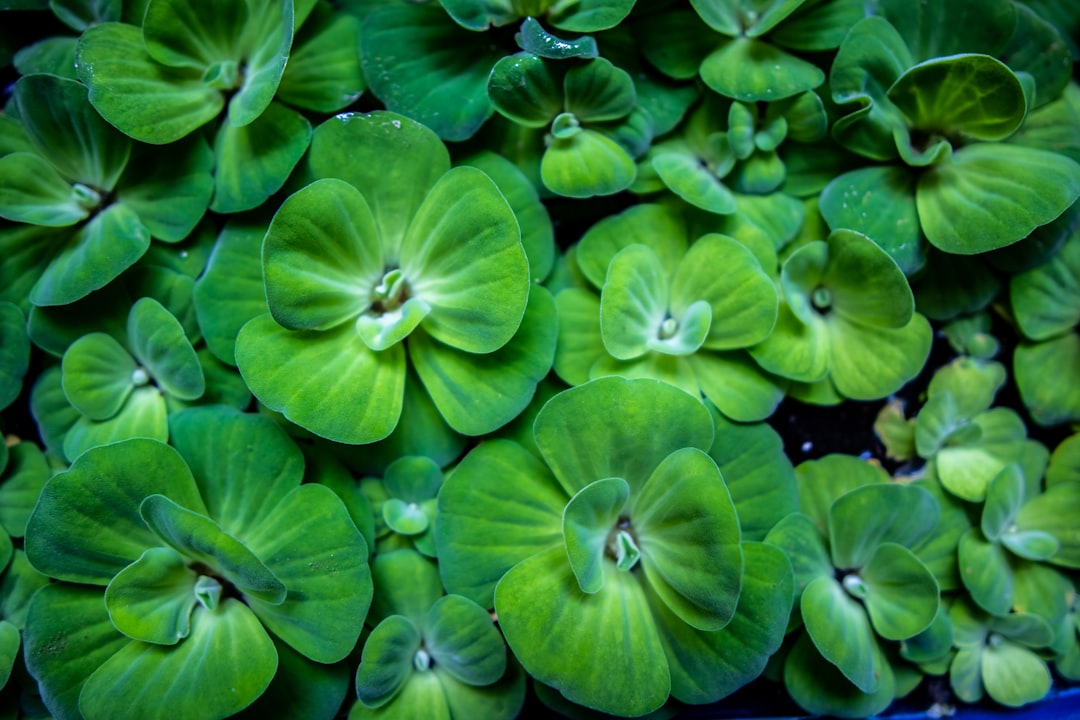
Water lettuce forms attractive rosettes of pale green, velvety leaves that float on the surface like miniature lettuces. It develops impressive root systems that can extend 15 to 30 centimetres below the surface, creating a dense curtain that provides exceptional cover. Water lettuce is one of the larger floating plants and works best in medium to large tanks or open-top setups where it has room to grow. It multiplies through stolons and can grow quite large (individual rosettes reaching 10 to 15 centimetres across) if given sufficient nutrients and light.
- Difficulty: Easy to moderate
- Growth rate: Moderate to fast
- Light need: Moderate to high
- Root length: Very long (15 – 30 cm)
- Best for: Large tanks, open-top setups, dramatic root curtains
Water Sprite (Ceratopteris thalictroides)
Water sprite is uniquely versatile — it thrives either planted in the substrate or floating at the surface. When floating, it develops finely divided, lacy fronds that create a beautiful canopy and provides excellent fry cover. Its growth rate is rapid, and it propagates by producing tiny plantlets on the edges of mature fronds that break off and float independently. Water sprite is an outstanding nutrient absorber and one of the most effective plants for controlling water quality in community tanks.
- Difficulty: Very easy
- Growth rate: Very fast
- Light need: Low to high
- Root length: Moderate when floating
- Best for: Versatile use, fry tanks, rapid nutrient absorption
Maintenance and Care
Floating plant maintenance is straightforward but requires consistency:
Thinning
The most important maintenance task is regular thinning. Floating plants that are allowed to cover the entire water surface will block all light to plants below, potentially killing them. Aim to keep floating plants covering no more than 50 to 70 per cent of the surface. Scoop out excess growth weekly — this is also an effective form of nutrient export, as the removed plant material takes absorbed nitrate and phosphate with it.
Keeping Away From Filter Intake
Floating plants can be drawn into filter intakes and hang-on-back filters, clogging them and damaging the plants. Use a floating plant corral — a ring of airline tubing connected at the ends — to contain floating plants in a designated area. Alternatively, position a piece of clear tubing or a small strip of plastic along the water surface near the filter intake to create a barrier.
Nutrient Needs
Floating plants absorb nutrients primarily from the water column. A comprehensive liquid fertiliser dosed weekly supports healthy growth. Iron supplementation is particularly important for red root floater if you want red colouration. Floating plants do not need root tabs as they derive all nutrition from the water.
Surface Agitation
Most floating plants dislike strong surface agitation. Water lettuce and red root floater are particularly sensitive — their leaves can become waterlogged and rot if constantly splashed. Position filter outflows below the surface or angle them to minimise disturbance at the water line.
Which Fish Love Floaters
Many popular aquarium fish benefit enormously from floating plant cover:
- Bettas — naturally found in still waters with surface vegetation; floating plants provide resting spots near the surface and reduce stress
- Gouramis — bubble nest builders that appreciate floating plants as anchoring points for their nests
- Livebearers (guppies, endlers, platies) — fry survival rates improve dramatically with floating plant cover
- Tetras and rasboras — many species come from shaded forest streams and feel more secure under a floater canopy
- Shrimp — cherry shrimp graze biofilm from floating plant roots and shrimplets hide among them
- Corydoras and other bottom dwellers — appreciate the diffused lighting that floating plants create
Open-Top Tank Considerations
Open-top (rimless) aquariums are increasingly popular in Singapore, and floating plants look particularly striking in these setups because the plants can grow slightly above the water line, showcasing their natural form. However, there are some considerations:
- Evaporation: Open-top tanks lose water faster to evaporation, especially in air-conditioned rooms. Floating plants help reduce this but also need the water level maintained — if the water drops too low, plants at the edges can dry out.
- Humidity: Singapore’s naturally high humidity (70 to 90 per cent) is ideal for floating plants in open-top tanks, unlike drier climates where they may struggle.
- Larger species: Water lettuce and large frogbit can grow above the rim, creating a beautiful natural look. Ensure your lighting is positioned to accommodate this growth.
Common Problems
Yellowing Leaves
Yellow leaves on floating plants usually indicate nutrient deficiency, particularly nitrogen or iron. Increase liquid fertiliser dosing. In tanks with low fish stocks, floating plants can quickly exhaust available nutrients.
Mushy or Rotting Leaves
Rot is typically caused by water splashing onto the leaf surfaces (from filter outflows or air stones) or by poor air circulation above the water in lidded tanks. Reduce surface agitation, ensure adequate ventilation and remove any affected leaves promptly.
Complete Surface Coverage
If floating plants cover the entire surface, plants below will suffer from light deprivation. Thin regularly and maintain an open area for light penetration. This also ensures gas exchange at the water surface.
Hitchhiker Pests
Floating plants purchased from other hobbyists or shops may carry snail eggs, pest snails or duckweed mixed in with the desired species. Inspect new floating plants carefully and quarantine them in a separate container for a few days before adding them to your main tank.
Singapore-Specific Considerations
Singapore’s tropical climate makes it one of the best places in the world to grow floating aquarium plants:
- Humidity: Our consistently high humidity (70 to 90 per cent) is perfect for floating plants. In drier climates, exposed leaf surfaces can desiccate, but this is never an issue in Singapore.
- Temperature: Ambient water temperatures of 28 to 30 degrees Celsius are ideal for all the species discussed in this guide. No heater needed.
- Growth rate: The combination of warmth and humidity means floating plants grow exceptionally fast in Singapore. Plan for at least weekly thinning sessions.
- Outdoor growing: If you have a balcony with some sunlight, you can easily culture floating plants outdoors in a bucket or tub. This is an excellent way to maintain a backup supply and grow excess for sharing or selling.
- Water lettuce note: Pistia stratiotes is listed as a restricted species under NParks regulations in Singapore due to its invasive potential in natural waterways. While keeping it in indoor aquariums is generally acceptable, never release it into ponds, drains or reservoirs.
Frequently Asked Questions
Will floating plants kill my other plants by blocking light?
Only if they are allowed to completely cover the water surface. Maintain coverage at 50 to 70 per cent by thinning weekly. This provides the benefits of floating plants (shade, nutrient absorption, fry cover) while allowing sufficient light to reach rooted plants below. Low-light plants like Java fern, Anubias and Java moss tolerate floater shade particularly well.
How do I get rid of duckweed?
Honestly, complete eradication of duckweed is extremely difficult. The tiny fronds break apart easily and even a single remaining frond will regrow the colony. Your best approach is persistent manual removal — scoop it out during every water change, clean filters regularly and avoid transferring it between tanks on equipment. Some aquarists introduce duckweed-eating fish like goldfish, but this is rarely practical in tropical community tanks. Prevention is better than cure: avoid introducing duckweed in the first place.
Can I keep floating plants with a lidded tank?
Yes, but ensure adequate ventilation. In sealed tanks, condensation dripping onto floating plant leaves can cause rot. Lids with ventilation gaps or mesh tops work well. Many hobbyists in Singapore use glass lids placed slightly ajar to allow airflow while reducing evaporation and preventing fish from jumping.
Which floating plant is best for beginners?
Amazon frogbit and salvinia are the best choices for beginners. Both grow readily under basic aquarium lighting, tolerate a wide range of water conditions and are easy to thin when they multiply. Frogbit produces more impressive roots for visual impact, while salvinia is more compact and suited to nano tanks.
Want to add floating plants or other live greenery to your aquarium? Visit the Gensou shop at 5 Everton Park for a curated selection of aquatic plants. If you need help designing a balanced planted aquarium with the right mix of rooted and floating species, our team offers custom aquarium design and ongoing maintenance services. Get in touch to get started.
Related Reading
- Boron Deficiency in Aquarium Plants: Twisted Tips and Stunted Growth
- Calcium Deficiency in Aquarium Plants: Twisted New Growth
- Can Plants Cycle an Aquarium? The Planted Tank Shortcut
- Magnesium Deficiency in Aquarium Plants: Symptoms and Solutions
- Manganese Deficiency in Aquarium Plants: Pale Patches Between Veins



