Biotope Amazon Flooded Forest Paludarium Design Guide: Igapo Build
For three months a year the lower Amazon basin floods inland forests, submerging tree trunks under five metres of tannin-stained water. Fish swim between branches that were dry just weeks earlier, eating fallen fruit and insects. Recreating this seasonal ecosystem in glass is the goal of the amazon flooded forest paludarium, a blackwater biotope that captures the flooded-forest aesthetic without requiring an Olympic pool. This guide from Gensou Aquascaping at 5 Everton Park walks through igapó ecology, tannin chemistry and the fish stocking that brings the build to life.
Igapó vs Várzea
The Amazon basin has two flooded-forest types. Igapó forests flood under blackwater rivers (Rio Negro tributaries) — dark, tannin-stained, acidic and nutrient-poor. Várzea forests flood under whitewater rivers (Rio Solimões, Rio Madeira) — pale, sediment-laden and nutrient-rich. Most aquarium biotope builds target igapó because the visual impact of dark tannin water against bleached driftwood is striking. Choose blackwater chemistry first and design around it.
Blackwater Chemistry
Target pH 4.5-6.0, KH under 1, GH 1-3 and tannin levels visible enough to give the water a strong tea colour. Achieve this with catappa leaves (Indian almond), alder cones, magnolia leaves and oak leaves. Singapore PUB tap is naturally soft (KH 1-2) so achieving low KH is straightforward; pH must be lowered with peat or driftwood-released tannins rather than chemical buffering. Browse the botanicals and leaf litter range for tannin-releasing materials.
Substrate and Hardscape
Use fine sand or sand-and-aquasoil mix at 4-6 cm depth — flooded forests do not have gravel beds. Build the hardscape from spider wood, mopani driftwood and bleached oak roots arranged to suggest submerged tree trunks. Vertical placement matters: trunks rising from the substrate to above the water line replicate the actual ecosystem. The aquascape driftwood range includes spider wood and mopani options suitable for igapó builds.
Floating Plants
Above-water vegetation in flooded forests is dominated by floating plants. Azolla caroliniana, Salvinia auriculata, Pistia stratiotes (water lettuce) and Eichhornia crassipes (water hyacinth, regulated in Singapore) form thick mats. Below water, Cabomba aquatica, Echinodorus swords and Helanthium tenellum grow in the dim light. Lighting should be modest — flooded forests are heavily shaded under the tree canopy. LED on the lower end of intensity, 20 lumens per litre, mimics the natural conditions.
Livestock from the Igapó
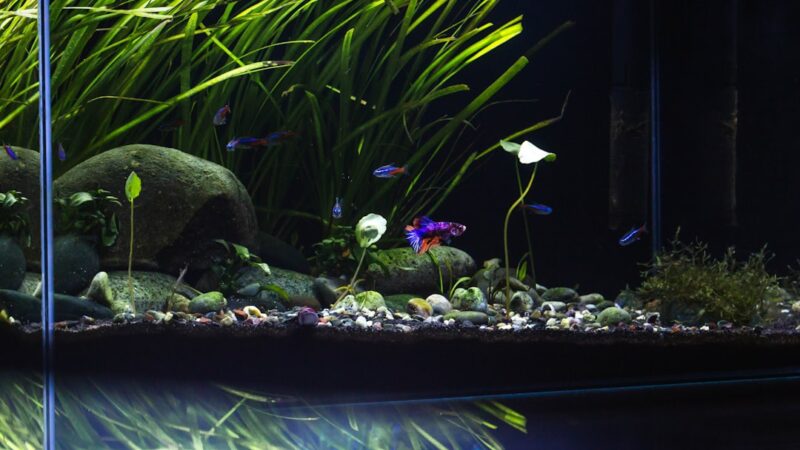
Authentic flooded-forest fish include splash tetras (Copella arnoldi), pencilfish (Nannostomus species), hatchetfish (Carnegiella strigata, Gasteropelecus sternicla), Apistogramma dwarf cichlids, and banded leporinus (Leporinus fasciatus) for larger builds. Cardinal tetras (Paracheirodon axelrodi) and rummy nose tetras add schooling colour. Stick to South American species exclusively for biotope authenticity — no Asian or African additions.
Tank Format and Size
A 90 cm by 45 cm by 45 cm tall paludarium accommodates a small flooded-forest scene with floating plants and a school of tetras. Larger 120 cm or 150 cm builds support apistogrammas, hatchetfish and a more developed canopy. The land portion is small (20-30 per cent) because the biotope simulates a forest under flood — so the dry trunk tops and a small mossy bank suffice. Browse the paludarium tank range for sizes appropriate to igapó builds.
Filtration and Maintenance
Blackwater is naturally low-bacterial, so filtration can be gentler than typical planted tanks. A canister filter at 4-6 times tank volume per hour, with mechanical and biological media plus a refresh of catappa leaves monthly, keeps the system stable. Avoid activated carbon because it strips tannins and ruins the visual effect. Weekly 20-25 per cent water changes with pre-acidified water (RO water with peat or aquasoil tea added) maintain stable pH.
Singapore Climate Considerations
Flooded-forest fish prefer 26-29°C, perfectly suited to Singapore ambient. No heater needed. Tannin-stained water and overhead floating plants block more light than expected, so adjust lighting upward if submerged plants stop growing. The aquarium lighting range at Gensou includes adjustable LED fixtures for biotope builds. Replace catappa leaves and alder cones every 4-6 weeks as tannins leach out.
Seasonal Cycling for Authenticity
The Amazon floods on a predictable annual rhythm — high water from December through May, low water June through November. Advanced biotope builders simulate this with seasonal water-level changes over the year, dropping the water by 20-30 per cent during the dry season and topping it back up during the wet season. The behavioural response from livestock is striking; apistogrammas spawn during the rising water phase, mimicking wild reproductive triggers. The seasonal swing also matches natural temperature variation, with low water months running slightly cooler at 25-26°C and high water months at 28-29°C.
Related Reading