Borneo Peat Swamp Blackwater Biotope Design Guide: Tannin Tea Setup
Bornean peat swamps produce some of the strangest water on the planet — amber-black tea coloured by decomposing leaf litter, pH below 5, almost no mineral content, and a surface canopy so dense the floor below is in perpetual gloom. The borneo peat swamp biotope reproduces that environment for wild bettas, licorice gouramis and the rasboras evolved to thrive in conditions most fish cannot survive. This design guide from Gensou Aquascaping at 5 Everton Park walks through the setup, the chemistry and the livestock combinations that make a peat-swamp display feel authentically Bornean.
Habitat Reality
Peat swamps cover the lowland forests of Sarawak, Sabah and Kalimantan — slow-moving or still pools beneath dense canopy, the floor carpeted with metre-deep accumulated leaf litter. The water reads pH 4.5-5.5, GH below 3, KH below 2, and visibility ranges from clear-tea to nearly opaque cola depending on rainfall. There are no rocks. The substrate is pure organic peat sediment.
Tank Sizing
A 90cm tank at 150-180 litres gives enough horizontal space for a community of small wild bettas and a school of soft-water rasboras. Tall tanks waste vertical space because peat-swamp livestock occupy the lower two-thirds. Use the aquarium tank range for shallow-profile dimensions.
Substrate and Leaf Litter
Lay a thin 2cm base of fine sand, then build a 3-5cm carpet of dried Indian almond leaves, oak leaves and alder cones. The leaf carpet IS the substrate — not decoration on top of it. Browse the decoration and substrate range for catappa products. As leaves break down they release tannins and create the soft-acid baseline naturally.
Hardscape Without Rocks
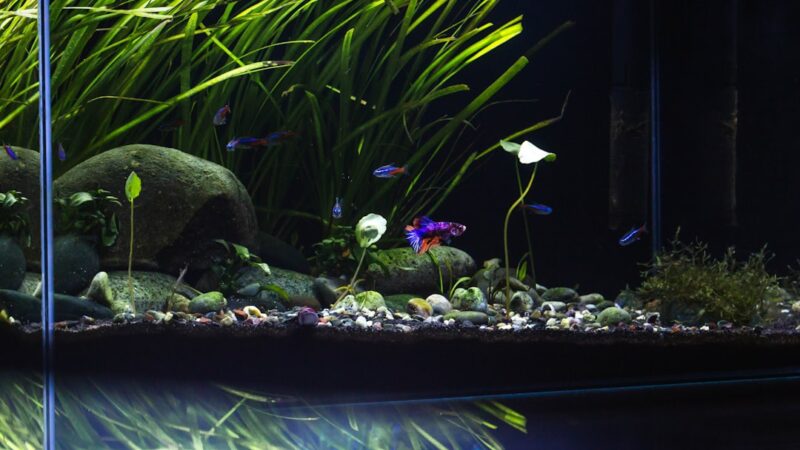
Peat swamps contain zero rocks. All hardscape is wood. Use Sumatran or Malaysian driftwood arranged horizontally to suggest fallen branches across the leaf carpet. Add slim spider wood for vertical interest. Avoid lava rock, dragon stone and any limestone-based material — they push KH up and break the biotope chemistry.
Plant Selection
Genuine peat swamps have minimal aquatic plants because of the gloom and acidity. Use Cryptocoryne species — C. cordata, C. striolata and C. pallidinervia are Bornean natives that tolerate the pH. Java moss tied to driftwood adds texture. Floating Salvinia or red root floater provide canopy shade and surface cover.
Water Chemistry
Target pH 4.5-5.5, GH 1-3, KH 0-1, and 26-28°C. PUB tap water at GH 2-4 KH 1-2 needs RODI cuts and tannin loading. Run peat moss as a primary filter media in the canister. Test pH weekly — KH near zero means buffering capacity is low and pH can swing if maintenance lapses.
Filtration
A canister rated for three times tank volume per hour, packed with peat moss, alder cones, and biological media. The aquarium pump range covers suitable canister models. Skip charcoal — it strips the tannins out and defeats the entire chemistry. Keep flow gentle; peat-swamp fish evolved in still water.
Livestock Recipe
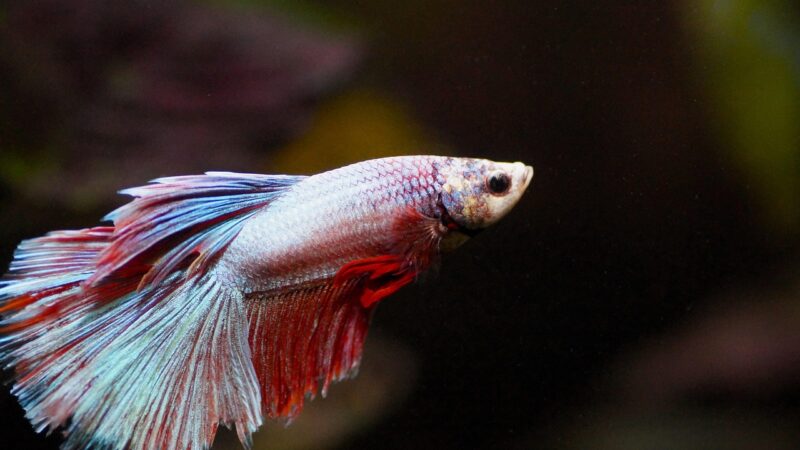
The classic combination: a pair of wild Betta rutilans or B. coccina, a school of fifteen Boraras brigittae or B. maculatus, six Rasbora axelrodi for the upper third, a small group of three Parosphromenus licorice gouramis for the leaf carpet floor, and Sundadanio axelrodi for shoaling motion. Avoid loaches, plecos and any rock-dwelling species — they break the biotope ecology.
Lighting
Dim. Run a low-output LED at 5000-6500K for five to six hours daily, ideally with floating plant cover dimming the floor further. Heavy lighting bleaches the tannin colour and stresses the gloom-adapted livestock.
Composition Notes
Build the visual story horizontally — a forest floor with fallen branches, leaves accumulated against wood, and small openings of clear sand peeking through. Photograph slightly above the water line with backlight from a window to capture the amber glow.
Related Reading