Aquascape Nature Aquarium Terms Glossary Guide: Amano Vocabulary
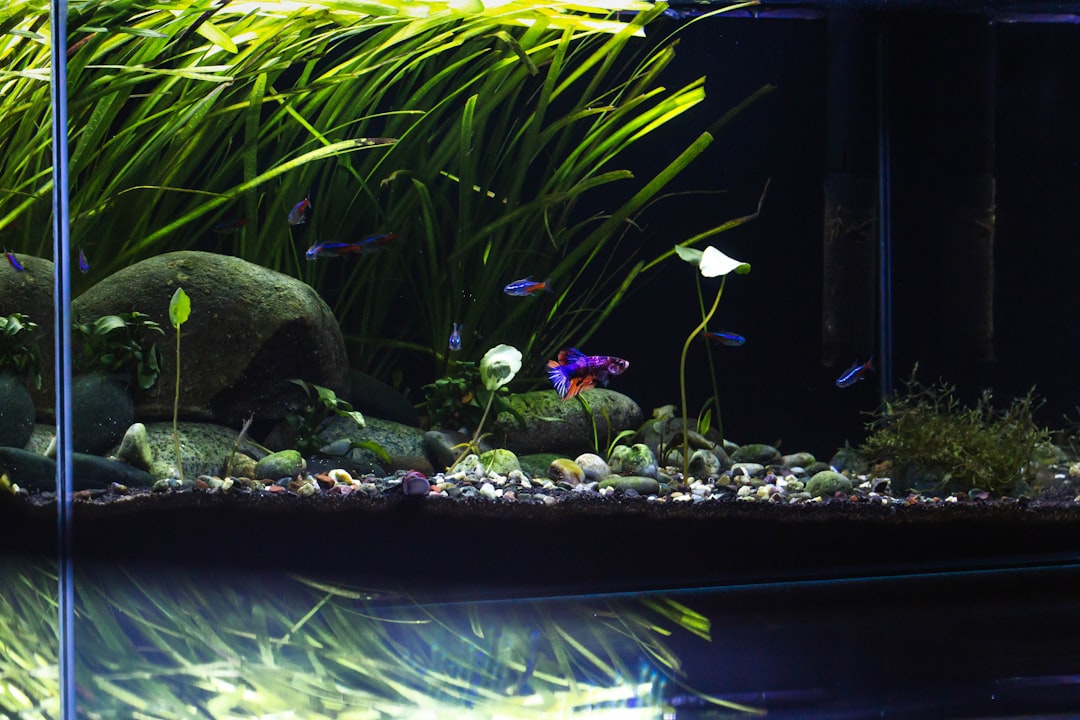
The vocabulary of nature aquarium design — wabi-sabi, hardscape, sankin, negative space — feels intimidating until each term clicks into place as a tool for clearer compositional thinking. The aquascape nature aquarium glossary below collects the working terms used by Takashi Amano, his ADA team, and the IAPLC competitors who keep the style alive. Reading this aquascape nature aquarium glossary from Gensou Aquascaping at 5 Everton Park gives you the same vocabulary used in judging panels and helps you describe and refine your own scapes.
Definition in 50 Words
Nature Aquarium is the planted tank style developed by Takashi Amano from the 1980s onwards. It draws on Japanese garden design and ink painting principles to create natural-looking underwater landscapes. Compositions emphasise asymmetric balance, focal point hierarchy, layered planting, negative space and the wabi-sabi aesthetic of imperfect natural beauty.
Hardscape and Softscape
Hardscape refers to the non-living structural elements — stones, driftwood, rocks. Softscape covers the living material — plants and mosses. The order of work is always hardscape first, softscape after. A strong hardscape carries the composition even before plants grow in. The hardscape range at Gensou stocks Seiryu, Dragon Stone, spider wood and Manzanita.
Focal Point
The focal point is the single area drawing the eye on first viewing. Strong scapes have one clearly dominant focal point at roughly 38 per cent or 62 per cent across the width (golden ratio positions). Multiple competing focal points fragment attention and weaken the composition. Suteishi sacrificial stones, an exposed root cluster or a colour-contrasting plant patch can all serve as focal points.
Negative Space
Negative space is the empty area — open substrate, unplanted water column, uncluttered background — that gives the eye room to rest. Beginner scapes overplant; mature work uses 30-50 per cent negative space. Foreground stretches of bare or short-carpet substrate read as openness, suggesting depth. The convention echoes Japanese ink painting (sumi-e), where untouched paper carries as much weight as drawn lines.
Layering and Depth
Three depth zones organise plant placement. Foreground (front 10-15 cm) carries low carpets — HC, dwarf hairgrass, Marsilea hirsuta. Midground (15-30 cm back) holds medium-height bushes — Bucephalandra, Anubias, Cryptocoryne. Background (back 30+ cm) holds tall stems — Rotala rotundifolia, Ludwigia repens, Vallisneria. Layering creates the illusion of depth in a tank only 50 cm deep. Browse the plant range by zone for systematic stocking.
Golden Ratio and Rule of Thirds
Both rules govern focal point placement. The golden ratio (1:1.618 or roughly 38:62 split) is the more sophisticated; rule of thirds (33:67 split) is its approximation. Place the main hardscape element along one of these division lines, never dead-centre. The eye is repelled by symmetric centred compositions and drawn to slightly off-centre tension.
Suteishi
Suteishi means “sacrificial stones” — small scattered stones placed to soften transitions and add ground interest. They are deliberately understated. In nature aquarium work the term extends to any small element that supports without dominating: a single small driftwood branch, a clump of moss, an exposed root tip.
Sankin and Sanzon
Sankin is the classical three-stone arrangement borrowed from Iwagumi traditions. Sanzon is the five-stone Buddhist triad arrangement — a central main element flanked by paired attendants on each side. Both arrangements appear in nature aquarium work, where the principles transfer to driftwood layouts as well as stone.
Wabi-Sabi
Wabi-sabi is the Japanese aesthetic of imperfect, transient and incomplete beauty. Applied to scaping, it justifies leaving algae-marked stones, gnarled roots and broken plant edges in place rather than sterilising every surface. The aged look of a scape after six months — softened algae patina, mature plant growth, settled colour — is wabi-sabi in motion. Constant intervention destroys it.
Iwagumi as a Subset
Iwagumi (stone-only) is the most minimalist subset of nature aquarium style. Other subsets include Ryoboku (driftwood-dominant), Mizube (riverside style with exposed roots) and Mountain (large slope compositions). Each follows the same compositional principles — focal point, golden ratio, layered depth — but uses different hardscape vocabulary.
Singapore Application
Local scapers face Singapore-specific challenges: tropical 28-30°C ambient stresses delicate carpet species, soft PUB tap water suits most stems, and HDB-sized tanks (60-90 cm typical) make compositional choices critical. A chiller from the chiller range at 25°C unlocks tighter HC carpets and brighter rotala colour. Pressurised CO2 plus high-PAR LED lighting from the lighting range are baseline requirements for IAPLC-grade results.
Related Reading