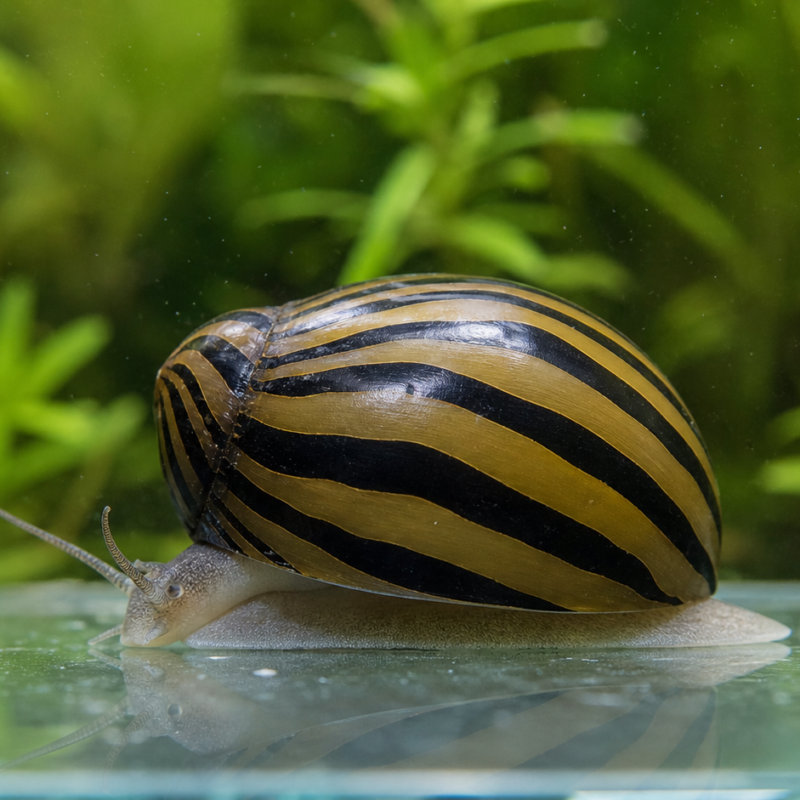
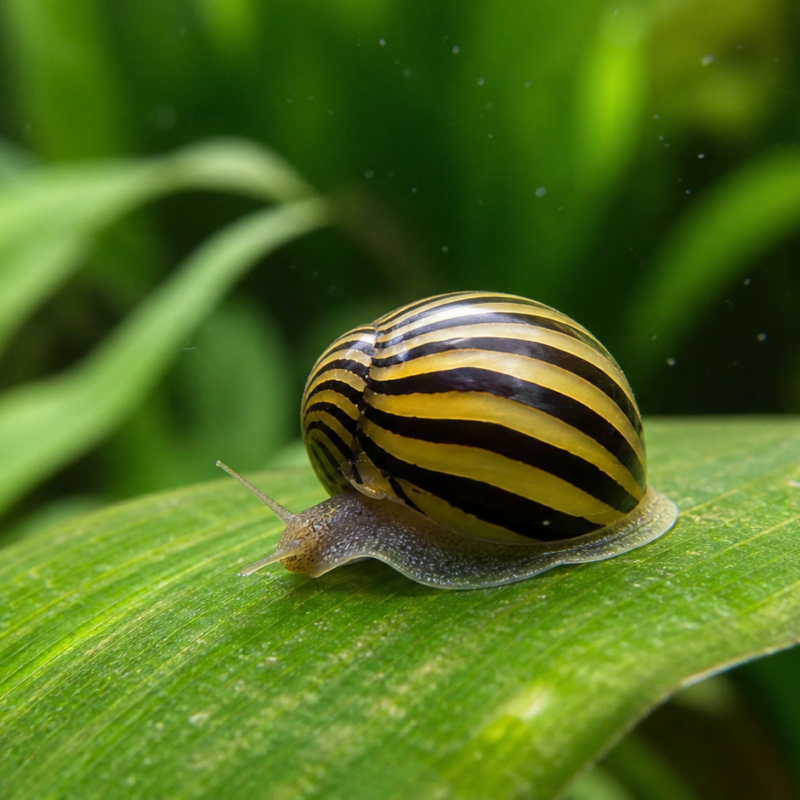
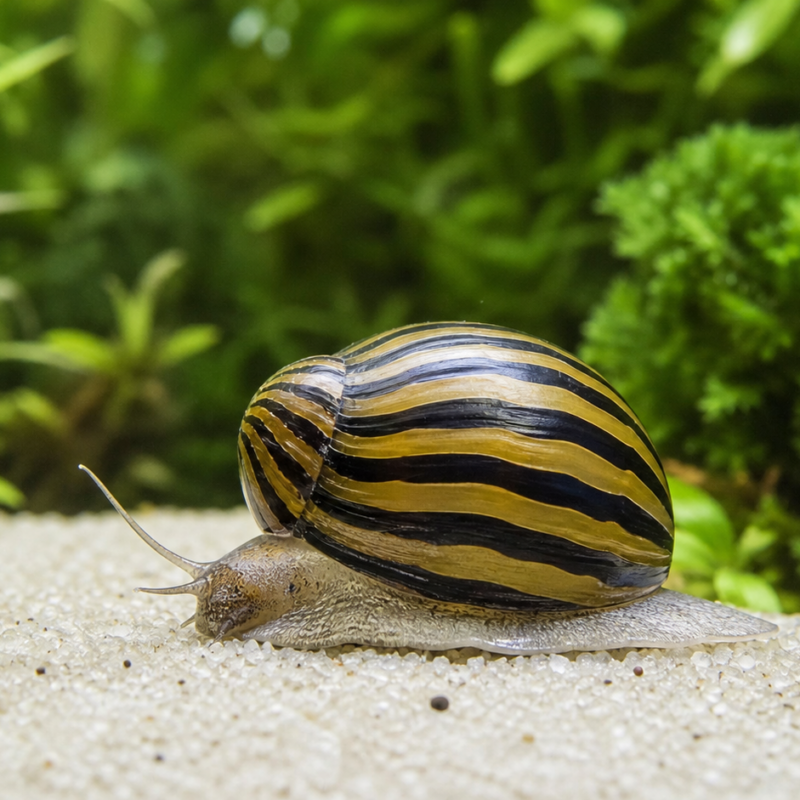
Zebra Nerite Snail
Neritina natalensis · Peaceful · Beginner care
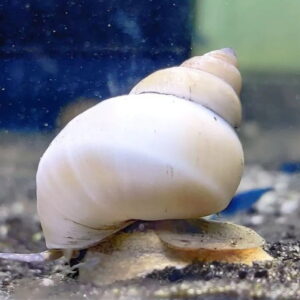
Bold black-and-gold racing stripes on a glossy shell — and one of the very best algae eaters money can buy. Safe with everything, and it can never overrun a freshwater tank.
At a glance
Species profile Neritina natalensis
Origin
East Africa (coastal rivers and estuaries)
Family
Neritidae (nerite snail family)
Adult size
Up to 2.5 cm (1 in)
Diet
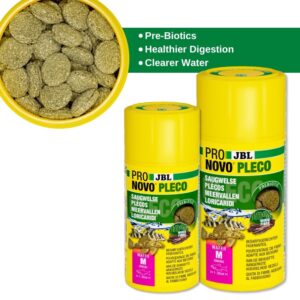
Grazes algae and biofilm off glass, rock and decor; supplement with algae wafers (Herbivore)
Temperament
Peaceful
Swimming level
All levels
Minimum group
1+ (shoaling)
Lifespan
1-2 years
Minimum tank
20 L (5 gal)
Water type
Freshwater
Size to scale
2.5 cm adult length, shown to scale against an iPhone 15 Pro (14.66 cm).
Natural range
Where it comes from — Africa
East Africa (coastal rivers and estuaries)
Water
Singapore tap water vs its needs
Hardness: Medium to hard (6-18 dGH).
In the aquarium
How it lives in the tank
Swims at every level of the tank
Sensitivity Index — Hardy
Hardy and beginner-friendly; keep up routine water changes and it will thrive.
Our own read on how forgiving this species is of water changes — not a formal standard.
Keeping & care
What this fish needs
Family
About the Neritidae family nerite snail family
Neritidae are the nerite snails, small hard-shelled snails from coastal and brackish tropics that have become the hobby's premier algae-cleaners — zebra, tiger, horned and olive nerites among them. They graze film and even tough spot algae tirelessly across glass, rock and hardscape without touching healthy plants, and stay small. Crucially they cannot reproduce in freshwater, so they never overrun a tank.
Keep them in hard, calcium-rich water to protect their shells, supplement with algae wafers once the tank is clean, and secure the lid — nerites often wander above the waterline.
Breeding
Does not breed in freshwaterNerites lay small, hard white eggs on hardscape and glass, but the larvae need brackish or marine water to develop, so those eggs never hatch in a normal aquarium. That is a feature, not a flaw — an effective algae-eater with no population explosion; deliberate breeding requires a dedicated brackish larval setup and is rarely attempted.
Feeding
Recommended food
Compatibility
Best tankmates
Community