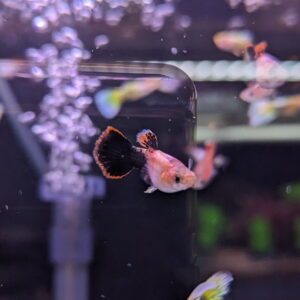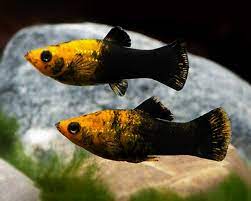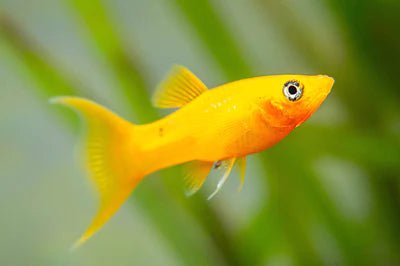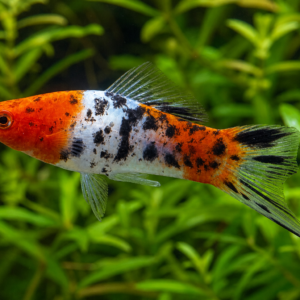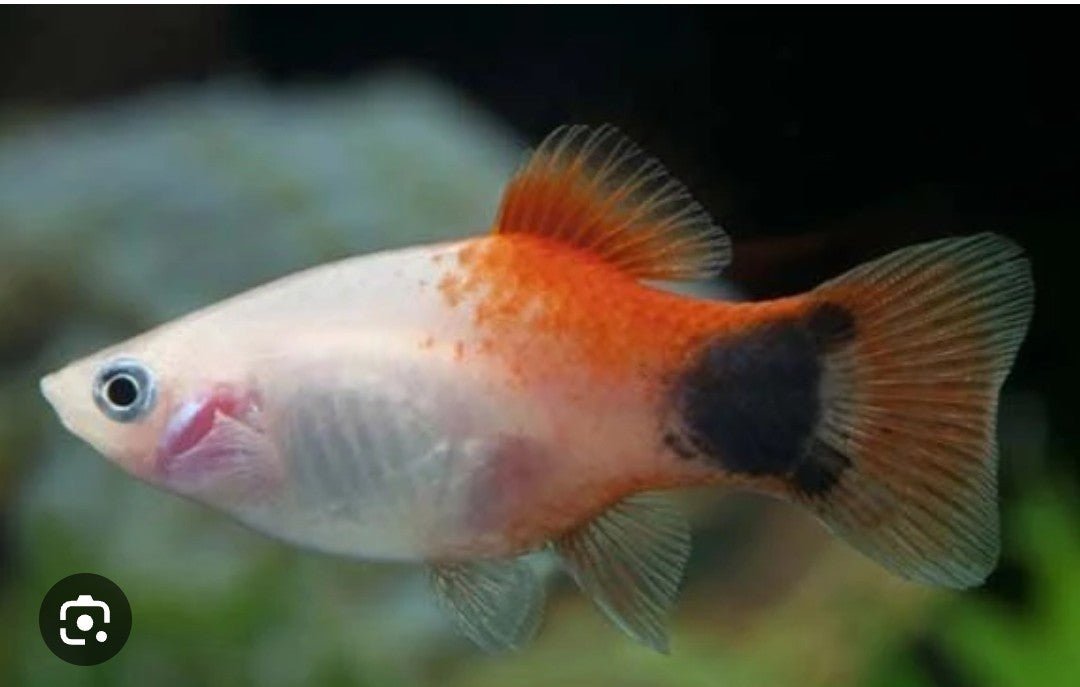
mickey mouse Platy
Xiphophorus maculatus · Peaceful · Beginner care
Out of stock
Ask on WhatsAppAt a glance
Species profile Xiphophorus maculatus
Origin
Central America (Mexico to Guatemala/Belize)
Family
Poeciliidae (livebearer family)
Adult size
Up to 6 cm (2.5 in)
Diet
Flake, micro-pellets and some algae/veg matter (Omnivore)
Temperament
Peaceful
Swimming level
Middle
Minimum group
4+ (shoaling)
Lifespan
3-4 years
Minimum tank
55 L (15 gal)
Water type
Freshwater
Size to scale
6 cm adult length, shown to scale against an iPhone 15 Pro (14.66 cm).
Natural range
Where it comes from — Central America
Central America (Mexico to Guatemala/Belize)
Water
Singapore tap water vs its needs
Hardness: Medium to hard (10-25 dGH).
In the aquarium
How it lives in the tank
Swims in the middle of the tank
Keep in a group of 4+
Sensitivity Index — Hardy
Hardy and beginner-friendly; keep up routine water changes and it will thrive.
Our own read on how forgiving this species is of water changes — not a formal standard.
Keeping & care
What this fish needs
Family
About the Poeciliidae family livebearer family
Poeciliidae is a large family of small freshwater fishes native to the Americas (chiefly Central America, Mexico, and the southern United States), best known in the hobby for guppies, mollies, platies, and swordtails. Members are typically small, hardy, and active, with a peaceful and highly sociable temperament that suits community tanks. They tolerate a wide range of conditions and are among the most beginner-friendly aquarium fishes, generally preferring hard, slightly alkaline, well-planted water.
Hardy and peaceful community fish; keep in groups with slightly hard, well-planted water and expect steady natural breeding unless the sexes are kept apart.
Breeding
LivebearerMost aquarium poeciliids are livebearers: females are internally fertilized (the male's anal fin is modified into a gonopodium) and release free-swimming, fully formed fry rather than eggs. Breeding is easy and often happens unprompted in a community tank; a well-fed mixed-sex group will produce broods every few weeks, and females can store sperm to deliver several successive broods from one mating. Because adults readily eat their own young, fry survival improves with dense planting (or a breeding trap), so provide fine-leaved plants or floating cover and feed the fry small foods such as crushed flake or baby brine shrimp.
Feeding
Recommended food
Compatibility
Best tankmates
Community