
Aquarium Microbial Loop Ecology Guide: Detritus to Plankton
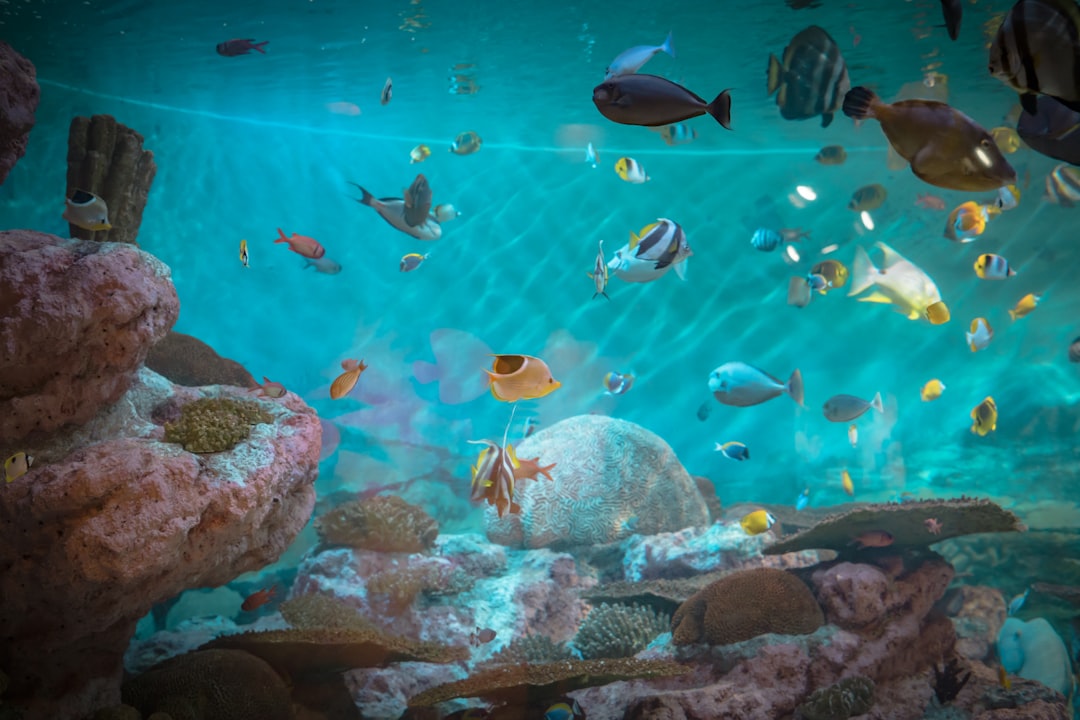
The visible food web of your aquarium — fish eating shrimp eating algae — sits on top of an invisible parallel web that handles dissolved organic matter, runs faster than the macro-fauna realises, and feeds half the system through a chain of single-celled actors. The aquarium microbial loop was first described by Farooq Azam in marine ecology in the 1980s and applies just as well to freshwater systems. This deep dive from Gensou Aquascaping at 5 Everton Park traces the loop from dissolved sugars through bacteria, flagellates and ciliates to copepods, and explains why mature tanks support more livestock than nutrient inputs alone would predict.
The Loop’s Starting Point: Dissolved Organic Matter
Roughly 30-50 per cent of the carbon fixed by aquatic plants leaks back into the water column as dissolved organic matter — DOM — through root exudation, leaf surface secretion and natural cell turnover. Add in fish mucous, urine, faecal dissolution and decaying detritus, and a typical planted tank generates 1-5 mg DOM per litre per day. DOM is too dilute and too small for any animal to eat directly. It vanishes into a chemical fog that conventional food-web models ignored for decades.
Heterotrophic Bacteria as the Loop’s First Step
Heterotrophic bacteria — distinct from the chemoautotrophs of the nitrogen cycle — capture DOM directly through cell-surface transporters. They convert dissolved sugars, amino acids and organic acids into bacterial biomass at efficiencies of 20-40 per cent. A typical mature tank holds 10^6 to 10^7 heterotrophic cells per millilitre of water column, and several orders of magnitude more in the substrate and biofilm. The filtration range bio-media supports the bulk of this population.
Flagellates: The First Grazers
Bacteria are too small for animals to eat efficiently — predator-prey size ratio runs against it. The next link is heterotrophic flagellates, single-celled eukaryotes 2-10 micrometres across that consume bacteria at rates of 10-100 cells per flagellate per hour. Flagellates double every 4-12 hours under normal conditions, which means bacterial populations are kept in check by predation rather than starvation in mature tanks.
Ciliates and the Second Grazing Step
Ciliates — Vorticella, Stentor, hypotrichs — feed on flagellates and free bacteria. They are larger (50-200 micrometres) and move slower, often anchored to surfaces or drifting in slow currents. Ciliates are visible under a 40x microscope and indicate a mature, low-pollution system. Their density crashes during ammonia spikes, making them a sensitive bioindicator that beats most test kits for early warning.
Copepods, Rotifers and the Bridge to Macro-Fauna
Copepods and rotifers consume ciliates and large flagellates, packaging microbial-loop carbon into a size class that fish fry, small shrimp and detritivorous snails can finally eat. A planted tank with mature substrate holds 10-100 copepods per litre — invisible during the day, swarming up the glass under a torch at night. They are the entire reason refugium-equipped marine setups support fish without continuous live-food dosing.
Why Low-Nutrient Systems Need the Loop More
The microbial loop matters most in oligotrophic (low-nutrient) systems where conventional algae-grazer pathways cannot supply enough biomass. Reef tanks, mature blackwater tanks and well-aged shrimp tanks all run on substantial microbial-loop throughput. Adding heavy mechanical filtration that strips DOM cuts off the loop at its source — a known reason why some bare-bottom shrimp setups underperform planted ones with deep substrate.
Refugium Ecology Applied
A refugium is essentially a protected chamber where the microbial loop can run without grazing pressure from main-tank fish. Pods breed up in the refugium and drift into the display, supplementing the main-tank loop. In freshwater, a planted sump or partitioned shrimp section serves the same role. The aquarium tank range includes nano cubes that double as refugia for heavily-stocked main tanks.
How Overfeeding Disrupts the Loop
Excess fish food bypasses the slow microbial pathway and dumps DOM, ammonia and phosphate directly into the system faster than the loop can process. Bacterial blooms result — visible as cloudy water — as heterotrophs proliferate beyond the flagellate grazing capacity. The cloudiness clears within 48-72 hours as flagellates catch up, but the disruption can crash sensitive shrimp populations during the spike.
Substrate Depth and Loop Capacity
The substrate is where the densest microbial loop activity happens. A 5cm substrate bed using fine grain from the decoration and substrate range supports orders of magnitude more microbial biomass than a 1cm cosmetic layer. Deep beds also enable anaerobic denitrification at the lower strata — closing nitrogen cycle in addition to running the loop.
Related Reading



