
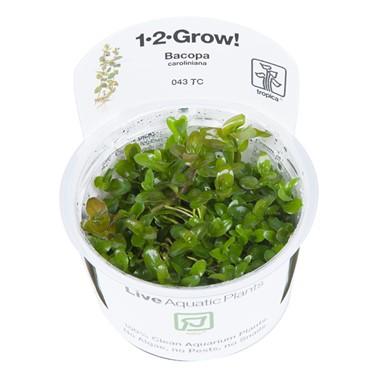
Aquarium Plant Photosynthesis Deep Guide: C3 vs CAM Pathways
Plants in your aquascape are running biochemistry that has fascinated botanists for a century — and most aquatic species are operating well below their photosynthetic capacity because of a single limiting factor: dissolved CO2. An aquarium photosynthesis deep dive into the actual carbon-fixation pathways explains why CO2 injection transforms growth rates, why some species manage without it, and why emersed-grown plants always look different from their submersed forms. This explainer from Gensou Aquascaping at 5 Everton Park covers C3, CAM and bicarbonate-uptake mechanisms in the species you actually keep.
The Calvin-Benson Cycle in Aquatic Plants
The vast majority of aquarium plants are C3 plants. They fix carbon through the Calvin-Benson cycle — the enzyme RuBisCO captures CO2 and combines it with ribulose-1,5-bisphosphate to form two molecules of 3-phosphoglycerate, the first stable product. The cycle is efficient when CO2 is abundant but suffers from photorespiration when CO2 drops, because RuBisCO accidentally binds oxygen instead of CO2 and wastes energy.
Why Submersed Plants Run Carbon-Limited
CO2 diffuses through water 10,000 times slower than through air. A leaf in still water sits inside a boundary layer where dissolved CO2 has been depleted by photosynthesis faster than it can diffuse in. This is the central limitation of submersed aquatic life — even a planted tank with 30 mg/L dissolved CO2 has slower CO2 supply to the leaf surface than the same plant grown emersed in 0.04 per cent atmospheric CO2. Adequate flow from the filtration range reduces the boundary layer and is as important as the gas concentration itself.
CAM and C4 Side Doors
A handful of aquatic plants run partial CAM (crassulacean acid metabolism) when grown emersed — Crassula helmsii, Isoetes species and some Sagittaria. CAM plants open their stomata at night, fix CO2 into malic acid, store it in vacuoles, and release it during the day for the Calvin cycle. This decouples gas exchange from sunlight and is an adaptation to dry environments. Submersed, the CAM cycle generally shuts down because gas exchange constraints differ.
Bicarbonate Uptake: The HCO3- Trick
Some aquatic plants bypass CO2 limitation by using bicarbonate (HCO3-) directly. Vallisneria spiralis, Egeria densa, Elodea canadensis and several Potamogeton species express bicarbonate transporters in their leaf epidermis and convert HCO3- to CO2 inside the cell using carbonic anhydrase. These species thrive in hard alkaline water where CO2 is scarce but HCO3- is abundant — exactly the opposite of typical Singapore tap conditions, which is why Vallisneria often does poorly in soft local water without remineralisation.
Light Intensity and the PAR Curve
Photosynthesis rate climbs linearly with photosynthetically active radiation up to a saturation point that varies by species. Carpeting plants like Hemianthus callitrichoides saturate around 80-100 PAR; low-light species like Anubias barteri saturate around 40-50 PAR. Above saturation, additional light drives no extra growth and instead pushes the system into algae-favouring excess. The aquarium fertiliser range includes liquid carbon sources that extend the saturation ceiling for tanks without pressurised CO2.
Photoperiod and Diel Rhythm
Aquarium plants follow circadian rhythms tied to day length. Eight to ten hours of light per day matches the equatorial photoperiod most tropical species evolved under. Splitting the photoperiod into two blocks (siesta method) is sometimes recommended to suppress algae, but the photosynthetic productivity loss is real — about 15-20 per cent compared to a continuous block of equivalent length.
Why Emersed Forms Look Different
Emersed leaves are thicker, with more cuticle and palisade mesophyll, because they are optimised for atmospheric CO2 uptake and light capture without the constraint of water boundary layers. When you submerge a tropica pot of Hemianthus callitrichoides, the original emersed leaves often die back over two to three weeks and are replaced by thinner, finer submersed leaves — the same plant, different morphology, completely different photosynthetic machinery.
Oxygen as the Photosynthesis Receipt
The bubbles of pearling oxygen on plant leaves at midday are the visible receipt of active photosynthesis. Each fixed CO2 molecule releases one O2. A heavily planted tank can supersaturate the water column to 12-14 mg/L dissolved oxygen during peak photosynthesis — enough that fish gather near the surface for the cooler, less-saturated layer, not because they are gasping but because warm supersaturated water can cause gas-bubble disease.
Iron and Magnesium in the Chloroplast
Chlorophyll molecules are built around a magnesium core, and the electron transport chain depends on iron-sulphur clusters. Iron deficiency shows as interveinal yellowing on new growth — the classic symptom that drives hobbyists to dose iron-rich liquids. Magnesium deficiency mimics it but appears on older leaves first.
Related Reading



