Mountain Layout in Aquascaping: Building Peaks and Cliffs
Table of Contents
- What Is a Mountain Layout?
- Building Height: Substrate and Stone
- Stone Selection for Peaks and Cliffs
- Stacking and Securing Structures
- Moss on Peaks and Ridgelines
- Carpet Plants in Valleys
- Perspective Tricks for Dramatic Scale
- Equipment Considerations
- Frequently Asked Questions
What Is a Mountain Layout?
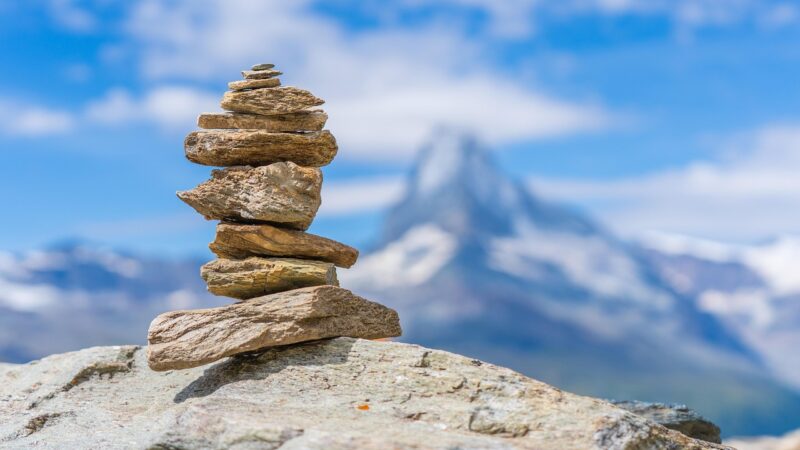
A mountain layout creates the illusion of towering peaks, rugged cliffs and sweeping valleys within the confines of an aquarium. Using carefully selected and stacked stones, mounded substrate and strategic planting, this style transforms a standard tank into a dramatic alpine or geological landscape.
The style pushes Iwagumi-inspired design further by building vertically, creating far more height and drama. For Singapore aquascapers looking to create a showpiece in their HDB flat or condo, a mountain layout commands attention unlike any other style. When done well, a 60 cm tank can look like a vast wilderness, complete with mist-shrouded peaks and forested valleys.
Building Height: Substrate and Stone
Height is the defining characteristic of a mountain layout. Without significant elevation changes, the layout will look like a standard rock arrangement rather than a mountain range.
Substrate Mounding
Build your substrate much higher than you would for a standard layout. For a tank that is 36 cm tall, the substrate at the highest point should reach 15 to 20 cm, roughly half the tank height. This sounds extreme, but the mounded substrate forms the interior structure of your “mountains,” reducing the amount of stone needed and distributing weight more evenly.
Substrate Layering for Height
| Layer | Material | Purpose | Depth |
|---|---|---|---|
| Base (bottom) | Pumice or lava rock chunks | Lightweight filler to add volume without excessive weight | 5-10 cm |
| Middle | Coarse gravel or leftover substrate | Transition layer that prevents fine soil from falling into gaps | 2-3 cm |
| Top | Aquasoil (ADA Amazonia or similar) | Planting medium for moss and plants | 3-5 cm |
Using lightweight filler is critical. Building a 15 cm mound entirely from aquasoil creates excessive weight, unnecessary cost and inevitable compaction. Pumice maintains height while keeping weight manageable for standard furniture in Singapore homes.
Retaining Walls
Tall substrate mounds slump when filled with water. Press flat stones vertically into the substrate at the base of each mound as hidden retaining walls to prevent spreading during water changes.
Stone Selection for Peaks and Cliffs
The choice of stone defines the character of your mountain layout. Angular, textured stones create the most convincing cliff faces and peaks.
Recommended Stone Types
| Stone Type | Texture | Colour | Mountain Effect | pH Impact |
|---|---|---|---|---|
| Seiryu stone | Deeply ridged, layered | Blue-grey with white veins | Excellent for layered cliffs | Slightly raises pH/KH |
| Ryuoh stone | Angular, sharp edges | Dark grey | Excellent for jagged peaks | Slightly raises pH/KH |
| Hakkai stone | Rough, craggy | Warm grey-brown | Very good for natural ridges | Minimal |
| Manten stone | Smooth with subtle texture | Dark grey-black | Good for rounded mountains | Minimal |
| Dragon stone (Ohko) | Pitted, holey | Red-brown to tan | Good for weathered cliffs | Neutral |
Seiryu stone is the classic choice for mountain layouts in Singapore. Its layered, striated texture naturally resembles exposed rock faces, and the white veining suggests snow-capped peaks or exposed quartz seams. For more on working with this stone, see our Seiryu stone aquascaping guide.
Selecting Individual Pieces
- One or two large “hero” stones for the main peaks.
- Several medium pieces for secondary peaks and cliff faces.
- Many small pieces for base, transitions and detail.
- All stones should be the same type. Mixing types breaks the illusion.
Stacking and Securing Structures
Stacking stones to create height introduces a structural risk. An unstable stack can collapse, cracking glass or injuring livestock. Every stone placement must be secure before adding water.
Securing Methods
- Gravity and wedging – The simplest approach. Stack stones so each upper piece is firmly wedged against the ones below. Wiggle-test every stone. If it moves, reposition it.
- Aquarium-safe epoxy – Two-part epoxy (such as D-D Aquascape or Tunze Coral Cement) bonds stones permanently. Apply to dry stones, press together and allow to cure fully before adding water. This is the safest option for tall structures.
- Stainless steel pins – Drill small holes in stones and insert stainless steel rods to join pieces invisibly. Advanced technique used by competition aquascapers.
- Egg-crate light diffuser – Place a grid of egg-crate material on the tank bottom before adding substrate. This distributes the weight of heavy stones evenly across the glass and prevents point-loading that could cause cracks.
For HDB setups, always use an egg-crate base with heavy stone structures. A 60 cm tank with water, substrate and 5 to 8 kg of stone can exceed 80 kg. For terracing techniques, see our aquarium terracing guide.
Moss on Peaks and Ridgelines
Moss is the signature planting element in mountain layouts. Applied to the upper portions of stones, it mimics the vegetation that clings to real mountain peaks and ridgelines, adding life and colour without obscuring the stone’s form.
Best Mosses for Mountain Layouts
- Christmas moss (Vesicularia montagnei) – Grows in triangular fronds that hang downward, resembling miniature pine trees. The premier choice for mountain layouts and performs well in Singapore’s warm water.
- Fissidens fontanus – Short, dense growth that looks like tiny ferns. Excellent for covering the tops of stones to create forested peaks.
- Weeping moss – Drapes downward over stone edges, creating a cascading effect that suggests waterfalls or hanging vegetation on cliff faces.
- Mini Pellia (Riccardia chamedryfolia) – Compact, bright green growth. Good for detailed work on smaller accent stones.
Attaching Moss to Stone
Spread a thin layer of moss on the target area and secure with super glue gel or cotton thread. Apply moss primarily to upper portions and ridgelines, leaving lower cliff faces bare. This mimics the natural tree line seen on real mountains.
Carpet Plants in Valleys
While the peaks are defined by stone and moss, the valleys between mountains should feature low-growing carpet plants or open sand to create contrast and depth.
Carpet Plant Options
- HC Cuba – Finest-textured carpet. Can be challenging above 30 degrees Celsius in Singapore.
- Eleocharis mini – Grass-like appearance suits alpine meadow themes. Tolerates warm water well.
- Monte Carlo – Reliable at 28-32 degrees Celsius. The safest choice for Singapore.
- Open sand – Bare white sand maximises contrast between planted peaks and empty valleys.
Perspective Tricks for Dramatic Scale
The most impressive mountain layouts use perspective tricks to make stones look far larger than they actually are.
Graduated Stone Sizes
Place the largest stones at the front and bottom, with progressively smaller stones toward the top and back. This mimics how real mountains appear smaller in the distance. A “summit” stone only 5 cm tall can look enormous when everything above it is proportionally smaller.
Forced Perspective With Planting
Use larger-leafed plants at the bottom (Bucephalandra, Anubias nana) and smaller-leafed plants at the top (Fissidens, Riccardia). This scale shift reinforces the illusion of height and distance.
Background Treatment
A frosted or light-blue gradient background enhances the mountain effect by simulating sky or mist. Many Singapore aquascapers use translucent white film on the back glass, backlit with a soft LED strip, to make peaks appear to emerge from clouds.
Frequently Asked Questions
How much stone do I need for a mountain layout?
For a 60 cm tank, plan for 5 to 8 kg of stone. For a 90 cm tank, 8 to 15 kg is typical. Mountain layouts use more stone than most other styles because of the vertical stacking required. Buy more than you think you need, as you will want options when arranging peaks and selecting pieces that fit together naturally. Leftover stone can always be used in future projects.
Can I build a mountain layout without CO2 injection?
Yes, but your plant choices will be more limited. Without CO2, skip demanding carpets like HC Cuba and use mosses (which do not require CO2) on the peaks combined with open sand or low-tech plants like Cryptocoryne parva in the valleys. A moss-dominant mountain layout can look absolutely stunning without any CO2 at all, and it is significantly easier to maintain.
Will the stone structure settle or shift over time?
Any stone structure will settle slightly as the substrate beneath it compacts, typically within the first two to four weeks. This is normal and usually minor. If you have bonded your stones with epoxy, the structure moves as a unit and generally remains stable. Unbonded stacks may need adjustment after the initial settling period. Always check stone stability during routine water changes.
Is a mountain layout suitable for a nano tank?
Mountain layouts can work beautifully in nano tanks of 20 litres and above, but scale is everything. Use a single “hero” stone of 8 to 12 cm as the main peak, with two or three smaller accent stones. Fine-textured mosses like Fissidens maintain the scale illusion better than larger mosses in nano setups. The constraint of a small tank actually helps, as fewer elements mean a cleaner, more focused composition.
Build Your Mountain Layout With Gensou
Creating a convincing mountain layout requires the right stone selection, careful structural planning and an eye for perspective. With over 20 years of aquascaping experience, Gensou Aquascaping can help you design and build a mountain layout that becomes the centrepiece of your home. Visit our studio at 5 Everton Park to see our stone collection and discuss your project, browse our aquascaping services, or get in touch for a consultation.
Related Reading